


Volumetric Flask vs Erlenmeyer Flask: Practical Guide to Choosing the Right Glassware for Accurate Solution Prep

Introduction
When we step into a chemistry lab, the first thing we notice is the sea of glassware—each piece has a specific job. Two of the most common containers are the volumetric flask and the Erlenmeyer flask. At first glance they might look similar, but their design, accuracy, and ideal applications are quite different. In this article, I’ll walk you through the difference between volumetric flask and Erlenmeyer flask, show you when to pick one over the other, and share some practical tips to get the best results in your experiments.
What Is a Volumetric Flask?
A volumetric flask is a pear‑shaped bottle with a single calibration mark. It is made to hold a precise volume of liquid when filled to the line at a specific temperature (usually 20 °C). Because the neck is narrow, even a small change in liquid level translates to a tiny volume error, giving the flask high accuracy.
- Design: Flat bottom, long narrow neck, single graduation.
- Typical sizes: 10 mL, 25 mL, 50 mL, 100 mL, 250 mL, 500 mL, 1 L.
- Material: Borosilicate glass (resistant to thermal shock).
What Is an Erlenmeyer Flask?
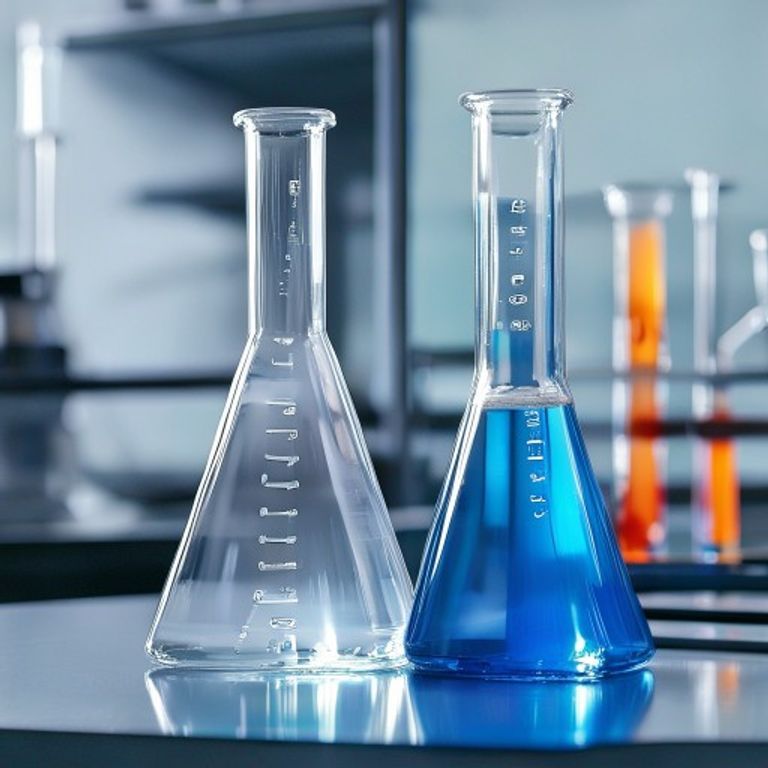
The Erlenmeyer flask, also called a conical flask, has a wide base that tapers to a short neck with a single or no graduation. It is versatile for mixing, heating, and titration, but it is not meant for precise volume measurements.
- Design: Conical body, flat or rounded bottom, short neck.
- Typical sizes: 50 mL, 125 mL, 250 mL, 500 mL, 1 L.
- Material: Usually borosilicate glass, sometimes plastic for disposable versions.
Key Differences: Shape, Accuracy, and Markings
Think of the volumetric flask as a ruler and the Erlenmeyer flask as a bucket. The ruler (volumetric) gives you exact measurements, while the bucket (Erlenmeyer) is great for moving a lot of liquid around without worrying about the exact amount.
| Feature | Volumetric Flask | Erlenmeyer Flask |
|---|---|---|
| Primary purpose | Accurate solution preparation | Mixing, heating, titration |
| Calibration | Single precise mark | Often no marks or rough graduations |
| Accuracy | ±0.1 % (high) | ±1–5 % (low) |
| Heat tolerance | Good, but narrow neck limits rapid boiling | Excellent – wide base spreads heat evenly |
When to Use a Volumetric Flask vs. an Erlenmeyer Flask
Use a volumetric flask when:
- You need a solution of known concentration for quantitative analysis (e.g., preparing a 0.1 M NaCl standard).
- Precision matters, such as in calibration curves or gravimetric analysis.
- You are performing volumetric analysis where the exact volume determines the result.
Use an Erlenmeyer flask when:
- You are mixing reagents, especially if you need to swirl without spilling.
- The solution will be heated on a Bunsen burner; the wide base reduces the risk of cracking.
- You are conducting a titration and need a container that can be easily swirled while adding the titrant.
Accuracy Comparison: Why It Matters
In analytical chemistry, a small error can cascade into a completely wrong result. A volumetric flask’s narrow neck acts like a magnifying glass for volume changes—move the liquid a millimeter, and you’ve altered the volume by less than 0.1 %. In contrast, the Erlenmeyer’s broad neck makes it difficult to gauge small volume changes, leading to larger uncertainties.
If you’re preparing a stock solution for a series of experiments, always start with a volumetric flask. Then you can transfer the exact amount to an Erlenmeyer flask for heating or mixing without losing the accuracy you built into the stock.
Primary Uses and Practical Tips
Volumetric Flask
- Prepare standard solutions for calibration of instruments.
- Make buffer solutions where exact molarity is critical.
- Use a mastering the Bunsen burner only for gentle warming; avoid rapid boiling to prevent breakage.
Erlenmeyer Flask
- Mix reactants by swirling; the conical shape keeps splashes inside.
- Carry out reflux reactions—its short neck can be fitted with a condenser.
- When you need to hold a test tube holder for simultaneous experiments, the Erlenmeyer’s stable base makes it easy to set up a multi‑flask arrangement.
FAQ
Q: Can I use an Erlenmeyer flask for preparing a standard solution?
A: You can, but you’ll sacrifice accuracy. If the concentration must be exact, stick to a volumetric flask.
Q: Are volumetric flasks suitable for heating?
A: They can handle mild heating, but the narrow neck limits rapid temperature changes. For vigorous boiling, switch to an Erlenmeyer flask.
Q: How do I clean a volumetric flask without affecting its calibration?
A: Rinse with distilled water, avoid abrasive brushes, and let it air‑dry upside down. Never use strong acids unless the flask is specifically designed for it.
Q: What’s the best way to transfer a solution from a volumetric flask to an Erlenmeyer flask?
A: Use a funnel and gently pour, or employ a glass pipette for precise transfer. This minimizes loss and maintains the intended concentration.
Conclusion
Choosing between a volumetric flask and an Erlenmeyer flask isn’t just a matter of preference; it’s about matching the tool to the task. If you need high accuracy for solution concentration, the volumetric flask is your go‑to. When mixing, heating, or titrating, the Erlenmeyer flask offers flexibility and safety. By understanding their strengths and limitations, we can avoid common pitfalls and produce reliable, reproducible results in the lab.







