

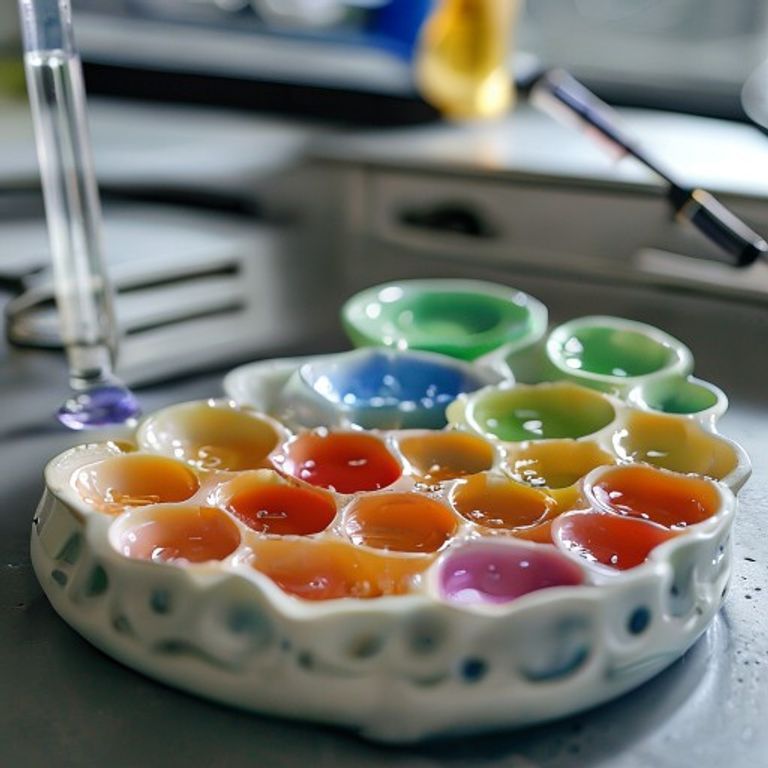
Spot Plate Uses: Practical Applications in Chemistry and Beyond

Introduction
When we step into a chemistry lab, the first thing that catches our eye is often the colorful array of small wells on a spot plate. These compact, usually ceramic or plastic plates might look simple, but they are powerhouse tools for a wide range of experiments. In this article, I’ll share how we use spot plates in everyday lab work, why they’re essential for microscale chemistry, and some clever tricks to get the most out of them.
Why Spot Plates Matter
Think of a spot plate as the “post‑it notes” of the laboratory—tiny, disposable, and perfect for jotting down quick observations. Their main advantage is the ability to run multiple reactions side‑by‑side without cross‑contamination. This makes them ideal for:
- Qualitative analysis
- Colorimetric tests
- Pre‑screening of reaction conditions
- Teaching demonstrations
Key Applications of Spot Plates
1. Spot Plate Uses in Chemistry
In my own experiments, I often start with a microscale chemistry approach. By placing just a few drops of reagents into each well, I can test dozens of conditions using only milliliters of chemicals. This not only saves reagents but also reduces waste—a win‑win for the budget and the environment.
2. Qualitative Analysis and Colorimetric Tests
One classic use is the detection of ions via color change. For example, adding a few drops of potassium thiocyanate to a well containing iron(III) ions produces a deep red complex. By comparing the intensity of the color across several wells, we can estimate concentration levels without sophisticated instrumentation.
3. Micro‑Scale Reaction Screening
When developing a new synthesis, I like to set up a reaction plate of different temperature or pH conditions on a spot plate. Each well becomes a tiny test tube, allowing rapid identification of the most promising parameters before scaling up to larger flasks.
4. Teaching and Demonstrations
In undergraduate labs, spot plates are perfect for showing students the basics of acid‑base neutralization, precipitation reactions, or even enzyme activity. The visual impact of color changes in each well makes abstract concepts concrete.
Choosing the Right Spot Plate
Not all spot plates are created equal. Here are a few factors to consider:
- Material: Ceramic plates are heat‑resistant and ideal for reactions requiring gentle heating, while plastic plates are disposable and lighter.
- Number of wells: Common configurations include 12, 24, or 48 wells. Choose based on how many parallel tests you need.
- Well depth: Deeper wells hold larger volumes, which is useful for reactions that generate gas or need stirring.
For a deeper dive into selecting and maintaining spot plates, check out our spot plate essentials guide.
Cleaning and Reusing Spot Plates
Even though many spot plates are designed for single‑use, reusing ceramic plates can be cost‑effective. Here’s a quick cleaning routine:
- Rinse each well with distilled water immediately after use.
- Soak the plate in a mild detergent solution for 5‑10 minutes.
- Use a soft brush to remove any residue, especially if you worked with viscous liquids.
- Rinse thoroughly and let air‑dry before the next experiment.
If you need a refresher on cleaning other lab tools, the mastering the laboratory mortar and pestle article offers useful parallels.
Integrating Spot Plates with Other Lab Equipment
Spot plates don’t work in isolation. Often, they complement:
- test tube uses for longer reactions that need heating or stirring.
- Erlenmeyer flasks when you need to transfer a reaction mixture after the initial screening.
- Microplate readers for quantitative absorbance measurements, turning a simple color change into precise data.
Conclusion
Spot plates are more than just cheap plastic trays; they are versatile, low‑cost platforms that enable rapid, safe, and environmentally friendly experimentation. Whether you’re a student learning the basics of acid‑base chemistry or a researcher screening dozens of catalysts, mastering the spot plate uses can dramatically streamline your workflow.
FAQ
What are the main advantages of using a spot plate over test tubes?
Spot plates allow multiple parallel tests with minimal reagent volume, reduce cross‑contamination risk, and provide a clear visual comparison of results.
Can I use a spot plate for heating reactions?
Ceramic spot plates can tolerate gentle heating (e.g., on a hot plate), but plastic plates should only be used for room‑temperature or cold reactions.
How many drops of liquid can I safely add to a single well?
Most wells hold 0.5–2 mL. Adding 5–10 drops (≈0.1–0.3 mL) is typical for colorimetric tests; always check the manufacturer’s specifications.
Is it okay to reuse a plastic spot plate?
While possible, plastic plates are prone to scratches that can harbor residues. For reliable results, it’s best to use them as single‑use items.
What safety precautions should I follow?
Wear gloves and goggles, work in a fume hood for volatile reagents, and never mix incompatible chemicals in the same well.