Unlocking the Lab’s Workhorse: The Essential Function of a Beaker in Science

Have you ever walked into a science lab, whether in school or a professional setting, and noticed those simple, cylindrical glass containers everywhere? Chances are, you’ve seen a beaker. It might look unassuming, like just another glass cup, but believe me, this piece of laboratory equipment is an absolute superstar when it comes to versatility. Today, we’re going to dive deep into the fascinating world of this fundamental piece of laboratory glassware, exploring the primary use of a beaker in a lab and understanding its crucial role in countless scientific experiments.
Often, when we think of scientific tools, we imagine complex machinery, but sometimes, the simplest tools are the most indispensable. The function of a beaker is precisely that – simple yet profoundly important. So, let’s peel back the layers and discover why this humble vessel is a staple in every chemist’s, biologist’s, and physicist’s arsenal.
More Than Just a Glass Cup: The Primary Uses of a Beaker
When someone asks “what is the primary use of a beaker in a lab?”, the answer isn’t just one thing. Beakers are truly the utility players of the lab, ready for almost anything! Here are some of their most common jobs:
- Holding and Temporary Storage: This is perhaps the most straightforward use. Beakers are excellent for holding liquids or solids that aren’t reactive with glass (or plastic, depending on the beaker material). Think of it like a temporary parking spot for your reagents or samples. Need to pour something out of a larger container? Grab a beaker!
- Mixing Solutions: With their wide mouths, beakers make it super easy to stir, swirl, or mix different substances together. Whether you’re dissolving a solid into a liquid or combining two solutions, the beaker provides ample space for effective agitation without too much risk of splashing. This makes them ideal for various experimental procedures involving liquid transfer.
- Heating Liquids: Most laboratory beakers are made from borosilicate glass (like Pyrex or Kimax), which is incredibly resistant to thermal shock. This means you can safely heat contents in a beaker using a hot plate, Bunsen burner, or heating mantle. Imagine trying to make tea in a regular glass cup over an open flame – not a good idea! But for a beaker, it’s just another day at the office. They are designed to withstand temperature changes, making them perfect for boiling, warming, or gentle simmering during a reaction.
- Performing Reactions: Many chemical reactions can be safely initiated and observed within a beaker. Its open top allows for easy addition of reagents and observation of changes like color shifts, gas evolution, or precipitation.
- Pouring and Transferring: The lip or “spout” on most beakers is specifically designed for controlled pouring, minimizing drips and spills when transferring liquids from one container to another.
Why Your Beaker Isn’t a Measuring Cup: Understanding Accuracy
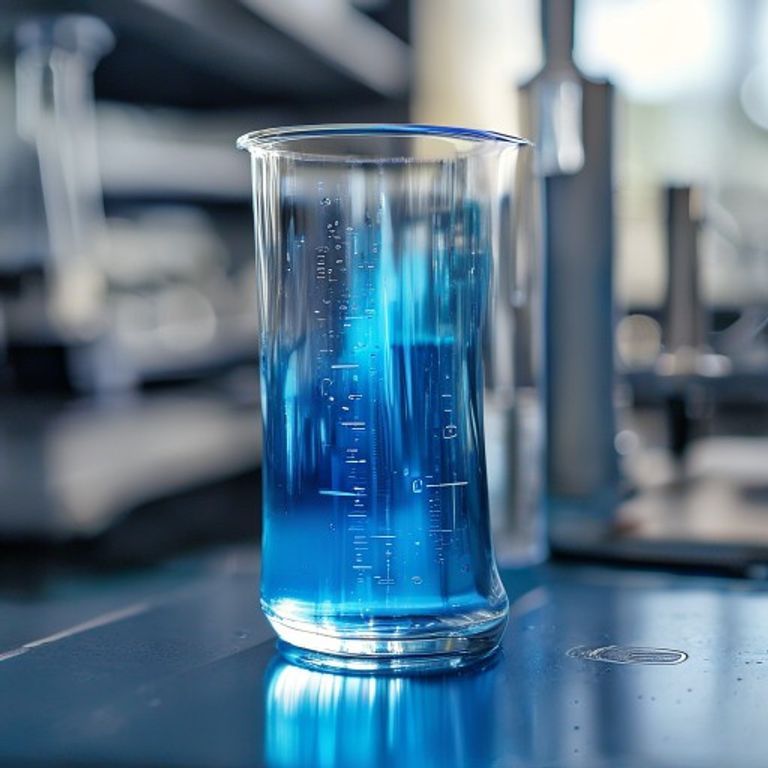
This is a super important point: while beakers do have volume markings (graduations) on their sides, they are NOT accurate measuring tools. Let me repeat that – they are not for precise measurements! Think of it this way: your kitchen measuring cup for flour is good enough for a batch of cookies, right? But if you were baking a delicate soufflé where every gram matters, you’d use a digital scale. Beakers are like that kitchen measuring cup; their markings are approximate, usually accurate only to about 5-10%.
So, why are beakers not accurate measuring tools? It boils down to their wide mouth and manufacturing tolerances. They are designed for convenience and versatility, not precision. If your experiment demands exact volumes, you need to reach for more specialized Volumetric Flask Accuracy, like a graduated cylinder, a pipette, or a volumetric flask. These tools are calibrated much more precisely for accurate results.
Different Types, Different Jobs: Common Beaker Varieties
When we talk about the purpose of a beaker in a chemistry laboratory, it’s worth noting that they come in various glassware types and sizes, each suited for slightly different tasks:
- Low-Form (Griffin Beakers): These are the most common type, wider than they are tall, with a pouring spout. They’re great for general use, stirring, and heating.
- High-Form (Berzelius Beakers): Taller and narrower, these are often preferred when evaporation needs to be minimized or when using magnetic stir bars for mixing.
- Plastic Beakers: Made from polypropylene or other plastics, these are used when dealing with corrosive chemicals that might etch glass, or for experiments where breaking glass is a concern. They are also lighter and less expensive.
Regardless of their specific form, the common uses for a glass beaker in science remain largely the same: holding, mixing, and heating.
Conclusion: The Unsung Hero of the Laboratory
In essence, the function of a beaker is to be the ultimate multitasker in the lab. While it won’t win any awards for precision measurement, its robust design, heat resistance, and ease of use make it an indispensable tool for a vast array of scientific activities. From preparing solutions to conducting simple reactions and acting as temporary chemical storage, the beaker truly embodies efficiency and reliability. So, the next time you see one, remember that this simple piece of glassware is silently enabling countless scientific discoveries. It’s a testament to how even the most basic laboratory equipment plays a vital role in our understanding of the world.
Frequently Asked Questions (FAQ)
Q: Can I use a beaker for accurate measurements?
A: No, beakers are not designed for accurate measurements. Their volume markings are approximate, usually with an accuracy of 5-10%. For precise measurements, you should use tools like graduated cylinders, pipettes, or volumetric flasks.
Q: What’s the main difference between a beaker and an Erlenmeyer flask?
A: The main difference lies in their shape and primary use. A beaker has a cylindrical shape with a flat bottom and a wide mouth, making it ideal for holding, mixing, and heating. An Erlenmeyer flask, on the other hand, has a conical body, a flat bottom, and a narrow neck, which is better for swirling, preventing splashes, and reducing evaporation. We have a complete guide to the essential Erlenmeyer Flask if you want to know more!
Q: Are all beakers made of glass?
A: While glass (specifically borosilicate glass) beakers are the most common due to their heat and chemical resistance, beakers are also made from various plastics like polypropylene for specific applications where glass might be unsuitable or easily broken.
Q: Can beakers be heated?
A: Yes, most laboratory glass beakers are made from borosilicate glass, which is designed to withstand high temperatures and thermal shock, making them perfectly safe for heating over a hot plate or Bunsen burner.