Unsung Hero: Why Every Lab Needs a Tripod Stand for Essential Heating Experiments

When we picture a chemistry lab, our minds often jump to bubbling test tubes, colorful solutions, or complex instruments. But often, the true workhorses, the silent supporters, get overlooked. Today, we’re shining a spotlight on one such unsung hero: the tripod stand. This simple, three-legged apparatus might not look fancy, but it plays an absolutely critical role in countless laboratory procedures, especially when heat is involved.
If you’ve ever wondered what is a three legged stand in a lab, or why scientists bother with such a basic piece of equipment, you’re in the right place. We’ll explore its function, how it supports essential experiments, and why it’s more important than you might think. So, let’s dive into the world of this humble yet indispensable lab tool!
What Exactly is a Tripod Stand?
Imagine a tiny, sturdy table with three legs, typically made from iron or another heat-resistant metal. That, in essence, is a tripod stand. Its design is straightforward: a flat, circular top ring connected to three equally spaced legs. This simple structure provides incredible stability, which is paramount in a lab setting where precision and safety are key.
Unlike a photographic tripod that holds cameras, a laboratory tripod stand isn’t about adjusting height or angling. Its primary job is fixed and firm: to provide a stable, elevated platform. This elevation is crucial because it allows for other pieces of lab equipment, like a Bunsen burner, to fit underneath, creating a safe and effective heating setup.
The Function of a Tripod Stand: More Than Just a Support
So, what exactly is the function of tripod stand in chemistry lab? In short, it’s all about support, specifically for heating experiments. Think of it as the stable foundation for your heating setup. Without it, safely applying heat to a beaker or flask would be incredibly difficult, if not impossible, and certainly unsafe. Here’s a breakdown of its core functions:
- Providing Stable Elevation: The three legs ensure that whatever is placed on top remains steady and doesn’t wobble, preventing spills or accidents.
- Supporting Heating Apparatus: It’s the perfect apparatus to support wire gauze during heating, which in turn holds glassware like beakers or flasks. This creates a gap for a Bunsen burner or spirit lamp.
- Distributing Heat Evenly: When combined with a wire gauze, the tripod stand helps to spread the heat from the burner more evenly across the bottom of the glassware, preventing hot spots and potential glass breakage.
- Enhancing Safety: By keeping glassware elevated and secure, it minimizes direct contact with the flame and reduces the risk of burns or tipping over.
The Perfect Setup: Using Your Tripod Stand for Heating
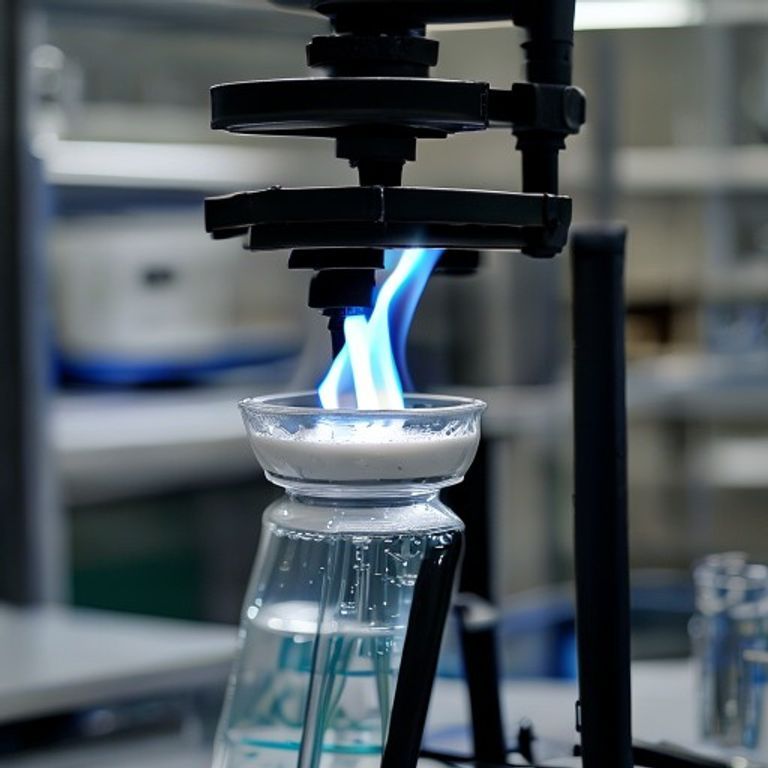
Now, let’s talk about how this workhorse comes into play during actual experiments. When we need to heat liquids, perhaps for a solution or a chemical reaction, the tripod stand is the first step in building our heating station. Here’s a typical scenario:
- We place the tripod stand on a heat-resistant mat or laboratory bench.
- On top of the tripod stand, we carefully lay a piece of wire gauze. This gauze, often with a ceramic center, acts as an interface between the flame and our glassware. It provides a flat surface for the glassware and helps to diffuse the heat.
- Next, we place our laboratory beaker (or flask) containing the substance to be heated directly on the wire gauze. By the way, if you want to know more about the versatility of this common lab vessel, check out our guide on Beaker Science 101: Unraveling the Secrets of This Laboratory Workhorse.
- Finally, a Bunsen burner is positioned underneath the tripod stand, directly below the wire gauze and the beaker. The flame heats the gauze, which then transfers heat to the glassware.
This entire arrangement is what we refer to as a lab stand for heating beaker and water, or more broadly, a heating apparatus. It’s a classic setup for many fundamental chemistry experiments, making the tripod stand an absolutely essential piece of lab equipment for heating experiment.
Beyond Heating: Other Applications
While heating experiments are its primary domain, a tripod stand can sometimes serve other simple support roles in the lab. For instance, it can be used to hold up evaporating dishes, funnels, or even as a temporary rest for small pieces of equipment when not actively heating. Its sturdy design makes it a versatile, general-purpose support system whenever elevation and stability are required.
Maintaining Your Lab’s Workhorse
Because tripod stands are usually made of robust metals, they require minimal maintenance. A simple wipe-down after use to remove any spills or residues is usually enough. Over time, some discoloration from heat exposure might occur, which is completely normal. The key is to ensure it remains clean, stable, and free from any structural damage that could compromise its integrity during use.
Conclusion
The humble tripod stand might not be the most glamorous item in the laboratory, but its importance cannot be overstated. From providing a stable platform for heating experiments to ensuring the safety and efficiency of countless procedures, this three-legged marvel truly is an indispensable part of any science classroom or research facility. So, the next time you see one, give a nod to this unsung hero – it’s literally holding your experiments together!
FAQ (Frequently Asked Questions)
Q: Can I use a tripod stand without wire gauze?
A: While technically you could, it’s not recommended. The wire gauze provides a flat, stable surface for glassware and, crucially, helps to distribute heat evenly. Without it, the direct flame could create “hot spots” on the glass, potentially causing it to crack or break.
Q: Are all tripod stands the same size?
A: Tripod stands come in various heights and ring diameters to accommodate different sizes of burners and glassware. Common sizes are usually adequate for most standard laboratory setups.
Q: What materials are tripod stands typically made from?
A: They are almost always made from heat-resistant metals like iron, sometimes with a rust-resistant coating. This ensures they can withstand high temperatures from Bunsen burners without deforming or degrading.
Q: What other equipment is essential when using a tripod stand for heating?
A: Besides the tripod stand itself, you’ll definitely need a wire gauze (with or without a ceramic center), a Bunsen burner or spirit lamp, appropriate glassware (like a beaker or flask), and a heat-resistant mat for safety.