Decoding the Graduated Cylinder: Definition, Uses, and How to Measure Like a Pro

Ever walked into a science lab and seen all those clear, cylindrical glass tubes with markings on the side? Chances are, you’ve spotted a graduated cylinder! For many of us, especially those just starting our scientific journey, understanding each piece of laboratory apparatus can feel a bit overwhelming. But don’t worry, today, we’re going to demystify one of the most fundamental tools for volume measurement: the graduated cylinder. By the end of this article, you’ll not only know the definitive graduated cylinder definition but also feel confident using it like a seasoned chemist.
So, let’s dive in and unlock the secrets of this simple yet indispensable piece of laboratory glassware!
What Exactly is a Graduated Cylinder? (Definition & Anatomy)
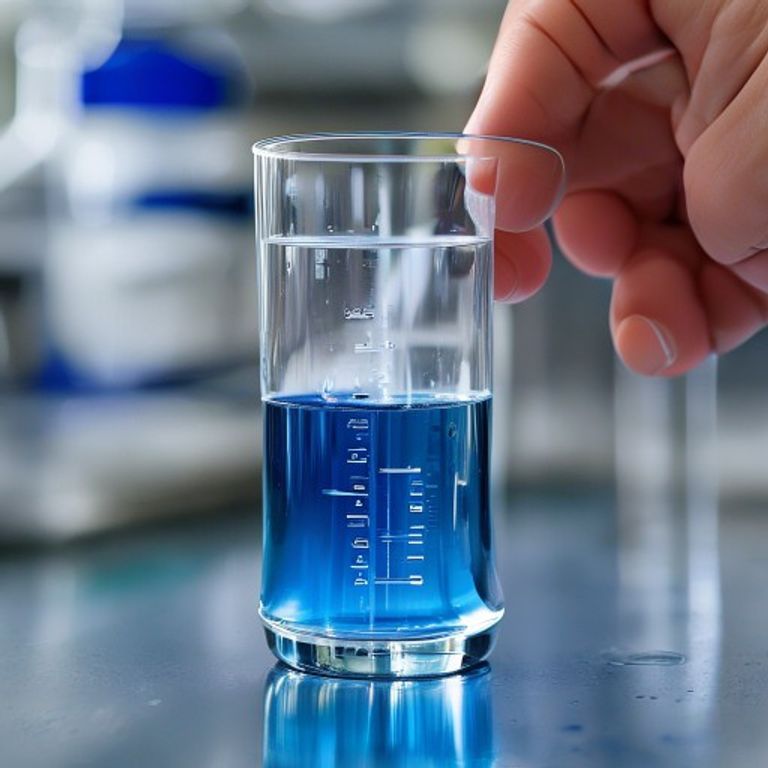
At its core, a graduated cylinder is a tall, cylindrical container, typically made of glass or plastic, with a flat base and a spout for pouring. What makes it special are the precise markings, or “graduations,” etched along its side, allowing us to measure liquid volumes accurately. This is why it’s also often referred to as a measuring cylinder. Unlike beakers or flasks, which are great for holding or mixing, the graduated cylinder is specifically designed for obtaining an accurate reading of a liquid’s volume.
Think of it like a measuring cup in your kitchen, but far more precise and designed for scientific work. These cylinders come in various sizes, from small 5 mL ones to large 2000 mL (2 L) versions, each with different levels of precision. The smaller the cylinder, generally, the more precise the measurements it can provide.
Key Features:
- Cylindrical Shape: Its uniform diameter ensures consistent measurement accuracy along its height.
- Graduations: These lines indicate specific volumes, usually in milliliters (mL). They’re marked from bottom to top.
- Base: A sturdy base keeps the cylinder upright, preventing spills.
- Pour Spout: A small lip at the top facilitates easy and controlled pouring of liquids.
- Material: Most are made of borosilicate glass (for heat and chemical resistance) or high-quality plastics like polypropylene (for durability and shatter resistance).
Why the Graduated Cylinder is a Lab Superstar: Its Core Uses
Now that we understand the graduated cylinder definition, let’s talk about what is a graduated cylinder used for. Its primary function is straightforward: to measure the volume of liquids. While this sounds simple, its application is vast across various scientific disciplines.
In a typical graduated cylinder definition chemistry lab setting, we often use it to:
- Prepare solutions: When you need a specific amount of solvent (like water) to dissolve a solute, a graduated cylinder ensures you add just the right volume.
- Measure reagents: Many experiments require precise volumes of chemical reagents to ensure reactions proceed as expected.
- Determine density: By measuring the volume of an object (often through water displacement) and its mass, we can calculate its density.
- Dispense liquids: Though not as precise as a burette or pipette, it’s excellent for dispensing non-critical volumes quickly. Speaking of precision, for extremely accurate dispensing of smaller volumes, understanding essential pipette functions is crucial for flawless experiments.
The graduated cylinder definition and uses really boil down to its role as a reliable workhorse for volume measurement where moderate precision is required. It strikes a balance between speed and accuracy, making it indispensable.
The Secret to Accurate Readings: Mastering the Meniscus
Perhaps the most crucial aspect of how to read a graduated cylinder accurately is understanding the meniscus. When you pour a liquid, especially water or aqueous solutions, into the cylinder, you’ll notice that the surface isn’t perfectly flat. Instead, it curves either upwards or, more commonly, downwards. This curve is called the definition of meniscus in a graduated cylinder.
For most aqueous solutions, the liquid will “climb” slightly up the sides of the glass due to surface tension, forming a concave (U-shaped) meniscus. To get an accurate reading, we always read the bottom of this curve. Imagine the surface of the liquid is a gentle smile; you read the very bottom of that smile.
Here’s how to do it right:
- Place the graduated cylinder on a flat, level surface. Don’t hold it in your hand, as this can lead to parallax errors.
- Bring your eye level with the bottom of the meniscus. If you look down on it, you’ll read too high; if you look up, you’ll read too low.
- Read the volume at the lowest point of the concave meniscus.
- Estimate one digit beyond the smallest marked increment. For example, if the smallest marks are in 1 mL increments, you should estimate to the nearest 0.1 mL.
This attention to detail ensures your measurements are as precise as the instrument allows.
Tips for Success: Ensuring Precision Every Time
While understanding the graduated cylinder definition is step one, mastering its use comes with practice and a few helpful tips:
- Cleanliness is Key: Always ensure your graduated cylinder is clean and dry before use. Residue from previous experiments or even water droplets can affect your measurements.
- Avoid Extreme Temperatures: While borosilicate glass is heat-resistant, sudden temperature changes or very hot liquids can affect the glass’s volume, leading to inaccurate readings.
- Handle with Care: Despite being sturdy science equipment, graduated cylinders are still glassware. Dropping them can lead to breakage.
- Use the Right Size: Always choose the smallest graduated cylinder that can comfortably hold the volume you need to measure. A 10 mL measurement in a 100 mL cylinder will be less accurate than in a 25 mL cylinder.
Conclusion
From the precise graduated cylinder definition to its crucial role in virtually every scientific experiment, this unassuming piece of laboratory equipment is truly indispensable. We’ve explored what is a graduated cylinder used for, delved into how to read a graduated cylinder accurately by understanding the definition of meniscus in a graduated cylinder, and even touched upon practical tips for its use in the graduated cylinder definition chemistry lab. Mastering its use is a fundamental skill that will serve you well in any scientific endeavor. So, next time you’re in the lab, you’ll not just see a glass tube, but a powerful tool for precise liquid measurement!
FAQs about Graduated Cylinders
Q: What is the main difference between a beaker and a graduated cylinder?
A: A beaker is primarily for holding, mixing, or heating liquids, and its volume markings are approximate. A graduated cylinder, on the other hand, is specifically designed for accurate measurement of liquid volumes.
Q: Can I heat liquids in a graduated cylinder?
A: It’s generally not recommended. While some graduated cylinders are made of heat-resistant glass, they are not designed for heating. The heat can affect the accuracy of the graduations and may cause the cylinder to crack.
Q: Why is the meniscus important when reading a graduated cylinder?
A: The meniscus is the curve formed by the liquid surface due to surface tension. Reading the bottom of the concave meniscus (for most aqueous solutions) ensures a consistent and accurate measurement, eliminating errors that would occur if you read the top or middle of the curve.
Q: Are plastic graduated cylinders less accurate than glass ones?
A: For general lab work, both glass and plastic graduated cylinders offer good accuracy. Glass typically offers slightly higher precision for very critical measurements and is resistant to more chemicals. Plastic cylinders are more durable and shatter-resistant, making them ideal for educational settings or when handling corrosive substances where breakage is a concern.