

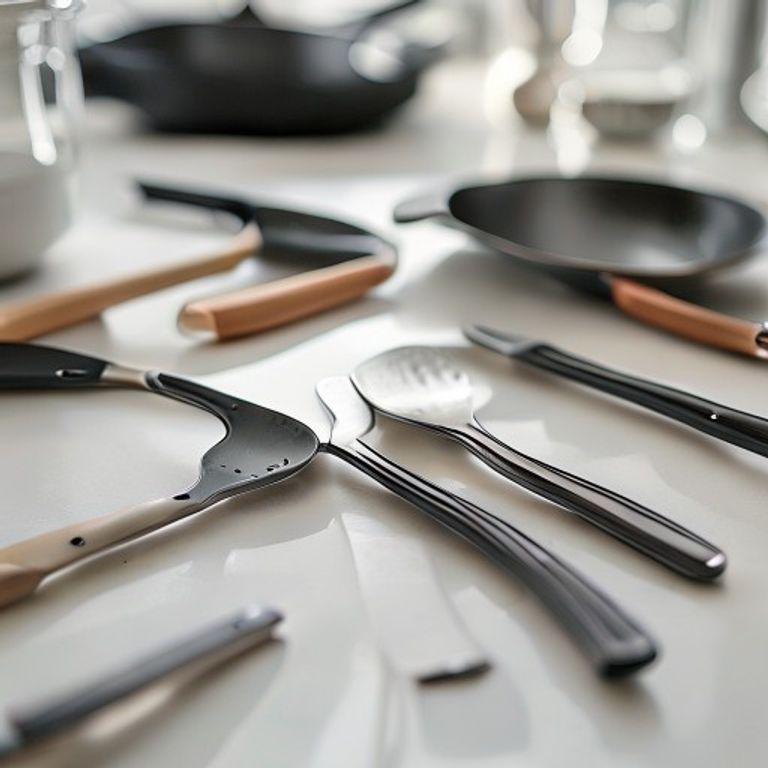
The Unsung Hero of Your Kitchen and Lab: Unveiling the Many “Spatula Uses” You Never Knew

Ever thought about the humble spatula? It’s one of those kitchen utensils that often gets overlooked, blending into the background of our daily cooking routines. But if we really stop to think about it, this simple tool is incredibly versatile, a true workhorse that plays many roles, both in our kitchens and surprisingly, even in laboratories. From flipping pancakes to scraping bowls, the “spatula uses” are far more diverse than you might imagine. Let’s dive deep and explore the myriad ways this indispensable gadget makes our lives easier.
What Are Spatulas Used For in Cooking? A Culinary Deep Dive
When most of us picture a spatula, our minds immediately jump to the kitchen. And for good reason! Spatulas are fundamental cooking tools, designed to handle a variety of tasks that make meal preparation and cooking a breeze. They come in various shapes and sizes, each perfectly suited for specific culinary adventures.
Flipping, Stirring, and Scraping Bowls: The Everyday Essentials
- Flipping and Turning: This is probably the most iconic role. Think about that perfectly golden-brown pancake or a sizzling burger on the grill. A good spatula, especially one with a broad, flat surface, is essential for flipping pancakes, eggs, fish, and even vegetables with ease. The thin, flexible edge slides smoothly underneath, ensuring your food stays intact.
- Stirring and Sautéing: For recipes that require constant stirring, like scrambled eggs, risottos, or sautéing vegetables, a heat-resistant spatula (often silicone or wood) is ideal. It helps to move food around the pan, preventing it from sticking or burning.
- Scraping Bowls and Pans: Ever tried to get every last bit of batter or dough out of a mixing bowl with a spoon? It’s a struggle. This is where the soft, flexible edge of a silicone spatula shines. It conforms to the curve of the bowl, allowing you to efficiently scoop and scraping bowls clean, minimizing waste and making cleanup a breeze.
Common Uses for Silicone Spatulas: Your Non-Stick Ally
Silicone spatulas have become incredibly popular, and it’s not hard to see why. Their heat resistance, flexibility, and non-scratch properties make them a go-to for many home cooks. What are silicone spatulas used for most often?
- Non-Stick Cookware: Unlike metal spatulas, silicone won’t scratch your precious non-stick pans, preserving their lifespan.
- High-Heat Cooking: They can withstand high temperatures, making them perfect for stirring hot sauces, working with caramel, or sautéing over a roaring flame.
- Mixing and Folding: Their flexibility is excellent for gently folding delicate ingredients like whipped egg whites or cream into batters without deflating them.
Specific Applications of Spatulas in Baking: Sweet Success
Bakers know that spatulas are indispensable tools for achieving sweet perfection. Their specific applications in baking are crucial for everything from delicate pastries to robust loaves of bread.
- Spreading Frosting and Glazes: Offset spatulas, with their angled blade, are specifically designed for spreading frosting evenly over cakes and cupcakes. Their design allows your knuckles to clear the surface, preventing accidental smudges.
- Leveling Batters: A straight-edged spatula is perfect for leveling cake batter in pans, ensuring an even bake.
- Decorating: Small, flexible spatulas can be used for intricate decorating, creating swirls, peaks, and other artistic touches on your baked goods.
Different Uses for Spatulas in Laboratories: Beyond the Kitchen
Believe it or not, spatulas aren’t just for culinary artists! They are also fundamental instruments in scientific settings. When we consider the “different uses for spatulas in laboratories,” we often find tools that, while similar in name, have distinct designs tailored for precision and contamination prevention.
- Transferring Chemicals: Lab spatulas, often made of stainless steel or plastic, are crucial for transferring small amounts of solid chemicals from containers to beakers or weighing boats. Their thin, flat blades or scoop-like ends are perfect for this delicate task.
- Mixing and Stirring: In chemistry, spatulas can be used to mix powders or stir solutions, especially when dealing with small quantities.
- Scraping and Cleaning: Just like in the kitchen, spatulas can be used to scrape residue from glassware or other lab equipment.
How to Choose a Spatula for Various Tasks: Your Spatula Shopping Guide
With so many types available, choosing the right spatula can feel a bit overwhelming. But don’t worry, I’ve got your back! Here’s a quick guide on “how to choose a spatula for various tasks”:
-
Material Matters:
- Silicone: Best for non-stick pans, high-heat cooking, mixing, and scraping. Very flexible and gentle.
- Metal (Stainless Steel): Excellent for grilling, heavy-duty flipping, and tasks requiring rigidity. Can scratch non-stick surfaces.
- Wood/Bamboo: Good for stirring, safe for non-stick, but less flexible and can absorb odors.
- Plastic (Nylon): Often budget-friendly, heat-resistant, and non-scratch, but some types might not withstand very high temperatures.
-
Shape and Size:
- Turner Spatula: Broad, flat, sometimes slotted for draining fat. Ideal for flipping.
- Rubber/Silicone Scraper Spatula: Flexible head, perfect for scraping bowls clean and folding.
- Offset Spatula: Angled blade, designed specifically for spreading frosting and decorating.
- Lab Spatula: Often smaller, with a thin blade or scoop, made for precise handling of solids.
Conclusion: The Humble Hero We Can’t Live Without
From the sizzle of a frying pan to the meticulous measurements in a lab, the spatula truly is an unsung hero. We’ve seen that whether you’re asking “what are spatulas used for in cooking,” or wondering about their role in scientific experiments, their versatility is astounding. Next time you reach for this simple tool, take a moment to appreciate its incredible range of “spatula uses” and how it silently empowers us to create, cook, and discover every single day.
FAQ: Your Spatula Questions Answered
Q: Can I use a silicone spatula on a hot grill?
A: While silicone spatulas are heat-resistant, direct, prolonged exposure to extremely high grill heat can damage them. For grilling, metal spatulas are generally more suitable.
Q: What’s the difference between a spatula and a turner?
A: Often, the terms are used interchangeably. Generally, a “turner” specifically refers to a spatula with a broad, flat head designed for flipping foods like pancakes or burgers. A “spatula” is a broader term encompassing tools for flipping, scraping, spreading, and mixing.
Q: How do I clean a silicone spatula?
A: Most silicone spatulas are dishwasher safe. For stubborn residue, hand wash with warm, soapy water and a sponge. Ensure they are thoroughly dry before storing.
Q: Are wooden spatulas hygienic?
A: Wooden spatulas can be hygienic if properly cared for. They need to be washed thoroughly and dried completely to prevent bacterial growth. Avoid soaking them for long periods, which can lead to cracking or warping.