

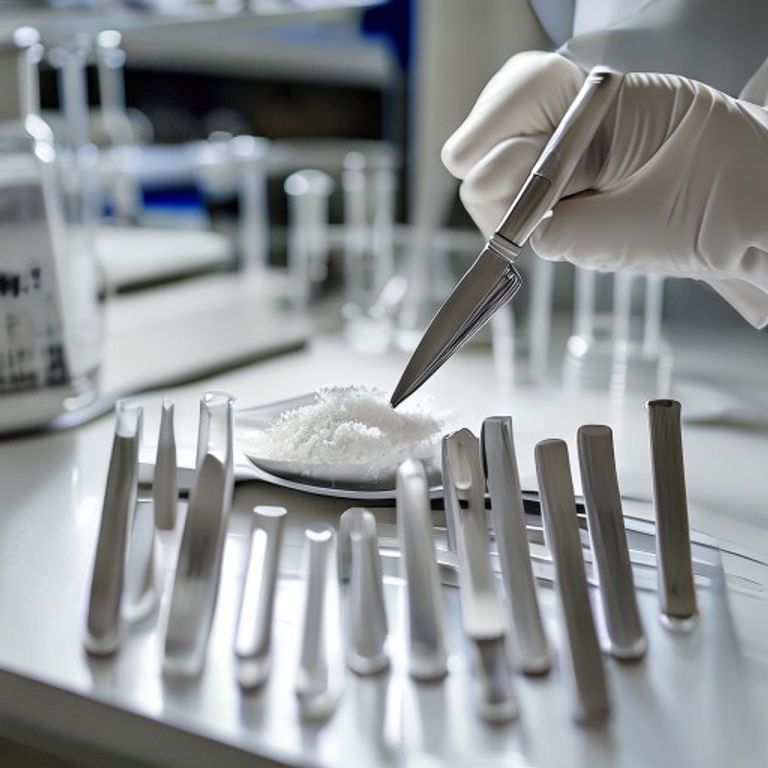
Unveiling the Unsung Hero: The Ultimate Guide to Lab Spatula Uses

In the vast world of laboratory equipment, some tools grab all the spotlight – think microscopes, centrifuges, or fancy spectrophotometers. But often, it’s the humble, everyday instruments that truly make our scientific endeavors possible. Today, we’re shining a light on one such unsung hero: the laboratory spatula. You might think, “It’s just for scooping, right?” Well, you’d be surprised! Its ultimate guide to laboratory spatula uses extends far beyond simple transfers. In this article, we’ll explore why this small tool is an indispensable part of almost every scientific discipline, from chemistry to biology, and how mastering its use can significantly improve your lab efficiency and safety.
For us, the spatula is like a precise extension of our hand, designed to handle delicate materials with care. Let’s dive deeper into its versatility and discover the many specific applications of laboratory spatulas.
What Exactly is a Lab Spatula?
At its core, a lab spatula is a small, handheld tool primarily designed for handling small quantities of solid materials. Imagine a miniature shovel or a tiny spoon, often made from stainless steel, but also available in plastic or rubber for specific tasks. Their diverse designs cater to various needs, ensuring accuracy and preventing contamination, which are crucial in any scientific setting.
The Many Faces of Lab Spatulas: Types and Their Design
Just like a chef has different knives, scientists have various spatulas, each optimized for a particular job. Understanding the different types of lab spatulas and their uses is key to effective lab work.
Flat/Microspatulas
These spatulas feature a flat, thin blade, perfect for scraping, spreading, or transferring very small amounts of powder, especially in micro-scale experiments or when working with delicate samples.
Spoon Spatulas/Scoops
As the name suggests, these have a small spoon-like end, ideal for scooping and transferring granular or powdered reagents. They often come with a flat or chisel end on the opposite side, offering dual functionality.
Spatulas with Chisel/Blade Ends
These are designed with a sharper, chisel-like edge that helps in breaking up compacted powders or scraping solidified substances from the sides of glassware.
Rubber Spatulas
Made from flexible rubber or silicone, these are excellent for handling viscous liquids or semi-solids. Their flexibility allows for thorough scraping of containers without scratching delicate glass surfaces.
Flexible Spatulas
Similar to rubber spatulas but often with a thin, metallic blade, these are useful for mixing, stirring, or spreading pasty substances.
Unpacking Specific Applications: Where Do Lab Spatulas Shine?
Now, let’s get into the nitty-gritty of what are lab spatulas used for in chemistry, biology, and beyond. Their utility spans almost every corner of the laboratory.
In Chemistry Labs
For us chemists, spatulas are foundational. They are essential for:
- Weighing Reagents: We meticulously transfer precise amounts of solid chemicals onto weighing boats or directly into reaction vessels. Accuracy here is paramount, as even a slight deviation can affect reaction outcomes. This is a fundamental skill we learn when we first dive into basic chemistry made simple.
- Transferring Chemicals: Moving powders or crystals from their stock bottles into beakers, flasks, or test tubes without spillage.
- Mixing and Stirring: Small spatulas can be used to gently mix solid components or stir solutions in small containers.
- Scraping Precipitates: After a reaction, a spatula helps us collect solid precipitates that have settled or adhered to glassware.
In Biology Labs
Common laboratory spatula applications in biology are just as critical, often involving delicate handling of biological materials:
- Media Preparation: Scooping powdered agar or other culture media into flasks for sterilization.
- Sample Transfer: Carefully transferring tissue samples, microbial colonies, or other biological specimens.
- Spreading Samples: Using a flat spatula to evenly spread bacterial cultures on agar plates.
- Collecting Samples: In fieldwork, spatulas can be used to collect soil, sediment, or plant samples.
Beyond Chemistry and Biology
The utility of lab spatulas isn’t limited to these two fields. In pharmaceuticals, they are used for precise weighing of active pharmaceutical ingredients. In material science, they assist in handling catalysts and polymers. Even in forensics, microspatulas are invaluable for collecting trace evidence.
Mastering the Art of Scooping: How to Properly Use a Lab Spatula
Proper technique is key to using a lab spatula safely and effectively. It’s not just about getting the material from point A to point B; it’s about doing it cleanly and accurately.
- Choose the Right Spatula: Select the type that best suits the material and the task (e.g., spoon for powders, flat for scraping).
- Scooping Technique: For powders, gently dip the spatula into the material. Use a controlled, light hand to scoop. For transferring into narrow openings (like test tubes), hold the spatula over the opening and gently tap it to release the material.
- Preventing Contamination: Always use a clean spatula. If handling different reagents, clean the spatula thoroughly between uses or use separate spatulas. Never put a used spatula back into a stock reagent bottle.
- Safety First: When handling hazardous chemicals, always wear appropriate personal protective equipment (PPE), including gloves and safety glasses.
- Cleaning and Maintenance: After use, clean your spatulas immediately. Stainless steel spatulas can be washed with detergent and water, rinsed, and dried. Plastic spatulas should also be washed appropriately. Proper storage helps maintain their integrity and cleanliness.
Kesimpulan
So, there you have it. The lab spatula, often seen as a basic tool, is anything but. Its simple design belies its immense versatility and importance in various scientific applications. From delicate micro-transfers in chemistry to careful sample handling in biology, knowing the different types and how to properly use a lab spatula is a fundamental skill for any scientist. Next time you’re in the lab, take a moment to appreciate this small but mighty instrument – it truly is an unsung hero, making precise and safe scientific work possible every single day.
Frequently Asked Questions (FAQ)
Q: Can I use any spatula for any chemical?
A: Not necessarily. While stainless steel spatulas are suitable for most common chemicals, some corrosive or reactive substances might require specialized spatulas made of resistant plastics (like PTFE) or glass. Always check compatibility.
Q: How do I clean my lab spatula?
A: For most non-hazardous substances, simply wash with laboratory detergent and tap water, rinse thoroughly with distilled water, and dry completely with a clean cloth or air dry. For hazardous or sensitive materials, follow specific lab protocols for decontamination.
Q: Are plastic spatulas as good as metal ones?
A: It depends on the application. Plastic spatulas are great for avoiding metal contamination, working with very aggressive chemicals that might corrode metal, or for single-use applications. However, they are less durable and may not be suitable for breaking up hard clumps.
Q: What’s the difference between a spatula and a scoop?
A: Often, the terms are used interchangeably, or a “spatula” refers to the broader category. However, a “scoop” typically implies a deeper, more spoon-like shape designed specifically for scooping larger quantities of powder or granules. Many lab spatulas combine a flat end with a scoop end for maximum utility.