The Unsung Hero: Decoding the Essential Laboratory Tripod Uses for Every Experiment

In the bustling world of scientific discovery, where complex machinery and intricate sensors often steal the spotlight, it’s easy to overlook the humbler, yet utterly indispensable, pieces of laboratory equipment. One such workhorse, often taken for granted, is the laboratory tripod. You’ve probably seen it countless times, perhaps without giving it a second thought, but its laboratory tripod uses are fundamental to countless experiments. Think of it as the sturdy legs beneath many critical scientific operations – without it, our delicate glassware would be wobbly, and our experiments, quite literally, unstable.
Today, we’re going to dive deep into why this three-legged marvel is so vital, exploring everything from its basic function to its role in complex setups. We’ll learn how to use a tripod stand in a lab effectively and safely, ensuring our scientific pursuits stand on firm ground.
What Exactly is a Laboratory Tripod, Anyway?
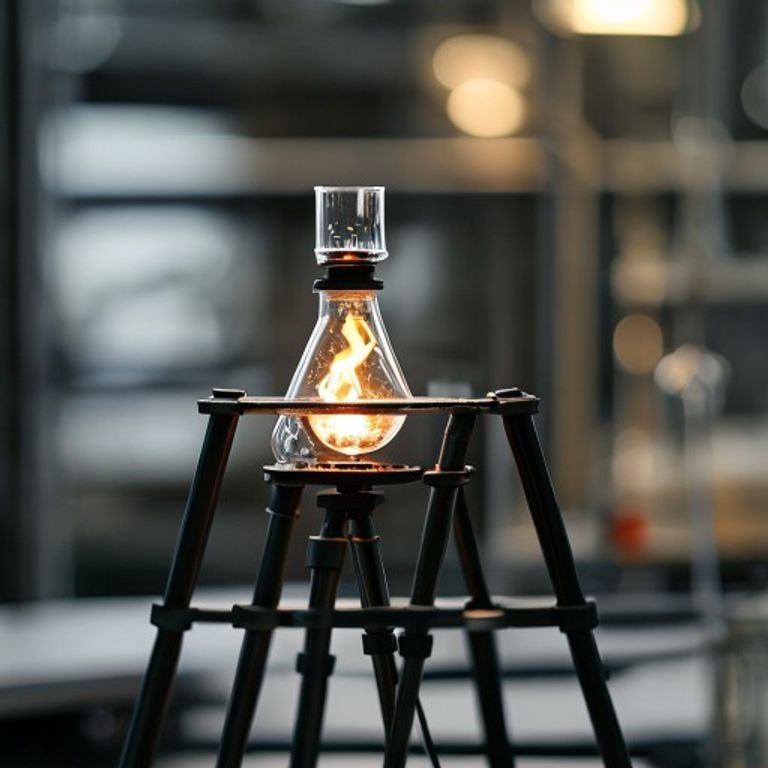
Before we explore its extensive uses, let’s quickly define what we’re talking about. A laboratory tripod is essentially a three-legged stand, typically made of metal (often iron or steel) for robustness and heat resistance. Its design is deceptively simple, yet incredibly effective. It usually has a flat, circular top surface, designed to hold other pieces of apparatus or a wire gauze. Its three legs provide a stable base, preventing tipping and ensuring a level platform for experiments. It’s the kind of item that doesn’t scream “innovation,” but silently underpins it.
The Core Mission: Supporting Glassware with Laboratory Tripod
At its heart, the primary purpose of tripod in chemistry experiments is to provide stable support. Imagine trying to heat a beaker full of liquid directly over a Bunsen burner, holding it with your hand – not only is it dangerous, but it’s also impossible to maintain a consistent position! This is where our tripod steps in. We place the tripod over the Bunsen burner, and then a wire gauze on top of the tripod. This creates a secure, elevated platform for our beakers, flasks, or crucibles. It’s like having a dedicated, heat-proof table for your glassware right where you need it.
- Stability: The three legs ensure maximum stability, distributing the weight evenly and preventing accidental spills or breakage of expensive glassware.
- Elevation: It lifts the glassware to an appropriate height above a heat source, allowing for controlled heating.
- Versatility: Different sizes of tripods can accommodate various glassware, from small beakers to larger flasks.
Heating Things Up: Proper Setup for Heating with a Lab Tripod
When it comes to heating substances in the lab, the tripod is often part of a dynamic duo, working hand-in-hand with a Bunsen burner stand and a wire gauze support. Here’s the typical setup:
- First, we place the laboratory tripod firmly on a heat-resistant surface.
- Next, we position a Bunsen burner (or another heat source like a spirit lamp) directly underneath the center of the tripod.
- Then, a wire gauze is placed on top of the tripod. This gauze serves several critical functions: it provides a flat surface for the glassware to rest on, distributes heat evenly across the bottom of the vessel (preventing hot spots that could crack the glass), and allows us to safely heat the contents.
- Finally, we place the beaker, flask, or other experimental heating platform directly onto the wire gauze.
This proper setup for heating with a lab tripod ensures that the glassware is securely held at the correct distance from the flame, allowing for safe and controlled heating. Whether we’re boiling water, dissolving solids, or carrying out a delicate chemical reaction, this stable platform is non-negotiable. For instance, if you’re conducting experiments that might involve various types of glassware, it’s good to remember what test tubes are really for and how they might be supported, often indirectly, in such setups.
Beyond Just a Stand: Scientific Applications of Lab Tripod Stands
While supporting glassware for heating is its most common role, the scientific applications of lab tripod stands extend further. It’s a foundational piece in many chemistry lab apparatus setups:
- Filtration Setups: We can use a tripod to support a funnel during filtration, with a conical flask placed below to collect the filtrate.
- Evaporation: When evaporating a solvent to obtain a solute, a tripod with a wire gauze can support an evaporating dish over a gentle flame.
- Distillation (as part of a larger setup): While complex distillation often uses retort stands and clamps, a tripod can be used for supporting the initial heating flask, especially in simpler distillation experiments.
- Support for Other Equipment: Sometimes, it acts as a base for other lighter equipment that needs to be elevated or kept stable, like certain types of sensors or small motors, though less common in basic chemistry.
How to Use a Tripod Stand in a Lab: Best Practices
Using a lab tripod might seem straightforward, but a few best practices ensure safety and experimental success:
- Choose the Right Size: Ensure the tripod’s top ring is appropriate for the wire gauze you’re using and that the legs provide ample stability for your glassware.
- Always Use Wire Gauze for Heating: Never place glassware directly on the tripod’s metal ring for heating, as uneven heat can cause stress and cracks. The wire gauze provides even heat distribution.
- Center the Heat Source: Position the Bunsen burner directly under the center of the wire gauze for efficient and even heating.
- Stability First: Always check that the tripod is stable on the workbench before placing any glassware or starting any heating. A wobbly tripod is a disaster waiting to happen.
- Heat Resistance: Ensure the workbench surface beneath the tripod is heat-resistant. Use a ceramic mat if necessary.
Conclusion
So there you have it! The humble laboratory tripod, often overlooked, is truly an unsung hero in the scientific world. Its primary role in providing glassware stability equipment during heating experiments is critical, but its versatility extends to various other setups. By understanding its purpose and adhering to proper usage guidelines, we ensure safer, more accurate, and more successful experiments. Next time you’re in the lab, take a moment to appreciate this simple yet essential piece of equipment – it’s literally holding your experiment together!
FAQ
Q1: What is the main purpose of a tripod in chemistry experiments?
A1: The main purpose is to provide stable support for glassware (like beakers, flasks, crucibles) during heating experiments, typically by holding a wire gauze over a Bunsen burner.
Q2: Can I heat glassware directly on a laboratory tripod without wire gauze?
A2: No, it’s not recommended. Placing glassware directly on the tripod’s metal ring can lead to uneven heating, which might cause the glass to crack or break due to thermal stress. The wire gauze distributes heat evenly.
Q3: How do I ensure proper setup for heating with a lab tripod?
A3: First, place the tripod on a heat-resistant surface. Position the Bunsen burner directly underneath. Place a wire gauze on top of the tripod. Finally, set your glassware onto the wire gauze. Always ensure stability before heating.
Q4: What material is a laboratory tripod usually made from?
A4: Laboratory tripods are typically made from sturdy, heat-resistant metals like iron or steel to withstand high temperatures and provide robust support.