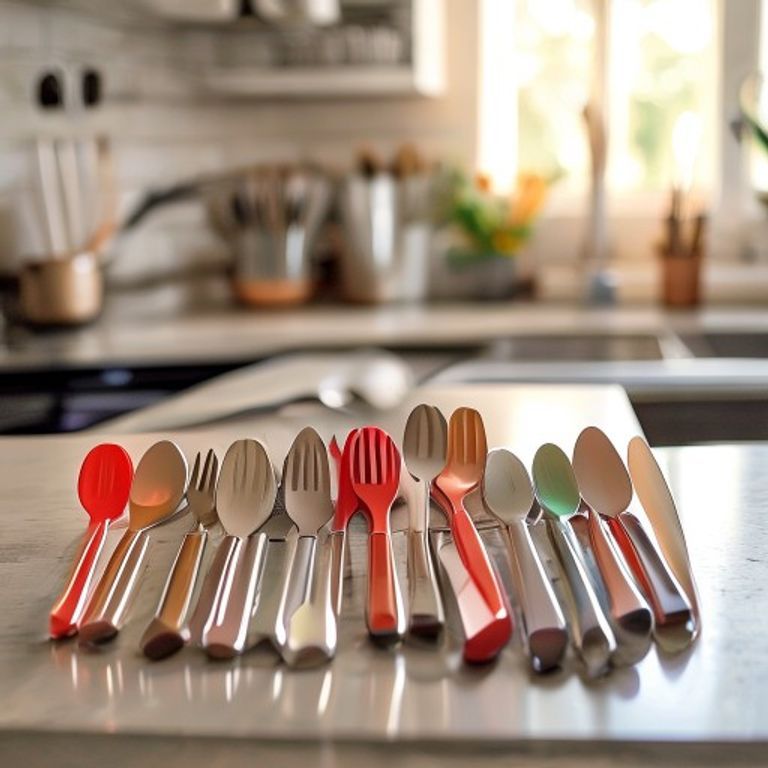
The Ultimate Guide to Spatula Uses: Beyond Just Flipping Eggs!

Halo, para penggemar dapur! When we think about essential kitchen utensils, a few items always come to mind: knives, cutting boards, and of course, the ever-reliable spatula. But have you ever truly stopped to appreciate the sheer versatility of this humble tool? Many of us might only associate it with flipping pancakes or stirring scrambled eggs. Trust me, there’s so much more to it!
Today, we’re going to dive deep into the fascinating world of spatula uses. We’ll explore not just how to use a spatula for cooking, but also the different types of spatulas and their uses, the best way to use a spatula for baking, and even specific applications like what a fish spatula is truly for. Get ready to have your culinary horizons expanded!
The Everyday Hero: Basic Spatula Uses
Let’s start with the basics, shall we? Even in its simplest form, a spatula is a powerhouse. Its primary job is to help us manipulate food in a hot pan or on a baking sheet without burning our fingers. Here are some of the fundamental spatula uses we all know and love:
- Flipping: This is probably the most iconic use. Whether it’s pancakes, eggs, burgers, or grilled cheese, a good spatula makes flipping a breeze, ensuring even cooking on both sides.
- Stirring: While spoons are great, a spatula, especially a silicone one, excels at stirring ingredients in a non-stick pan. Its flat edge allows it to scrape the bottom and sides of the pan effectively, preventing food from sticking or burning.
- Scraping: When you’re making a sauce, batter, or dough, a flexible spatula is your best friend for scraping every last bit out of a bowl or off a cutting board. No more wasted ingredients!
- Lifting: From delicate cookies off a baking sheet to freshly baked brownies from a pan, a spatula provides the leverage needed to lift items intact.
Understanding Your Tools: Different Types of Spatula and Their Uses
Just like how a chef has different knives for different tasks, there’s a spatula for almost every kitchen job. Let’s look at some common types:
1. Turner Spatulas (Flippers)
These are what most people think of when they hear “spatula.” They typically have a wide, flat head and a handle.
Types include:
- Metal Turners: Durable and great for high heat, but can scratch non-stick pans. Perfect for cast iron or stainless steel.
- Nylon or Silicone Turners: Safe for non-stick cookware, heat-resistant, and flexible. Ideal for delicate items.
- Fish Spatula: This is a specific use case! A fish spatula usually has a thin, angled, and slotted metal head. The slots allow grease to drain, and its thinness is perfect for sliding under delicate fish fillets without breaking them. It’s also surprisingly good for cookies and other fragile items!
2. Scraper Spatulas (Rubber/Silicone Spatulas)
These spatulas are characterized by their flexible, often spoon-shaped head, usually made of silicone or rubber.
Their uses are primarily for:
- Mixing and Folding: Their flexibility allows for gentle mixing and folding of ingredients, especially when you need to incorporate air, like in meringue or whipped cream.
- Scraping Bowls Clean: As mentioned, they are unparalleled at getting every last drop of batter, dough, or sauce from bowls and containers.
- Spreading: Great for spreading frosting, batter, or even peanut butter smoothly.
3. Offset Spatulas (Palette Knives)
With a blade that’s offset from the handle, these are primarily for precision tasks, especially in baking.
- Decorating Cakes: Perfect for spreading frosting evenly on cakes and cupcakes, reaching edges with ease.
- Lifting Delicate Pastries: The offset angle makes it easier to lift fragile pastries without disturbing their shape.
Spatulas in Action: Cooking and Baking Techniques
Let’s talk practical application. When learning how to use a spatula for cooking, technique matters. For flipping, slide the spatula gently under the food, ensuring the entire item is supported, then with a quick, confident wrist flick, turn it over. For scraping, apply slight pressure and move the spatula along the contours of your bowl or pan, guiding ingredients towards the center or into another container.
For the best way to use a spatula for baking, especially with delicate batters, think gentle. A flexible silicone spatula is ideal for folding ingredients. Use a ‘cut and fold’ motion: cut down through the center of the batter, then sweep the spatula to the side, lifting the batter from the bottom and folding it over the top. This preserves air, leading to lighter, fluffier baked goods.
Keeping Them Clean: Caring for Your Spatulas
Like any kitchen tool, proper cleaning and caring for spatulas prolongs their life and ensures hygiene. Most spatulas are dishwasher safe, especially silicone and nylon ones. For metal spatulas, hand washing is often recommended to prevent rusting and maintain their finish. Always ensure they are thoroughly dry before storing to prevent mildew or rust. If you have spatulas with removable heads, detach them for a deeper clean, especially around the handle where food can get trapped.
Conclusion
So there you have it! The spatula is far more than just a simple flipper. It’s a versatile, indispensable tool that deserves a place of honor in every kitchen. From the delicate turn of a fish fillet to the precise spreading of frosting, understanding the different spatula uses can truly elevate your cooking and baking game. So next time you reach for one, remember its many hidden talents and put them to good use!
FAQ About Spatula Uses
Q1: Can I use a metal spatula on a non-stick pan?
A: It’s generally not recommended. Metal spatulas can scratch and damage the non-stick coating, causing it to wear out faster. Stick to nylon or silicone spatulas for non-stick cookware.
Q2: What’s the main difference between a regular spatula and a fish spatula?
A: A fish spatula is typically thinner, more flexible, and often slotted. This design allows it to slide easily under delicate foods like fish without breaking them, and the slots help drain excess oil or liquid.
Q3: How do I choose the best spatula for baking?
A: For baking, a flexible silicone spatula (sometimes called a rubber spatula) is usually the best choice. It’s excellent for mixing, folding, and scraping bowls clean, and it won’t scratch your mixing bowls.
Q4: How often should I clean my spatulas?
A: You should clean your spatulas immediately after each use to prevent food residue from hardening and to maintain hygiene. If they have removable heads, clean those parts thoroughly as well.
Q5: Are all spatulas heat-resistant?
A: Not all. While most modern silicone and nylon spatulas are designed to be heat-resistant, their maximum temperature tolerance can vary. Always check the manufacturer’s specifications. Metal spatulas are generally very heat-resistant but can conduct heat to the handle.