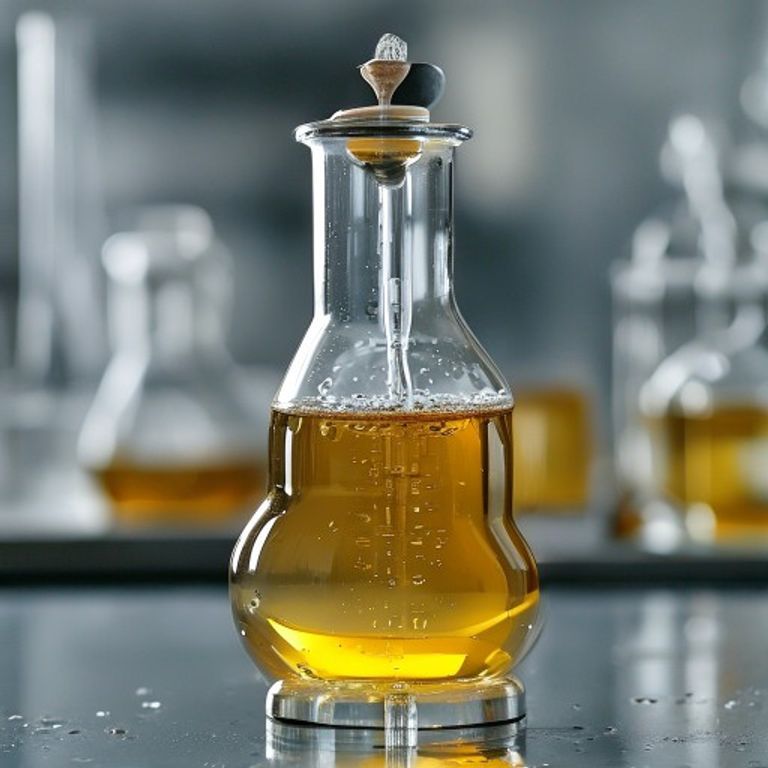
Unveiling the Separatory Funnel: Your Guide to Liquid-Liquid Extraction Mastery

Halo, para penjelajah dunia sains! Pernahkah kita melihat dua cairan yang menolak untuk bercampur, seperti minyak dan air? Nah, di dunia kimia, memisahkan dua “tetangga” yang tidak akur ini adalah tugas yang sering kita hadapi. Di sinilah sebuah alat laboratorium yang sangat keren dan cerdas bernama separatory funnel datang sebagai pahlawan. Mungkin kita pernah melihatnya di film-film sains atau di meja lab sekolah. Bentuknya yang unik dengan keran di bagian bawah memang menarik perhatian.
Sebagai seseorang yang sering berkutat di laboratorium, saya bisa bilang bahwa separatory funnel adalah salah satu alat yang sangat fundamental, terutama dalam teknik pemisahan. Kita akan bahas tuntas semuanya, mulai dari apa itu separatory funnel, bagaimana cara kerjanya yang ajaib, hingga tips praktis untuk menggunakannya di lab kita sendiri. Siap untuk menyelami dunia pemisahan cairan yang presisi?
What is a Separatory Funnel? A Simple Introduction
Imagine a pear-shaped glass container with a stopper at the top and a stopcock (a fancy word for a tap) at the bottom. That, my friends, is essentially a separatory funnel. Made typically from borosilicate glass (because it’s tough and resists chemicals), it’s designed specifically for separating immiscible liquids. “Immiscible” just means they don’t mix, like oil and water. Think of it like a referee in a boxing match, keeping two fighters (liquids) in separate corners.
This piece of essential laboratory glassware is a staple in any organic chemistry lab. Its unique design allows us to carefully drain the denser liquid from the bottom, leaving the lighter liquid behind. Pretty neat, right?
How Does a Separatory Funnel Work? The Magic of Density Separation
The core principle behind the separatory funnel is simple yet elegant: density separation. When we mix two immiscible liquids, they will naturally form distinct layers. The liquid with the higher density will sink to the bottom, while the liquid with the lower density will float on top. It’s just like how oil floats on water!
This process is often part of what we call liquid-liquid extraction. In this technique, we use a solvent to selectively pull out (extract) a specific compound from a mixture. For example, if we have a compound dissolved in water, we might add an organic solvent that doesn’t mix with water but can dissolve our desired compound. After shaking them together (gently!), the compound moves into the organic layer. Then, we use the separatory funnel to separate these two layers, effectively isolating our compound. It’s a bit like fishing, but for molecules!
Step-by-Step Guide: How to Use a Separatory Funnel for Extraction
Using a separatory funnel extraction procedure might seem intimidating at first, but with a little practice, it becomes second nature. Here’s a basic guide on how to use a separatory funnel:
- Secure the Funnel: First things first, mount your separatory funnel securely on a ring stand using an appropriate clamp. Make sure it’s upright and stable.
- Add Your Mixture: Pour the liquid mixture you want to separate into the funnel. Don’t fill it more than two-thirds full to leave room for mixing.
- Add the Extraction Solvent: Now, add your chosen extraction solvent. This is the liquid that will help pull out your desired compound.
- Insert the Stopper: Place the glass stopper firmly into the top of the funnel.
- Mix Gently (and Vent!): This is crucial. Carefully lift the separatory funnel from the clamp, holding the stopper firmly with one hand and the stopcock with the other. Invert the funnel and gently shake it for a few seconds. Immediately, point the stem away from anyone and open the stopcock to “vent” any built-up pressure. Repeat this gentle shaking and venting several times. Why vent? Because volatile solvents can build up pressure, and we don’t want a “pop!”
- Allow Layers to Separate: Return the funnel to the stand and let it sit undisturbed. You’ll see the two immiscible liquids gradually separate into distinct layers. This might take a few minutes.
- Drain the Bottom Layer: Once the layers are clearly separated, remove the stopper from the top. Then, slowly open the stopcock to drain the bottom (denser) layer into a clean beaker or flask. Be careful not to let any of the top layer drain out.
- Collect the Top Layer: Once the bottom layer is completely drained, close the stopcock. You can then pour the top (lighter) layer out through the top opening of the funnel into another clean container. This helps prevent contamination with any remaining droplets from the stopcock.
Beyond the Lab Bench: Separatory Funnel Uses in Chemistry (and More!)
While we mostly think of separatory funnel uses in chemistry labs, its application extends to various fields. Its primary role is in purification and isolation processes. We use it to:
- Extract compounds: As discussed with liquid-liquid extraction.
- Wash organic solutions: Removing impurities like acids, bases, or water.
- Prepare natural products: For example, in the process of creating a separatory funnel for essential oils. Here, we might extract aromatic compounds from plant material using a solvent, then separate the oil-rich layer.
- Environmental analysis: Separating pollutants from water samples.
Keeping It Clean: Cleaning Your Separatory Funnel
Just like any piece of laboratory glassware, proper cleaning is essential for accurate results and longevity. Cleaning a separatory funnel is straightforward:
- Rinse Immediately: After use, immediately rinse the funnel with the appropriate solvent (usually one that dissolves the residues) and then with tap water.
- Use Detergent and Brush: Use a specialized brush and laboratory detergent to scrub the inside thoroughly. Pay attention to the narrow stem and around the stopcock.
- Rinse with Distilled Water: Finish by rinsing several times with distilled or deionized water to remove any detergent residue.
- Air Dry: Invert the funnel and let it air dry in a drying rack. Ensure the stopcock is open during drying to allow air circulation.
Kesimpulan
Dari pembahasan kita, jelas bahwa separatory funnel bukan sekadar tabung kaca biasa. Ini adalah alat yang fundamental, sebuah jembatan yang memungkinkan kita memisahkan dan memurnikan berbagai zat dalam dunia kimia. Dengan memahami prinsip kerjanya, how to use a separatory funnel dengan benar, dan bahkan cara membersihkannya, kita telah membuka pintu ke berbagai eksperimen dan penemuan yang menarik. Jadi, lain kali kita melihat dua cairan yang tak mau bersatu, kita tahu siapa pahlawan yang bisa membantu mereka ‘berpisah’ dengan damai!
FAQ (Frequently Asked Questions)
Q1: Why do I need to vent the separatory funnel during shaking?
A1: Venting is crucial because mixing two liquids, especially organic solvents, can generate gas or pressure build-up inside the sealed funnel. If not vented, this pressure can cause the stopper to pop out or even shatter the funnel, which can be dangerous.
Q2: How do I know which layer is which in the separatory funnel?
A2: The best way is to know the densities of the liquids you are using. The denser liquid will always be on the bottom. If you’re unsure, you can add a small drop of water (if water is one of your layers); if it mixes with the top layer, then the top layer is water. If it sinks through the top layer to join the bottom layer, then the bottom layer is water.
Q3: Can I use a plastic separatory funnel?
A3: While plastic separatory funnels exist, glass ones are generally preferred in chemistry labs, especially for organic chemistry. Glass is less reactive with a wider range of chemicals and allows for better observation of the distinct layers. Plastic might be suitable for less demanding applications or when glass breakage is a major concern.
Q4: What if the layers don’t separate clearly?
A4: Sometimes, an “emulsion” (a stable mixture of tiny droplets of one liquid in another) can form, preventing clear separation. You can try several things:
- Let it sit longer.
- Gently swirl the funnel.
- Add a small amount of brine (saturated NaCl solution) to increase the density difference.
- Filter the emulsion if practical.