


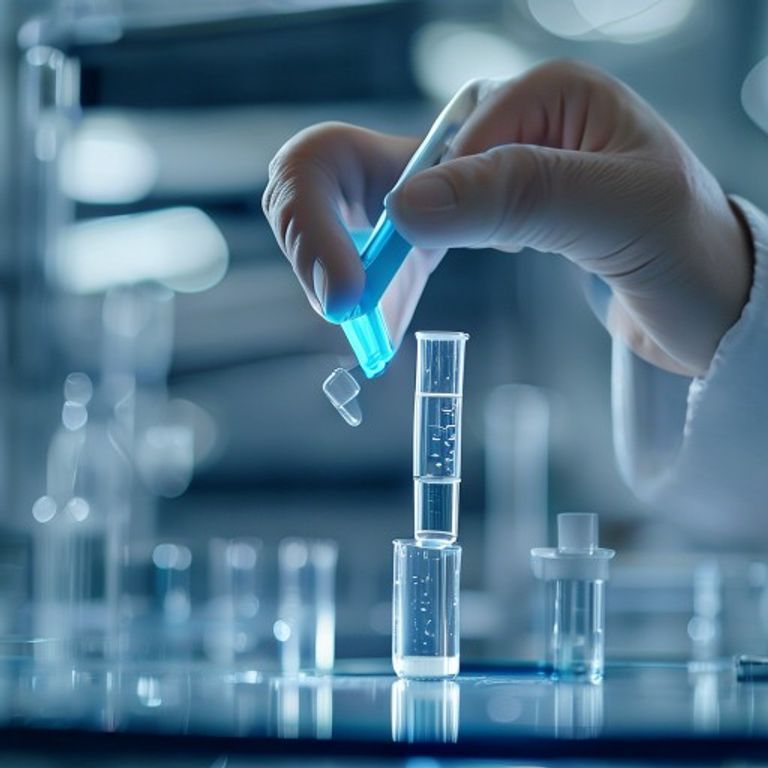
Unlocking Lab Accuracy: A Deep Dive into Essential Pipette Uses

Ever walked into a science lab and wondered about all those fancy glass and plastic tubes? Well, if you’ve seen thin, precise instruments for handling liquids, chances are you’ve encountered a pipette! For us scientists, students, or anyone curious about how things work in a lab, understanding pipette uses is absolutely fundamental. These seemingly simple tools are the unsung heroes behind countless scientific discoveries and everyday analyses. Think of them like super-accurate liquid measuring spoons, but for microscopic amounts.
Here at the lab, we rely on pipettes every single day. They are indispensable for moving specific, precise volumes of liquid from one container to another. Without them, our experiments would be a chaotic mess of inaccurate measurements, leading to unreliable results. So, let’s explore why pipettes are so crucial and what makes them such vital laboratory equipment.
What Exactly Are Pipettes For? The Core Purpose in the Lab
At its heart, the main purpose of a pipette in scientific experiments is precise liquid measurement and transfer. Imagine you need to mix exactly 10 milliliters (ml) of Solution A with 5 ml of Solution B to get a specific reaction. You can’t just eyeball it, right? That’s where pipettes step in. They allow us to achieve extreme accuracy, minimizing errors that could otherwise invalidate an entire experiment.
When people ask, “what are pipettes used for in a lab?”, the answer almost always revolves around precision. Whether it’s preparing samples for analysis, diluting solutions, or running complex biochemical assays, pipettes ensure that the right amount of liquid is exactly where it needs to be. This level of control is critical in fields like chemistry, biology, medicine, and environmental science, where even tiny variations can have significant consequences.
The Different Flavors of Pipettes: Types and Their Functions
Just like we have different types of spoons for different culinary tasks, there are various types of pipettes, each designed for specific functions and levels of precision. Let’s break them down:
Volumetric (or Transfer) Pipettes
These are the champions of accuracy for fixed volumes. They have a single mark on the stem, indicating one specific volume (e.g., 10 ml, 25 ml). When we need to transfer a precise, set amount of liquid, like when we’re preparing standard solutions, volumetric pipettes are our go-to. They are incredibly accurate, often to four significant figures!
Graduated (or Measuring) Pipettes
Think of these as the more versatile, but slightly less precise, siblings of volumetric pipettes. They have markings along their length, much like a ruler, allowing us to measure and transfer various volumes, not just a single fixed one. While great for general lab work where some flexibility is needed, they aren’t as accurate as their volumetric counterparts.
Micropipettes
Now, these are the superstars for working with tiny, tiny volumes – we’re talking microliters (µl)! What is a micropipette used for in biology and molecular labs? Absolutely everything! From DNA sequencing to PCR, cell culture, and enzyme assays, micropipettes are essential. They typically come with adjustable volume settings, allowing us to dial in the exact microliter amount needed. They usually require disposable tips to prevent cross-contamination, which is super important when dealing with delicate biological samples.
Pasteur Pipettes
These are the simplest type, often just a long glass or plastic tube with a narrow tip, usually without any volume markings. We use them for non-volumetric transfers, like moving small amounts of liquid where precision isn’t paramount, such as adding drops of a reagent or transferring supernatant after centrifugation. They’re basically glorified droppers!
Mastering the Art of Pipetting: How to Use a Pipette Accurately
Knowing the different types is one thing, but knowing how to use a pipette accurately is an art form that takes practice. Here are some quick tips we always emphasize:
- Choose the Right Pipette: Always select the pipette best suited for the volume you need to transfer and the required level of precision. Don’t use a Pasteur pipette when a micropipette is needed!
- Conditioning the Tip (for Micropipettes): Before aspirating the actual sample, we often pre-wet the tip by drawing up and dispensing air (or even a bit of the liquid) a couple of times. This helps improve accuracy, especially for viscous liquids.
- Vertical Aspiration: Always hold the pipette vertically when drawing up liquid. This helps ensure consistent and accurate liquid measurement.
- Proper Dispensing: When dispensing, touch the tip against the side of the receiving vessel to allow for complete liquid release. For micropipettes, use the second stop of the plunger to expel any remaining liquid.
- Avoid Bubbles: Bubbles mean inaccurate volume! Make sure the tip is always submerged sufficiently and that you draw liquid smoothly.
- Temperature Matters: Liquid volume can change with temperature. For highly sensitive experiments, we make sure both the pipette and the liquid are at the same room temperature.
Where Do Pipettes Shine? Practical Applications
Pipettes are everywhere! In a chemistry lab, we might use them to precisely measure reagents for a titration. In a biology lab, they are crucial for preparing cell cultures or extracting DNA. Hospitals use them for blood tests and diagnostic assays. Pharmaceutical companies rely on them for quality control and drug formulation. Basically, any field requiring accurate handling of small liquid volumes will have pipettes as their trusted companions. They truly are the workhorses for precise volumetric transfer.
Conclusion
So, there you have it! Pipettes are far more than just simple tubes. They are sophisticated scientific instruments that empower us to conduct experiments with precision and confidence. From basic school labs to cutting-edge research facilities, understanding pipette uses and mastering their operation is a core skill for anyone working with liquids. They are essential for ensuring the reliability and reproducibility of our scientific endeavors, pushing the boundaries of discovery one perfectly measured drop at a time.
FAQs About Pipette Uses
Q1: What is the main purpose of a pipette in scientific experiments?
The main purpose is to accurately and precisely transfer specific volumes of liquid, ensuring reliable and reproducible experimental results.
Q2: Why are micropipettes so important in biology labs?
Micropipettes are crucial in biology because they allow for the accurate transfer of very small volumes (microliters) of precious biological samples, which is essential for techniques like DNA amplification, cell culture, and protein analysis.
Q3: What’s the difference between a volumetric pipette and a graduated pipette?
A volumetric pipette is designed for extremely high accuracy when transferring a single, fixed volume. A graduated pipette has markings for various volumes, offering more flexibility but with slightly less precision compared to a volumetric pipette.
Q4: How can I ensure I’m using a pipette accurately?
To use a pipette accurately, always choose the correct type for your needs, hold it vertically during aspiration, ensure no air bubbles are drawn in, dispense completely by touching the tip to the vessel, and practice smooth, consistent movements.
Q5: Can I reuse pipette tips?
For most scientific applications, especially with micropipettes, tips are designed for single use to prevent cross-contamination and maintain accuracy. Reusing tips can lead to inaccurate results and contaminate samples.







