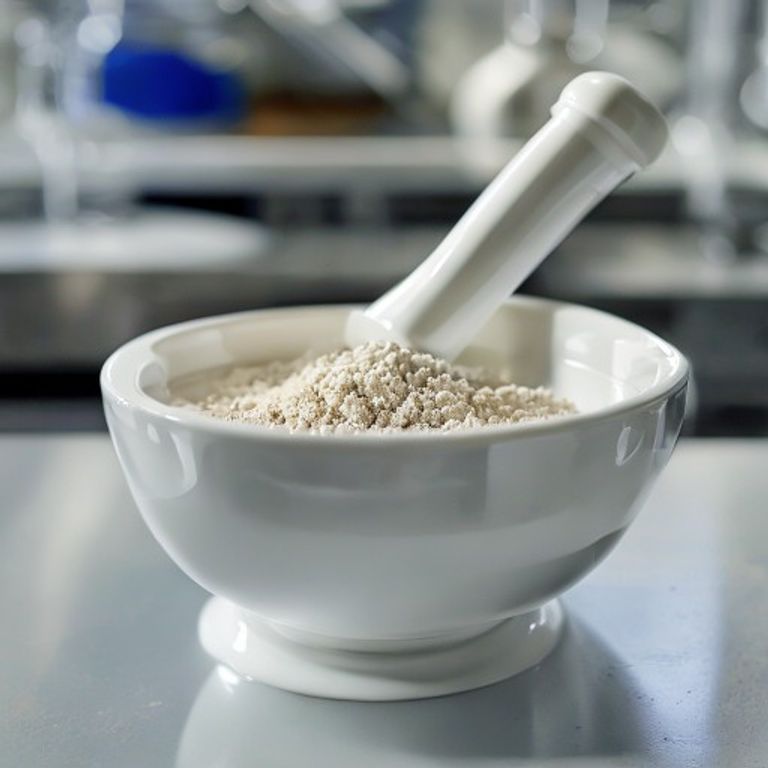
Votre guide essentiel sur le mortar et le pestle de laboratoire : Préparation manuelle de l'échantillon

Dans le monde animé de la recherche scientifique, où les machines de haute technologie occupent souvent une place centrale, il est facile d'ignorer les outils humbles mais indispensables qui forment l'épine dorsale de nombreuses expériences. Un tel outil, avec une histoire aussi longtemps que la science elle-même, est le mortier et pilon de laboratoire. Vous pourriez le considérer comme un simple outil de rectification, mais croyez-moi, son rôle dans la préparation d'échantillon précise et efficace n'est rien de moins que crucial. Aujourd'hui, nous allons plonger profondément dans la raison pour laquelle cet équipement de laboratoire apparemment basique reste si vital, comment l'utiliser comme un pro, et sa surprenante polyvalence.
Qu'est-ce qu'un Mortar et un Pestle de laboratoire exactement?
Dans son cœur, mortier et pilon de laboratoire est un dispositif utilisé pour écraser, broyer et mélanger des substances solides. Pensez-y comme un bol très spécialisé et massant de votre cuisine, mais conçu pour la précision et l'inertie chimique. Le «mortar» est le bol lourd, généralement fabriqué à partir de matériaux comme la porcelaine, la céramique, l'agate, ou même le verre, choisis pour leur dureté et leur résistance aux réactions chimiques. Le «peste» est l'outil en forme de club utilisé pour broyer et écraser le matériau contre la surface intérieure du mortier. Ensemble, ils forment un duo dynamique pour Réduction de la taille des particules.
Pourquoi l'utilisons-nous encore? Le but de la recherche scientifique
À une époque de pulvérisateurs automatisés et d'homogénéisateurs sophistiqués, vous pourriez vous demander, "Pourquoi se soucier de broyage manuel?" C'est là que le vrai Objet du mortier et du pilon dans la recherche scientifique Il brille. Souvent, nous traitons des échantillons trop petits pour les machines automatisées, ou des échantillons sensibles à la chaleur, où les meuleuses mécaniques pourraient générer trop de chaleur, ce qui pourrait modifier la composition chimique de l'échantillon. La commande manuelle offerte par un mortier et un pilon permet un broyage précis, doux et contrôlé. Il est parfait pour obtenir des poudres très fines, un processus connu comme trituration, qui est critique pour de nombreuses techniques d'analyse. Essentiellement, il fournit une méthode rentable et hautement contrôlée pour Préparation de l'échantillon.
Maîtriser le grind: Comment utiliser le mortier et le peste dans un laboratoire
Apprendre Comment utiliser le mortier et le pilon dans un laboratoire efficacement est plus d'art que la science, mais avec quelques conseils, vous serez un maître en peu de temps. Voici un guide simple pour broyage d'échantillons avec mortier et pilon en laboratoire:
- Démarrer Petit : Commencez toujours par une petite quantité d'échantillon. La surcharge du mortier rend le broyage inefficace et peut provoquer des déversements.
- Arrêtez ! Si votre échantillon est composé de morceaux plus grands, écrasez-les doucement en petits fragments d'abord. Utilisez la pointe de pestle pour la rupture initiale.
- Grind et rotate : Maintenez fermement le pilon et appliquez une pression vers le bas tout en le tournant dans un mouvement circulaire contre la surface intérieure du mortier. Le but est de ciser et d'écraser les particules entre les deux surfaces.
- Gratter et recueillir : Utilisation périodique spatule de laboratoire pour racler tout matériau s'accrochant aux côtés du mortier ou du pilon, le repoussant au centre pour le broyage ultérieur. Cela assure une taille égale des particules.
- Assurer l'uniformité : Continuer le broyage jusqu'à ce que la taille des particules souhaitées et l'homogénéité soient atteintes. Plus les particules sont fines, plus la dissolution et l'extraction sont importantes.
- La propreté est la clé: Nettoyez toujours votre mortier et pestez soigneusement avant et après chaque utilisation afin de prévenir la contamination croisée.
Beyond Grinding: Principales applications dans le laboratoire
Les demandes de mortier et pilon de laboratoire s'étend bien au-delà du simple broyage. En chimie, par exemple, il est indispensable pour créer des mélanges homogènes de réactifs solides. Ceci est crucial pour les réactions à l'état solide où un contact intime entre les réactifs est nécessaire pour que la réaction se déroule efficacement. Pensez à préparer des échantillons pour l'analyse :
- Chimie analytique: Pour obtenir des résultats précis dans des techniques comme la diffraction des rayons X, la spectroscopie ou la chromatographie, les échantillons doivent être finement broyés et complètement homogènes. C'est un excellent exemple de laboratoire des techniques manuelles de préparation des échantillons les professionnels emploient quotidiennement.
- Produits pharmaceutiques: Dans la formulation des médicaments, les ingrédients pharmaceutiques actifs (IPA) doivent souvent être triturés avec des excipients pour obtenir un mélange uniforme, assurant une posologie uniforme.
- Sciences des matériaux : Les chercheurs broyent souvent les matières premières à une poudre fine avant de les presser dans des granulés pour le frittage ou l'analyse.
- Biologie : Les tissus végétaux ou les petits tissus animaux peuvent être broyés pour perturber les parois cellulaires et extraire des composants intracellulaires aux fins d'analyse biochimique.
Ces Application du mortier et du pilon en chimie et d'autres domaines scientifiques soulignent sa pertinence durable en tant que fondement matériel de meulage de laboratoire, contribuant à techniques d'homogénéisation.
Choisir le bon outil : matière matérielle
Tout comme vous ne feriez pas utiliser un marteau pour conduire une vis, choisir le bon mortier et le bon matériau de pilonnage est vital. La porcelaine est un choix général commun, adapté à la plupart des échantillons en raison de sa dureté et de son inerte chimique. Pour les matériaux plus durs, un mortier et un pilon d'agate sont préférables car l'agate est extrêmement dure et lisse, réduisant ainsi la contamination des échantillons. Les mortiers en verre sont excellents lorsque l'on travaille avec des substances qui peuvent tacher ou réagir avec des matériaux poreux, offrant une inspection visuelle et un nettoyage faciles. Connaître les propriétés de votre échantillon nous aide à choisir le meilleur outil pour le travail.
Conclusion
Voilà. Les mortier et pilon de laboratoire, loin d'être une relique dépassée, est un témoignage de la puissance durable d'un design simple et efficace en science. De la précision Préparation de l'échantillon pour faciliter les réactions chimiques cruciales, sa polyvalence et sa fiabilité en font un outil irremplaçable dans pratiquement tous les laboratoires du monde. La prochaine fois que vous serez au labo, prenez un moment pour apprécier cette puissante invraisemblable – c'est vraiment un héros méconnu, nous aidant à débloquer les secrets cachés dans nos échantillons, un grind à la fois.
Foire aux questions (FAQ)
Q1 : Quel est le but principal d'un mortier et d'un pilon dans un laboratoire?
A1 : Son but principal est d'écraser, de broyer et de mélanger des substances solides pour obtenir une granulométrie plus fine et une plus grande homogénéité. Cela est crucial pour de nombreuses procédures analytiques et préparatoires.
Q2: Puis-je utiliser un mortier de cuisine et un pilon pour les travaux de laboratoire?
A2: Il est généralement pas recommandé. Les mortiers et les pestes de laboratoire sont fabriqués à partir de matériaux spécifiques (comme la porcelaine non vitrée, l'agate) qui sont chimiquement inertes, non poreux (ou spécialement conçus pour une contamination minimale) et suffisamment durables pour un travail scientifique précis. Les versions en cuisine peuvent lessiver les contaminants ou ne pas être assez robustes.
Q3: Comment nettoyer un mortier et un pilon de laboratoire?
A3: Le nettoyage implique généralement le lavage avec du savon et de l'eau, suivi par un rinçage approfondi. Pour les résidus tenaces, on peut utiliser un solvant approprié pour la substance moulue. Assurez-vous toujours qu'il sèche complètement avant la réutilisation, surtout si vous travaillez avec des matériaux sensibles à l'humidité.
Q4: Quel matériau est le meilleur pour le broyage d'échantillons très durs?
A4: Pour les échantillons très durs, un mortier et un pilon d'agate sont généralement le meilleur choix en raison de l'extrême dureté de l'agate, qui résiste à l'abrasion et minimise la contamination de l'échantillon avec du matériel de mortier.
Q5: Est-il possible de broyer des liquides ou semi-solides avec un mortier et un pilon?
R5: Bien que principalement pour les solides, un mortier et un pilon peuvent être utilisés pour mélanger des liquides dans des poudres pour former une pâte ou une suspension. Certains semi-solides plus doux peuvent également être triturés, mais leur fonction principale est la réduction de la taille des particules solides.