Débloquer le doux secret : un guide pratique pour l'extraction de glycérine-eau avec un entonnoir séparateur

Bonjour, amis passionnés de science et curieux d'esprit ! Vous êtes-vous déjà demandé comment séparer deux liquides qui semblent parfaitement heureux de se mélanger ? Aujourd'hui, nous plongeons dans un processus fascinant: utilisant un entonnoir de séparation pour l'extraction de l'eau glycérine. Alors que la glycérine et l'eau sont les meilleurs potes, ce qui signifie qu'ils se mélangent complètement, il y a là une astuce intelligente dans notre manche appelée extraction liquide-liquide qui nous permet de les séparer. Ce n'est pas seulement un truc de laboratoire cool; cette méthode est super importante dans diverses industries, des produits pharmaceutiques à la production de biodiesel, où la glycérine pure est une marchandise précieuse.
Si vous cherchez à comprendre comment séparer la glycérine de l'eau à l'aide d'équipements de laboratoire, vous êtes venu au bon endroit. Nous allons explorer les principes qui sous-tendent cette séparation, quels outils vous aurez besoin, et marcher à travers une procédure détaillée pour l'utilisation de l'entonnoir de séparation d'eau de glycérine, en vous assurant que vous obtenez des solutions pratiques à chaque étape du chemin.
Comprendre les bases : pourquoi la séparation est tricky (et comment nous la résolvons)
La glycérine, également connue sous le nom de glycérol, est un composé très polyvalent et utile. C'est un liquide épais et sucré qui est très soluble dans l'eau parce que les deux molécules sont polaires – elles aiment former des liens entre elles. Cette miscibilité parfaite est précisément pourquoi nous ne pouvons pas simplement les verser dans un entonnoir de séparation et nous attendons qu'ils se séparent magiquement comme l'huile et l'eau. Tu te souviens de la démo classique de l'huile et de l'eau qui refuse de se mélanger ? Cela parce qu'ils ont des polarités et des densités très différentes, formant ce que nous appelons des couches immiscibles.
Pour notre mélange glycérine-eau, pour obtenir la séparation à l'aide d'un entonnoir séparé, nous avons besoin d'un troisième composant : un solvant. Ce processus s'appelle extraction par solvant de glycérine en solution aqueuse. Le solvant choisi doit répondre à quelques critères cruciaux :
- Il doit être immiscible avec l'eau (ce qui signifie qu'il ne se mélange pas avec l'eau).
- Elle doit dissout préférentiellement la glycérine (ou parfois l'eau elle-même, laissant la glycérine derrière elle).
- Il devrait avoir une densité significativement différente de la couche d'eau afin que des couches distinctes puissent se former.
Pensez-y comme ça : imaginez que vous ayez une foule de gens (molécules d'eau) et quelques amis (molécules de glycérine) mélangés. Si vous voulez sortir vos amis, vous avez besoin de quelqu'un d'autre (le solvant) qui interagit seulement avec vos amis et puis les enlève, tout en ne vous ennuyant pas avec le reste de la foule. C'est essentiellement ce que nous faisons ici, en tirant parti des différences de densité pour créer une phase aqueuse et une phase organique.
Votre trousse à outils essentielle : ce dont vous aurez besoin
Avant de commencer, ramassons notre matériel. Sécurité d'abord, toujours porter vos lunettes de sécurité!
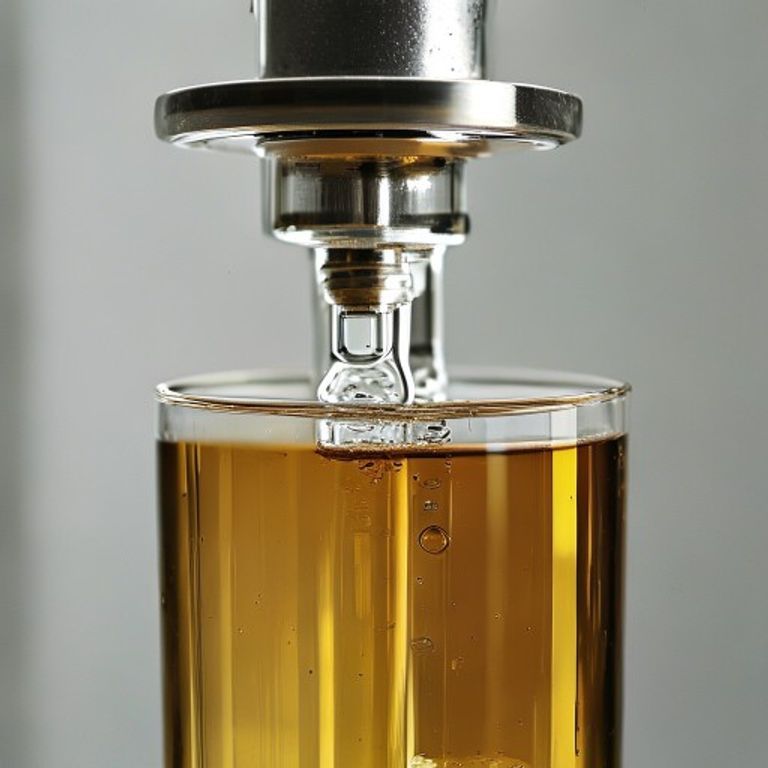
- Entonnoir de séparation: La star de notre spectacle ! Habituellement en forme de poire avec un bouchon en bas et un bouchon en haut.
- Support et pince anticorrosion: Pour tenir solidement l'entonnoir de séparation.
- Flèches de béchers ou d'erlenmeyer: Pour recueillir les couches séparées et maintenir les solutions initiales.
- Mélange glycérine-eau : Notre matériel de départ.
- Solvant d'extraction: C'est la clé. Les solvants courants pour l'extraction de la glycérine peuvent comprendre des éthers spécifiques ou d'autres solvants organiques qui sont immiscibles avec l'eau et ont une bonne affinité pour la glycérine. Dans certains cas, le «salting out» (en ajoutant beaucoup de sel à l'eau pour réduire la solubilité de la glycérine dans la phase aqueuse) est fait d'abord pour faciliter la séparation.
- Tige d'étirement: Useful for mixing your solutions before transferring them to the funnel, or for gentle stirring in the funnel (if not shaking).
- Wash Bottle with Distilled Water: For rinsing.
Guide étape par étape : Comment utiliser un entonnoir de séparation pour la séparation de l'eau de glycérine
Ready to get hands-on? Here’s your detailed procedure for glycerin water separation funnel technique:
- Set Up Your Equipment: Securely clamp the separating funnel to the retort stand. Make sure the stopcock is closed and a collection beaker is placed directly underneath it.
- Ajouter votre mélange : Carefully pour your glycerin-water mixture into the separating funnel. Don’t fill it more than about two-thirds full to leave room for the solvent and for shaking.
- Introduce the Solvent: Now, add your chosen extraction solvent to the funnel. You should see two distinct layers starting to form almost immediately if the solvent is truly immiscible with water.
- Mix ‘Em Up! (The Extraction Phase): Put the stopper firmly on the top of the separating funnel. Now, carefully lift the funnel from the stand (keeping the stopper firmly in place) and gently invert it a few times. The goal is to maximize contact between the two liquid phases so the glycerin can move from the water into the solvent.
- Important Safety Tip: Always “vent” the funnel frequently by inverting it and opening the stopcock to release any pressure buildup. Some solvents can produce vapors that build pressure quickly.
- Shake gently, not vigorously, to avoid forming an emulsion (a stubborn mixture of tiny droplets that won’t separate easily).
- Let Them Settle: Place the separating funnel back on the stand. Remove the stopper and allow the layers to settle completely. This might take a few minutes or longer, depending on the liquids involved and how vigorously you mixed them. You’ll observe the immiscible layers clearly separating due to their density differences. The denser liquid will be at the bottom. For many organic solvents, the aqueous phase (water layer) is denser and will be on the bottom, but always verify this!
- Égoutter la couche inférieure : Slowly open the stopcock and allow the bottom layer to drain into a clean, labeled beaker. As the interface (the line between the two layers) approaches the stopcock, slow down the flow.
- Recueillir le calque supérieur : Once the bottom layer is completely drained, close the stopcock. The top layer (containing our extracted glycerin, now dissolved in the solvent) can then be poured out from the top opening of the funnel into another clean, labeled beaker. This helps prevent contamination from any drops of the bottom layer still clinging to the stopcock.
- Repeat for Purity (Optional but Recommended): For better extraction efficiency and purity, you can repeat the extraction process one or two more times with fresh portions of the solvent. Combine all the solvent layers containing the extracted glycerin.
Au-delà de l'entonnoir: Qu'en est-il de la suite?
So, you’ve successfully used your separating funnel for glycerin water extraction – great job! But our glycerin is still mixed with the solvent. The next step would typically involve removing the solvent, often through distillation or evaporation, to isolate the pure glycerin. This part of the process requires different equipment and techniques, ensuring you get that sweet, pure product you’re after.
If you encounter troubleshooting glycerin water phase separation, like emulsion formation or layers not separating well, try letting it sit longer, gently swirling, or even adding a small amount of concentrated salt solution to the aqueous phase (if not already done) to encourage separation. Sometimes, a tiny bit of a different solvent can also help break an emulsion.
Conclusion
Separating glycerin from water using a separating funnel is a fantastic example of applying basic chemical principles – like solubility, density differences, and immiscible layers – to solve a practical problem. It demonstrates the power of liquid-liquid extraction as a separation technique. While it requires a bit of patience and attention to detail, mastering this skill opens up a world of possibilities in the lab and beyond. So, next time you encounter a seemingly inseparable mixture, remember the humble separating funnel and its role in unlocking pure substances!
FAQ
Q: Why can’t I just distill the glycerin-water mixture to separate them?
A: While distillation can separate liquids with different boiling points, glycerin has a very high boiling point (290 °C) and can decompose at such high temperatures. Additionally, it forms a strong hydrogen bond with water, making simple distillation inefficient for complete separation without vacuum. Solvent extraction is often a gentler and more effective method for recovering glycerin.
Q: What kind of solvent should I use for solvent extraction of glycerin from aqueous solution?
A: The best solvent depends on the specific conditions and desired purity. Common choices might include n-butanol, isopropyl alcohol (under specific conditions, as its miscibility with water can change with concentration and temperature), or ethers like diethyl ether. However, many of these are flammable, so always handle with extreme care and proper ventilation. Research the partition coefficient of glycerin in various solvent systems for optimal results.
Q: How do I know which layer is which in the separating funnel?
A: Typically, the denser liquid will settle at the bottom. You can look up the densities of water, glycerin, and your chosen solvent. As a quick check, you can add a small drop of water to the funnel; if it mixes with the top layer, then the top layer is the aqueous phase. If it sinks through the top layer and joins the bottom layer, then the bottom layer is the aqueous phase.
Q: What if my layers don’t separate easily after shaking?
A: This is a common issue, often called emulsion formation. Try letting the funnel sit undisturbed for a longer period (even overnight). Sometimes, gently swirling the funnel or carefully adding a small amount of saturated brine (saltwater) can help break the emulsion. In some cases, light centrifugation might be necessary, but this moves beyond basic separating funnel use.