


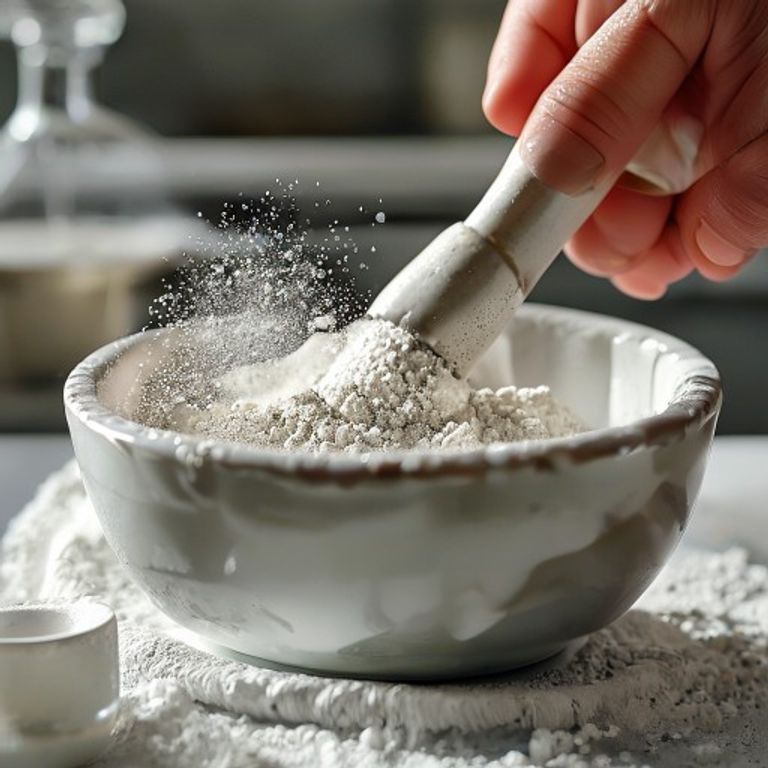
Déverrouillage de la science derrière le mortier et le pestle : comment optimiser l'efficacité du broyage au laboratoire

Présentation
When I first stepped into a chemistry lab, the humble mortar and pestle looked like a relic from an ancient kitchen. Yet, after a few rounds of trituration, I realized this simple tool is a powerhouse of physics and material science. In this article, we’ll dive into the scientific principles that make a mortar and pestle work, explore how it reduces particle size, and share practical tips to boost grinding efficiency for any laboratory application.
The Core Scientific Principles
1. Comminution and Energy Transfer
Comminution is the fancy term for breaking down solid particles into smaller pieces. In a mortar and pestle, the kinetic energy from our hands is transferred to the pestle, which then applies shear and impact forces on the sample. Think of it like a mini hammer‑and‑anvil system where the mortar acts as the anvil and the pestle delivers the blows.
2. Friction‑Driven Pulverization
As the pestle moves, it creates friction against the walls of the mortar. This friction generates heat and, more importantly, micro‑cracks that propagate through the material. The combination of shear (sliding) and compressive stress shatters particles into finer powders.
3. Material Science of the Mortar and Pestle
The choice of material—ceramic, glass, stainless steel, or agate—directly influences grinding efficiency:
- Hardness: Harder surfaces (e.g., agate) reduce wear and prevent contamination.
- Surface Roughness: A slightly rough interior increases friction, enhancing particle breakage.
- Thermal Conductivity: Low conductivity (ceramic) helps keep the sample cool, avoiding heat‑induced degradation.
How Mortar and Pestle Reduce Particle Size
Step‑by‑Step Trituration Process
To achieve consistent particle size, follow this practical workflow:
- Pre‑wetting (optional): Add a few drops of solvent to create a paste; this reduces agglomeration.
- Initial Grinding: Apply a circular motion to break down larger chunks.
- Press‑and‑Scrape: Press the pestle down and scrape the sides to ensure all material contacts the mortar wall.
- Re‑grind: Repeat until the desired fineness is reached, checking with a microscope or sieve.
Particle Size Distribution (PSD) Control
By adjusting grinding time and force, you can tailor the PSD. Longer, gentle grinding yields a narrow distribution, while short, vigorous strokes produce a broader range. Remember, over‑grinding can cause heat‑sensitive compounds to degrade.
Optimizing Grinding Efficiency
Conseils pratiques
- Choisissez la bonne taille : Match the mortar diameter to the sample volume—too large and you waste energy, too small and you risk spillage.
- Use the Correct Motion: A combination of circular and up‑and‑down strokes maximizes both shear and impact forces.
- Control Temperature: Pause periodically to let the sample cool, or use a chilled mortar for heat‑sensitive reagents.
- Prevent Contamination: Reserve a dedicated mortar for each type of material (e.g., one for organic, another for inorganic).
Linking to Other Lab Tools
Understanding how a mortar and pestle fits into the broader toolkit is essential. For instance, selecting the right glassware for solution preparation can affect downstream grinding. Our Flasque volumétrique vs Flasque Erlenmeyer guide helps you choose vessels that minimize sample loss before grinding.
Similarly, proper handling of accessories like a porte-tube d'essai ensures safety while you transfer powders between containers.
Physics Behind the Action
The grinding process can be described by the Hertzian contact theory, which predicts the stress distribution at the point where the pestle contacts the sample. Higher contact stress leads to faster fracture. Additionally, the Reynolds number for the micro‑flow of particles inside the mortar is extremely low, meaning the motion is dominated by viscous forces rather than inertia—perfect for controlled, fine grinding.
Conclusion
Even though it looks simple, the mortar and pestle is a sophisticated piece of laboratory equipment that leverages basic principles of physics, material science, and engineering. By understanding the science—comminution, friction, and material properties—you can dramatically improve grinding efficiency, achieve consistent particle sizes, and protect sensitive compounds from heat damage. Next time you reach for that classic tool, remember you’re actually applying centuries‑old science in a modern lab.
FAQ
Q: How do I know when the sample is ground enough?
A: Check the particle size with a sieve or microscope. If the powder passes through a 100 µm sieve and feels uniformly smooth, you’re likely done.
Q: Can I use a metal mortar for organic samples?
A: It’s possible, but metal can catalyze unwanted reactions. Agate or ceramic mortars are safer for most organics.
Q: Does the shape of the pestle matter?
A: Yes. A conical pestle concentrates force at the tip, ideal for hard samples, while a rounded pestle provides gentle, even grinding for delicate materials.
Q: How often should I clean the mortar and pestle?
A: After each different compound to avoid cross‑contamination. A quick rinse with solvent followed by drying is usually sufficient.
Q: Is there a way to reduce heat generation?
A: Grind in short bursts, use a chilled mortar, or add a small amount of solvent to dissipate heat.







