Comprendre le principe de séparation de l'entonnoir : des étapes simples pour l'extraction efficace de liquides

Présentation
Lorsque nous rencontrons pour la première fois un entonnoir séparé au labo, il peut ressembler à une théière avec un bouchon. Mais sous cette conception simple se trouve un principe puissant qui nous permet de diviser un mélange de liquides immiscibles en deux couches propres. Dans cet article, je vais vous guider à travers comment fonctionne un entonnoir séparé, la physique derrière la différence de densité, et quelques conseils pratiques pour éviter les pièges communs comme la formation d'émulsion.
Comment fonctionne un entonnoir de séparation?
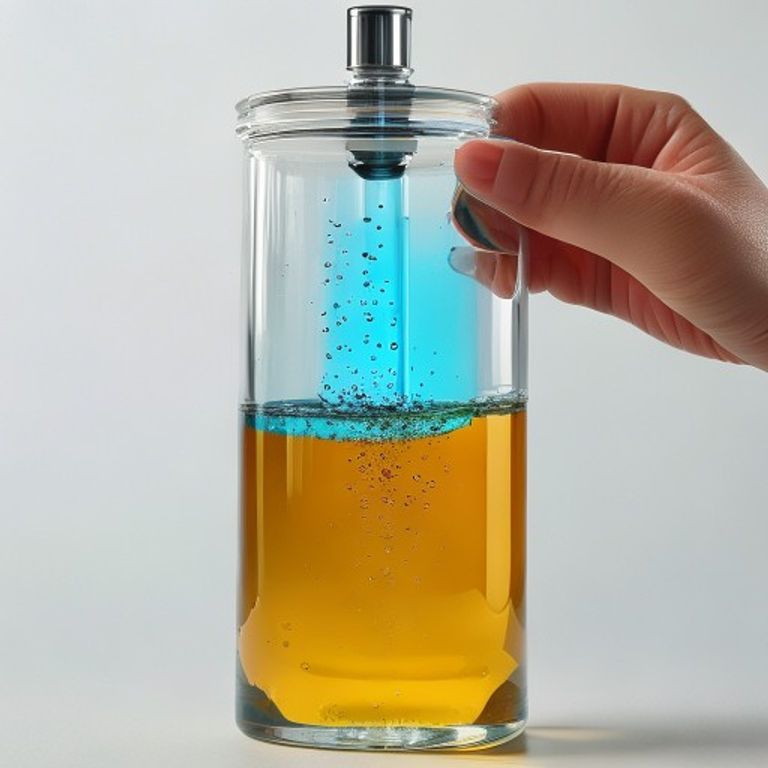
L'idée de base est simple: vous ajoutez deux liquides qui ne mélangent pas (penser de l'huile et de l'eau), secouez-les pour permettre le transfert des solutés, laissez le mélange se déposer, puis ouvrez le bouchon pour drainer la couche inférieure tandis que la couche supérieure reste dans l'entonnoir.
- Étape 1 – Chargement : Verser les liquides combinés dans l'entonnoir.
- Étape 2 – Mélange : Inversez doucement l'entonnoir plusieurs fois. Cela crée une grande zone interfaciale où le soluté peut se déplacer d'une phase à l'autre.
- Étape 3 – Réglage : Placez l'entonnoir debout et attendez que les deux phases se séparent en fonction de la densité.
- Étape 4 – Drainage : Ouvrez le bouchon pour libérer la couche plus dense (fond) dans une fiole réceptrice.
- Étape 5 – Clôture : Fermez le bouchon lorsque l'interface atteint l'extrémité du bouchon, puis versez la couche plus légère (en haut).
Principe de l'extraction liquid‐liquide à l'aide d'un entonnoir de séparation
La science qui sous-tend ce processus est essentiellement séparation de densité. Chaque liquide a une densité caractéristique (masse par unité de volume). Lorsque deux liquides immiscibles sont réunis, celui à haute densité coule, tandis que celui plus léger flotte. C'est la même raison pour laquelle l'huile flotte sur l'eau.
Au-delà de la densité, l'efficacité d'extraction dépend de la coefficient de partage du soluté entre les deux phases. Un soluté qui préfère la phase organique se déplacera dans la couche d'huile pendant le tremblement, tandis qu'un soluté qui préfère la phase aqueuse restera dans l'eau.
Conseils pratiques pour maximiser votre extraction
1. Choisissez la bonne paire de solvants
Choisir des solvants présentant un écart de densité important (par exemple, eau 1 g cm−3 vs dichlorométhane 1,33 g cm−3). Cela rend l'interface de calque nette et facile à voir.
2. Évitez la formation d'émulsion
Un tremblement vigoureux peut créer de petites gouttelettes qui restent suspendues, formant une émulsion. Pour le briser :
- Agiter doucement, puis tourner.
- Ajouter une petite quantité de saumure ou une solution salée pour "sauter" la phase d'eau.
- Laissez le mélange reposer plus longtemps; la gravité finira par fusionner les gouttelettes.
3. Utiliser correctement le stopcock
Commencez toujours le robinet avec l'entonnoir à l'envers. Cela empêche la couche plus légère de se déverser avant que vous ayez une chance de fermer le robinet.
4. Vérifier l'interface
Lorsque les deux couches sont clairement distinctes, vous verrez une ligne nette. Si la ligne est floue, donnez-lui plus de temps ou ajoutez un agent de séchage pour enlever l'eau résiduelle.
5. Sécurité d ' abord
Portez des gants et des lunettes, surtout lorsque vous travaillez avec des solvants organiques volatils. Gardez l'entonnoir éventé en ouvrant brièvement le bouchon supérieur après chaque drainage pour libérer toute pression accumulée.
Exemple du monde réel
Imagine you need to extract caffeine from coffee grounds using dichloromethane. After mixing the coffee extract (water) with dichloromethane, you shake the separating funnel, let it settle, and then drain the denser organic layer containing the caffeine. The remaining aqueous layer can be discarded or further processed. This simple operation illustrates the principle behind separating immiscible liquids in everyday lab work.
Connexion à d'autres éléments essentiels du laboratoire
If you’re curious about how other basic lab tools complement the separating funnel, check out this understanding the core test tube function. Knowing the right container for each step can streamline your workflow and reduce cross‑contamination.
Conclusion
The separating funnel is more than a piece of glass; it’s a practical application of density differences and partition chemistry. By mastering the simple steps—loading, gentle mixing, allowing phases to settle, and careful draining—you can achieve clean separations with minimal waste. Remember to choose solvents wisely, avoid emulsions, and always prioritize safety.
FAQ
Quel est le principe de la séparation des liquides immiscibles?
It relies on density differences: the liquid with higher density settles at the bottom, while the lighter one stays on top, allowing easy separation.
Comment briser une émulsion dans un entonnoir séparé ?
Gentle swirling, adding a small amount of brine, or allowing the mixture to stand longer can help coalesce droplets and restore clear layers.
Puis-je utiliser une paire de solvants?
Choose solvents that are immiscible and have a noticeable density gap. Common pairs include water/hexane, water/dichloromethane, or water/ethyl acetate.
Pourquoi je devrais évacuer l'entonnoir ?
Ventilation releases built‑up pressure from volatile solvents, preventing accidental splashes when you open the stopcock.
Un entonnoir séparé convient-il aux extractions à grande échelle?
For larger volumes, you might switch to a continuous extractor or a larger separatory funnel, but the underlying principle remains the same.