

Le Guide ultime pour tester les tubes: Utilisations, Conseils de chauffage, et comment ils se comparent aux béchers

Présentation
When we step into a chemistry lab, the first thing that catches our eye is often a row of slender glass cylinders – the humble test tube. Despite its simple appearance, this piece of verrerie de laboratoire is a powerhouse for a wide range of experiments. In this article, I’ll walk you through the most common uses of test tubes, why they’re perfect for heating, how they stack up against beakers, and even a quick guide on culturing bacteria. Let’s dive in and see why this little tube deserves a spot on every lab bench.
Qu'est-ce qu'un tube d'essai?
A test tube is a short, cylindrical piece of glass (or sometimes plastic) with a rounded bottom and an open top. It’s designed for holding, mixing, and heating small volumes of liquids – usually up to a few hundred milliliters. Because of its thin walls and narrow shape, a test tube heats quickly and evenly, making it ideal for many analytical procedures.
Common Uses of Test Tubes in Chemistry Labs
Here are the top ways we use test tubes on a daily basis:
- Préparation de l'échantillon: Mixing reagents, dissolving solids, or performing small‑scale reactions.
- Analyse qualitative: Spot tests for ions, precipitation reactions, and flame tests.
- Heat‑sensitive reactions: Performing reactions that require rapid temperature changes.
- Stockage & #160;: Temporary holding of liquids before transfer to larger vessels.
If you’re curious about other glass tools that complement the test tube, check out the Bécher article for a deeper dive into its role.
Why Test Tubes Are Ideal for Heating
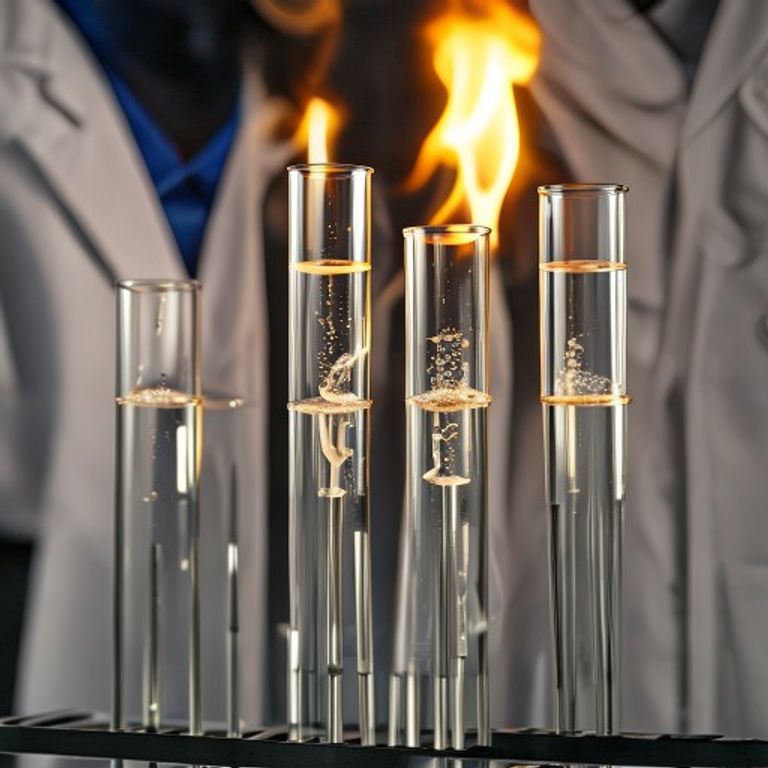
Heating a sample in a test tube feels a lot like using a miniature oven. The thin glass wall transfers heat from a flame or a hot plate directly to the liquid, reducing the time it takes to reach the target temperature. Here’s why we love heating in test tubes:
- Fast heat transfer: The small volume and thin walls mean the whole sample warms up quickly.
- Sécurité: The rounded bottom prevents the tube from tipping over, and the open top allows vapors to escape.
- Contrôle: You can easily move the tube in and out of the flame using a trépied de laboratoire for precise temperature control.
Just remember to use a heat‑resistant holder or a tripod to avoid direct contact between the flame and the glass, which could cause cracking.
Test Tube vs. Beaker: When to Choose Which
Both test tubes and beakers are staples of any lab, but they serve different purposes. Here’s a quick comparison to help you decide:
| Aspect | Éprouvette | Bécher |
|---|---|---|
| Volume Capacity | Up to ~250 mL | From 100 mL to several liters |
| Heat Transfer | Rapid, ideal for small samples | Slower, better for bulk heating |
| Mélange | Swirl or use a glass rod | Stir with a magnetic stir bar or spatula |
| Convenience | Easy to handle one‑by‑one | Good for simultaneous multiple reactions |
If you need to run many small reactions side‑by‑side, test tubes win. For larger volumes or when you need a flat surface for stirring, reach for a beaker.
How to Use a Test Tube for Culturing Bacteria
Beyond chemistry, test tubes are also handy in microbiology. Here’s a simple step‑by‑step guide to culturing bacteria in a test tube:
- Prepare the medium: Dissolve the appropriate broth in distilled water, sterilize by autoclaving, and let it cool to ~45 °C.
- Inoculate: Using a sterile loop, transfer a small amount of bacterial colony into the broth.
- Sceau: Loosely cap the tube to allow gas exchange while preventing contamination.
- Incubate: Place the tube in an incubator at the organism’s optimal temperature (usually 30‑37 °C).
- Monitor growth: Turbidity indicates bacterial proliferation; you can measure optical density with a spectrophotometer.
For handling delicate glass tools during microbiology work, the glass rods article offers great tips on using them without breaking the sterility.
Tips for Safe Handling and Maintenance
- Inspect tubes for cracks before each use – a tiny flaw can become a catastrophic break under heat.
- Never heat an empty test tube; the sudden temperature change can cause shattering.
- Use a tube holder or tripod to keep your hands away from the flame.
- After use, clean with detergent, rinse thoroughly, and dry upside‑down on a rack.
- If you work with corrosive acids, consider using plastic or quartz tubes instead of regular glass.
Conclusion
Test tubes might look simple, but they are incredibly versatile tools for sample preparation, heating, and even microbiology. By understanding their strengths—and knowing when a beaker or another piece of glassware is more appropriate—you can streamline your experiments and keep safety front‑and‑center. So next time you reach for a test tube, remember it’s not just a tube; it’s a compact laboratory powerhouse.
FAQ
- Can I use a test tube for high‑temperature reactions? Yes, but only up to the glass’s softening point (around 500 °C). For very high temperatures, switch to quartz.
- Quelle est la meilleure façon d'étiqueter un tube d'essai? Use waterproof lab‑grade markers or adhesive labels that can withstand heat.
- Are plastic test tubes safe for organic solvents? Generally no – many organic solvents can dissolve or weaken plastic. Stick to glass for those.
- How do I sterilize a test tube for microbiology? Autoclave at 121 °C for 15‑20 minutes or use a dry heat oven at 160 °C for 2 hours.
- Can I use a test tube as a makeshift pipette? Not recommended. Use proper pipettes for accurate volume measurement.