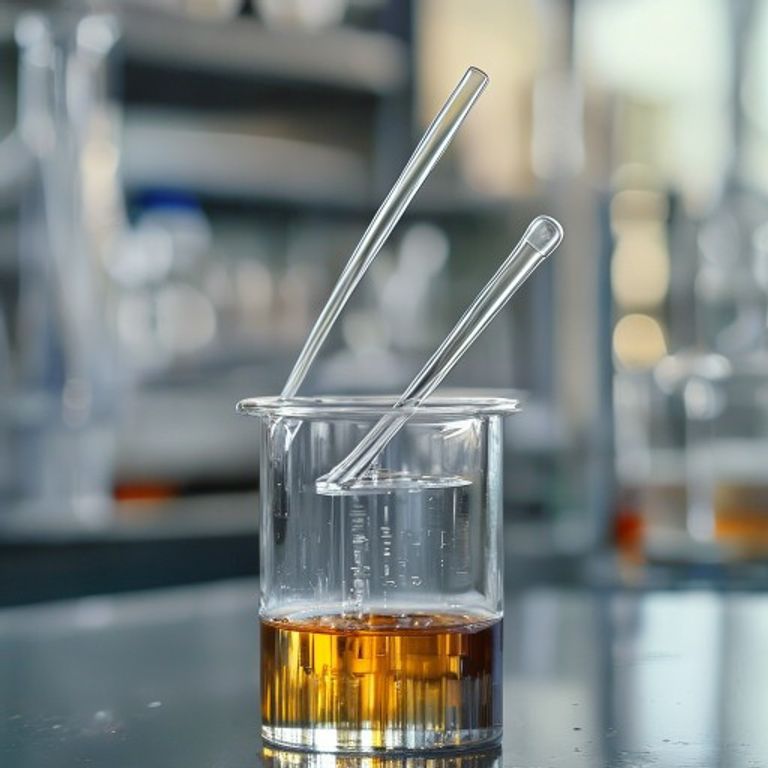
The Humble Stirring Rod: Votre guide essentiel de cet outil de laboratoire indispensable

Nous pensons souvent à des machines sophistiquées quand nous imaginons un laboratoire moderne. Pourtant, certains des équipements de laboratoire les plus fondamentaux et les plus vitaux sont étonnamment simples. Parmi eux, la tige de brassage se distingue comme un héros méconnu. Cette pièce sans prétention de verrerie scientifique est cruciale pour de nombreuses expériences et procédures, en faisant une pierre angulaire de toute boîte à outils en chimie. Mais qu'est-ce qu'une tige de brassage, et pourquoi est-ce si indispensable? Laissez plonger et explorez tout ce que vous devez savoir sur cette puissante mini merveille, de sa fonction de base à ses diverses applications.
Qu'est-ce qu'un stirring Rod utilisé? Les fonctions de base
A son cœur, une tige de brassage est conçue pour faciliter la solutions de mélange dans un conteneur. Pensez-y comme un mini fouet pour vos produits chimiques ! Ce simple acte d'agitation permet d'assurer l'homogénéité, permettant aux réactifs d'entrer en contact plus efficacement ou de se dissoudre complètement. Sans mélange approprié, nos expériences pourraient donner des résultats incohérents ou même échouer entièrement. Il ne s'agit pas seulement de tourbillonner, cependant, une tige de brassage a plusieurs autres rôles critiques dans le laboratoire.
Plus que des solutions de mélange : au-delà du bécher
Alors solutions de mélange est son travail principal, une tige de brassage est un vrai multitâche. Voici quelques autres façons d'utiliser cet outil de chimie polyvalent:
- Dissolution des solides: Lorsque l'on ajoute une substance solide à un solvant, l'agitation accélère considérablement le processus de dissolution en exposant constamment le solvant frais à la surface du soluté.
- Liquides de décantation: Vous avez déjà eu besoin de verser soigneusement un liquide sur un sédiment solide sans le déranger? Une tige agitée peut servir de guide, ralentissant l'écoulement du liquide vers le bas de la tige et empêchant les turbulences.
- Solutions de chauffage : Lors du chauffage d'une solution dans un bécher ou une fiole, le brassage doux contribue à répartir uniformément la chaleur dans l'ensemble du liquide, à prévenir la surchauffe localisée et à assurer une réaction plus contrôlée.
- Précipitations de prélèvement : Parfois, les précipités tenaces s'accrochent aux côtés de la verrerie. Une tige d'agitation peut les racler doucement, en veillant à ce que tous les réactifs soient pris en compte.
- Initiation des réactions : Dans certains cas, une perturbation physique causée par l'agitation peut aider à déclencher une réaction ou une cristallisation.
Types de barres de stirring de laboratoire: Matières
Tout comme nous choisissons différents types de cuillères pour différentes tâches culinaires, le matériau d'une tige de brassage est choisi en fonction de l'application spécifique du laboratoire. Le matériau le plus commun que vous rencontrerez est le verre, mais d'autres matériaux ont leur place aussi.
Le choix classique : caractéristiques de la tige en verre
Lorsque vous imaginez une tige de brassage, les chances sont que vous envisagez un verre. Et pour une bonne raison ! Les barres de brassage en verre sont sans doute les plus omniprésentes verrerie scientifique dans les laboratoires de chimie. Voilà pourquoi :
- Inerte chimique: Fabriquées en verre borosilicate (comme Pyrex), ces tiges sont très résistantes à la plupart des produits chimiques, acides et bases. Cela signifie qu'ils n'ont pas réagi avec nos solutions, assurant la pureté de nos expériences.
- Résistance à la chaleur: Le verre borosilicaté peut résister à des changements de température importants sans fissuration, ce qui le rend sûr pour une utilisation dans des solutions chauffées.
- Surface lisse: La surface lisse non poreuse est facile à nettoyer et empêche la contamination croisée entre les expériences.
- Transparence : Être clair, nous pouvons facilement observer ce qui se passe dans notre solution sans que la tige masque la vue.
- Rentabilité : Ils sont relativement peu coûteux et facilement disponibles.
Beyond Glass: Autres matériaux et utilisations de tige de stirring
Alors que le verre domine, d'autres matériaux offrent des avantages spécifiques pour des tâches particulières:
- Tiges de stirring en plastique: Souvent fabriqués à partir de polypropylène ou de Teflon, ils sont excellents pour les situations où le verre peut être trop fragile ou où une option non-rayure est nécessaire. Ils sont également utiles pour les produits chimiques moins agressifs ou le mélange général où l'inertie n'est pas aussi critique. Ils sont généralement jetables, réduisant les problèmes de nettoyage dans certains milieux.
- Tiges à étrier en métal: L'acier inoxydable ou d'autres alliages sont utilisés lorsqu'une durabilité extrême ou des propriétés thermiques spécifiques sont requises. Elles sont moins courantes en chimie générale, mais peuvent être trouvées dans des applications industrielles ou spécialisées où la résistance aux températures élevées ou au stress physique est primordiale.
Comment décrire une tige de stirring pour la classe scientifique : La simplicité est la clé
Si vous expliquez une tige de brassage à quelqu'un de nouveau à la science, gardez-la simple et relatable. Nous pouvons le décrire comme suit:
« Une tige de brassage est une mince pièce cylindrique de verre solide (ou de plastique) que nous utilisons dans un laboratoire scientifique. Son travail principal est de mélanger des liquides et des solides dans des béchers ou des tubes d'essai, comme en remuant le sucre dans le thé. Il nous aide à tout distribuer uniformément et peut également être utilisé pour guider les liquides lors du déversement. C'est un outil très simple mais incroyablement important pour faire des expériences en toute sécurité et efficacement ! »
S'occuper de vos étriers: Longévité dans le laboratoire
Bien qu'ils semblent robustes, le soin approprié de vos tiges de brassage assure leur longévité et empêche la contamination. Nettoyez toujours soigneusement votre tige de brassage immédiatement après l'utilisation avec des solvants appropriés, puis rincez à l'eau distillée. Rangez-les dans un endroit sûr où ils n'ont pas fait rouler le banc ou se faire ébrécher. Il convient de jeter les tiges en verre concassé ou craqué, car elles présentent un risque pour la sécurité.
Conclusion: Un petit outil avec un grand impact
La tige de brassage pourrait ne pas être le morceau le plus flash matériel de laboratoire, mais son rôle dans le laboratoire est indéniablement critique. De s'assurer parfaitement solutions de mélange pour aider à la décantation précise, cet outil simple témoigne du fait que souvent, les instruments les plus élémentaires sont les plus indispensables. Alors, la prochaine fois que vous serez au labo, prenez un moment pour apprécier cet humble héros – cela rend vraiment nos efforts scientifiques possibles!
Foire aux questions (FAQ) À propos de Stirring Rods
Q: Puis-je utiliser autre chose si je n'ai pas une tige de brassage?
R: Dans une pincée, pour un mélange très occasionnel, une cuillère propre ou un appareil similaire pourrait fonctionner. Cependant, pour des travaux de laboratoire précis, une tige de brassage dédiée (surtout le verre) est essentielle en raison de son inerte chimique, de sa résistance à la chaleur et de sa facilité de nettoyage. Ne jamais utiliser quelque chose qui pourrait réagir avec vos produits chimiques ou contaminer votre solution.
Q: Combien de temps devrait être une tige de brassage?
R: Les tiges de stirring sont de différentes longueurs, généralement de 15 à 30 cm (6 à 12 pouces). La longueur idéale dépend de la taille du conteneur avec lequel vous travaillez. Il devrait être assez long pour atteindre le fond de votre bécher ou de votre flacon confortablement, permettant un brassage efficace sans risquer votre main entrant dans la solution.
Q: Est-ce que toutes les tiges en verre sont les mêmes?
R: Alors que la plupart des barres de verre de laboratoire sont faites de verre borosilicaté pour ses propriétés supérieures, il peut y avoir des variations de diamètre et de longueur. Choisissez toujours celui qui convient à votre tâche spécifique et verrerie.
Q: Pourquoi est-ce qu'il s'agit d'une "stirring rod" et non d'une "mixing rod"?
R : Les deux termes décrivent efficacement sa fonction. La « tige de stirring » est le terme plus traditionnel et largement accepté dans les contextes scientifiques, probablement en raison de l'action spécifique de « stirring » qui implique un mouvement de rotation pour combiner des substances, plutôt que simplement un « mélange » général.