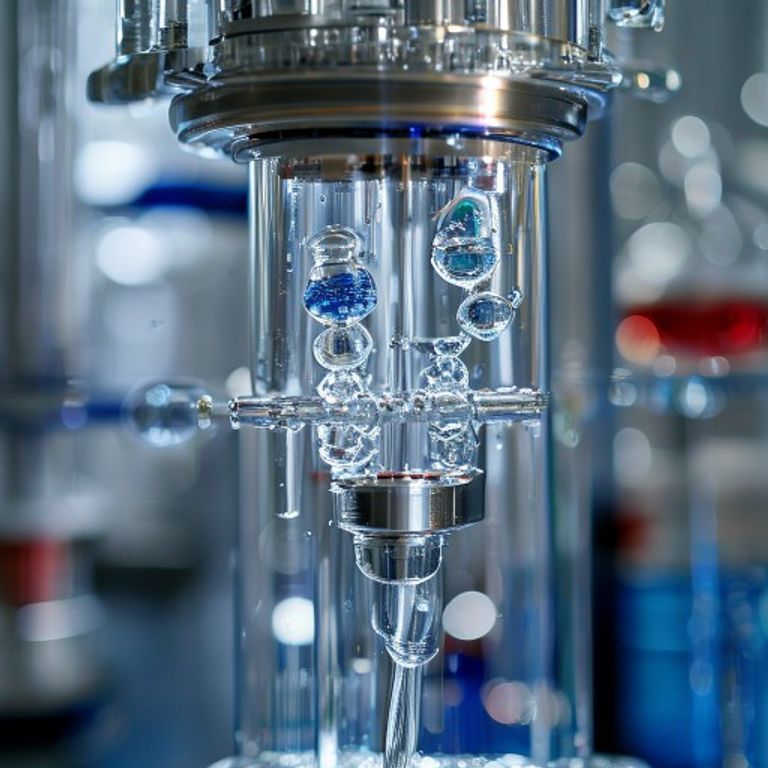
La science du froid : Explorer les utilisations du condenseur de laboratoire indispensable

Dans le monde animé de la chimie, où les réactions bullent et les solvants dansent, certains équipements travaillent inlassablement en coulisses, souvent inaperçus mais absolument essentiels. Un tel héros méconnu est le condenseur de laboratoire. Si vous vous êtes jamais demandé comment nous récupérons des solvants précieux, purifier les composés avec précision, ou assurer des réactions sans perdre de précieux réactifs à l'évaporation, alors vous êtes sur le point de découvrir le monde fascinant de utilisation de condenseur de laboratoire.
Pour nous, chimistes, ou toute personne curieuse de ce qui se passe dans un laboratoire, comprendre la fonction d'un condenseur est la clé pour débloquer de nombreux processus fondamentaux. Il n'est pas seulement un tube de verre fantaisie ; il est un composant crucial qui transforme les vapeurs chaudes en liquides frais, le rendant indispensable pour un large éventail d'applications chimiques. Laissez plonger et voir ce qui rend ces appareils apparemment simples si incroyablement vital.
Le concept de base : comment fonctionne un condenseur ?
Imaginez un verre froid de thé glacé par une chaude journée d'été. Qu'arrive-t-il à l'extérieur du verre ? Elle est couverte de minuscules gouttelettes d'eau, non ? C'est de la condensation ! Un condenseur de laboratoire fonctionne sur le même principe, mais de manière beaucoup plus contrôlée et efficace. Son travail principal est de refroidir les vapeurs chaudes, les retransformant en forme liquide. Ce processus s'appelle condensation vapeur.
La plupart des condenseurs se composent de deux tubes de verre concentriques. Le tube intérieur est l'endroit où la vapeur chaude se déplace, tandis que la veste extérieure a une entrée et une sortie pour un fluide de refroidissement, généralement de l'eau. L'eau froide s'écoule dans la veste, créant une surface froide qui entoure le tube intérieur. Lorsque la vapeur chaude d'un flacon de réaction ou de distillation pénètre dans le tube intérieur, elle entre en contact avec ces parois froides. La chaleur de la vapeur est transférée dans l'eau de refroidissement, ce qui entraîne la perte d'énergie et la condensation dans les gouttelettes liquides. Ces gouttelettes s'écoulent ensuite vers le bas, soit dans la fiole d'origine, soit dans un récipient de collecte.
C'est une merveille de la physique simple appliquée brillamment, assurant que les produits chimiques précieux ne sont pas perdus dans l'atmosphère et que nos expériences peuvent fonctionner efficacement et en toute sécurité.
Les chevaux de travail du laboratoire : applications clés des condenseurs
Les condensateurs ne sont pas seulement pour une tâche spécifique ; ils ont une gamme polyvalente de applications spécifiques des condensateurs de laboratoire. Laissez explorer certains des plus communs et importants.
1. Distillation: Purifier les liquides avec précision
Lorsque nous devons séparer différents liquides d'un mélange, ou purifier un liquide des impuretés non volatiles, la distillation est notre technique d'entrée. Ici, le condenseur joue un rôle étoilé. Le mélange est chauffé, ce qui provoque la vaporisation du composant le plus volatil. Cette vapeur monte ensuite dans le condenseur.
C'est là que se produit la magie : la vapeur chaude rencontre les surfaces froides à l'intérieur du condenseur, se transformant en un liquide pur. Ce liquide purifié coule ensuite dans une fiole réceptrice. Ce processus est crucial dans de nombreuses industries, depuis la production de solvants à haute pureté jusqu'au raffinage du pétrole. Comprendre Comment fonctionne un condenseur de reflux dans la distillation est fondamental pour parvenir à une bonne séparation.
2. Reflux: L'art de l'exploitation contrôlée
De nombreuses réactions chimiques nécessitent un chauffage prolongé. Cependant, si nous échauffions juste une fiole ouverte, notre précieux solvant serait simplement bouillir, et la réaction serait sèche. C'est là qu'intervient le reflux, et le condenseur est absolument critique.
Dans une configuration de reflux, le condenseur est monté verticalement sur le dessus de la fiole de réaction. Au fur et à mesure que le solvant bouillit et se transforme en vapeur, il monte dans le condenseur. La veste d'eau froide refroidit immédiatement la vapeur, la condensant en liquide. Ce liquide retourne ensuite directement dans la fiole de réaction. Ce cycle continu d'ébullition et de condensation nous permet de chauffer une réaction pendant des heures, même des jours, sans perdre de solvant. Il s'agit d'un système à boucle fermée, ce qui fait de la but du condenseur Liebig dans la synthèse organique extrêmement précieux pour maximiser les rendements et assurer la sécurité. C'est une chose courante. Réaction de reflux L'installation.
3. Récupération de solvants: Chimie durable en action
Dans les laboratoires universitaires et industriels, de grandes quantités de solvants sont utilisées quotidiennement. L'élimination de ces solvants après utilisation peut être coûteuse et dommageable pour l'environnement. C'est là que les condensateurs deviennent les champions de la durabilité à travers Récupération du solvant.
En utilisant la distillation avec un condenseur, nous pouvons purifier les solvants utilisés ou contaminés, les rendant aptes à la réutilisation. Cela réduit non seulement les déchets et notre empreinte environnementale, mais aussi les coûts opérationnels. C'est un gagnant-gagnant pour la planète et le budget.
Choisir votre arme : différents types de condenseurs de laboratoire
Tout comme vous n'utiliseriez pas un marteau pour chaque tâche, il n'y a pas un condenseur universel pour chaque application. Différentes conceptions offrent une efficacité variable et conviennent à des besoins spécifiques. Laissez voir différents types de condenseurs de laboratoire et leurs fonctions.
Le condenseur Liebig: Simple et efficace
C'est probablement le type le plus commun que vous allez rencontrer. Il dispose d'un tube intérieur droit entouré d'une veste extérieure droite. Il est excellent pour la distillation simple et le reflux lorsque les vapeurs ne sont pas trop volatiles. Pensez-y comme le cheval de travail, fiable et simple.
Le condenseur Allihn : plus de surface, plus de puissance
Aussi connu sous le nom de condenseur d'ampoules, l'allihn comporte une série d'ampoules ou d'indentations dans le tube intérieur. Ces ampoules augmentent considérablement la surface disponible pour la condensation, le rendant plus efficace qu'un condenseur Liebig, surtout pour les solvants plus volatils ou les temps de reflux plus longs.
Le condenseur Graham: la solution spirale
Le condenseur Graham a un tube intérieur en spirale dans une veste plus grande. Cette conception offre une surface de condensation encore plus grande que celle de l'allihn. Il est très efficace et souvent utilisé pour la condensation rapide ou avec des composés très volatils.
Au-delà des grands trois : autres condenseurs spécialisés
Tandis que Liebig, Allihn et Graham sont les plus communs, d'autres comme le condenseur Dimroth (double spirale) ou les condenseurs à doigts froids (immergés dans le sentier de vapeur) offrent des avantages spécialisés pour des applications particulières, impliquant souvent des températures très basses ou des travaux à petite échelle.
Maîtriser l'installation : un refroidissement adéquat du condenseur pour des résultats optimaux
Avoir le condenseur droit n'est que la moitié de la bataille; la mettre en place correctement est crucial pour la sécurité et l'efficacité. Il s'agit notamment de comprendre installation appropriée pour le refroidissement du condenseur dans les laboratoires de chimie.
D'abord et avant tout, assurez-vous que l'eau de refroidissement s'écoule dans l'entrée inférieure du condenseur et sortez par la sortie supérieure. Pourquoi ? Parce que le remplissage du condenseur du fond assure que la veste reste complètement pleine d'eau froide, maximisant la surface de refroidissement. Si vous coulez de l'eau du haut, les poches d'air peuvent se former, réduisant l'efficacité.
Aussi, fixez votre condenseur fermement avec des pinces à un support de retort, surtout quand il fait partie d'un plus grand Appareils de distillation. Fuite verrerie chimique peut entraîner des accidents. Utiliser les tubes appropriés pour l'entrée et l'extérieur de l'eau, en veillant à ce que les raccords soient serrés pour prévenir les fuites. Un débit constant, pas trop rapide, d'eau de refroidissement est généralement suffisant.
Conclusion
De la purification des huiles essentielles à la synthèse des molécules de médicaments complexes, les condenseurs de laboratoire sont vraiment les chevaux de travail silencieux du laboratoire de chimie. Ils empêchent les déchets, améliorent la sécurité et permettent à d'innombrables processus chimiques critiques de se produire efficacement. La compréhension de leur mécanisme, de leurs usages variés et de leur configuration nous permet de mener des expériences avec plus de confiance et de précision.
Ainsi, la prochaine fois que vous verrez un de ces élégants morceaux de verre, rappelez-vous la science fraîche qui se passe à l'intérieur – transformer les vapeurs chaudes en liquides précieux, une goutte à la fois. Ils pourraient ne pas prendre les projecteurs, mais sans eux, le monde de la chimie moderne ne serait tout simplement pas le même.
Foire aux questions (FAQ)
Q1 : Pourquoi est-il important que l'eau de refroidissement s'écoule dans l'entrée inférieure du condenseur ?
A1: Il est crucial parce que l'eau qui coule du fond assure que la veste entière se remplit d'eau de refroidissement, maximisant la surface de contact avec le tube intérieur et optimisant ainsi l'efficacité de refroidissement. Si l'eau coule du haut, les poches d'air peuvent facilement se former, réduisant ainsi la zone de refroidissement efficace.
Q2: Puis-je utiliser l'eau du robinet comme fluide de refroidissement pour les condenseurs?
A2: Oui, l'eau du robinet est le fluide de refroidissement le plus courant et généralement approprié pour la plupart des applications de condenseur de laboratoire. Dans certains cas spécialisés nécessitant des températures très basses, un refroidisseur circulant un liquide de refroidissement spécifique (comme un mélange antigel) peut être utilisé.
Q3: Quelle est la différence principale entre un condenseur Liebig et un condenseur Allihn?
A3: La principale différence réside dans leur conception de tube intérieur. Un condenseur Liebig a un tube intérieur droit, offrant une surface de refroidissement de base. Un condenseur Allihn, par contre, a une série d'indentations bulbeuses dans son tube intérieur, ce qui augmente significativement la surface de condensation, le rendant plus efficace pour les solvants volatils ou les temps de reflux plus longs.
Q4: Comment savoir si mon condenseur fonctionne efficacement pendant la distillation ou le reflux?
A4: Vous le saurez fonctionne efficacement si vous observez une condensation cohérente. En reflux, vous devriez voir un "anneau de reflux" clair où la vapeur se condense et s'égoutte dans la fiole. Dans le cas de la distillation, le liquide doit couler régulièrement de la sortie du condenseur dans votre flacon récepteur. Le verre à l'extérieur du condenseur doit se sentir frais au toucher.