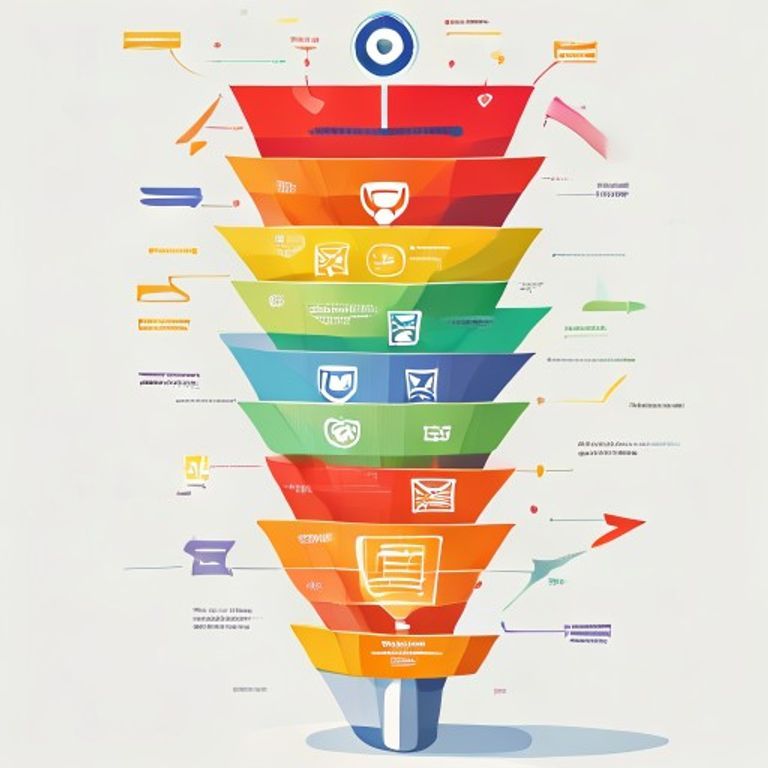
Maîtriser votre entonnoir marketing : le guide essentiel pour convertir les étrangers en clients fidèles

Have you ever wondered why some businesses seem to effortlessly attract new customers, while others struggle? The secret often lies in something called a marketing funnel. Think of it like a real funnel in your kitchen – wide at the top to catch a lot, and narrow at the bottom where only the refined liquid comes out. In business, our “liquid” is customers, and we want to guide as many as possible from just knowing about us to becoming loyal fans.
Today, we’re going to dive deep into what a marketing funnel is, why it’s absolutely crucial for any business, and how you can build one that actually works to turn curious visitors into paying customers. It’s a journey from initial awareness all the way to advocacy, and understanding each step can dramatically transform your marketing efforts.
What is the Purpose of a Marketing Funnel?
At its core, the purpose of a marketing funnel is to visualize and manage the journey a potential customer takes with your brand. It helps us understand where people are in their buying process, so we can give them the right information and nudge them forward. Imagine trying to sell a complex software solution to someone who’s never even heard of your company – it’s like asking them to marry you on the first date! The marketing funnel prevents this by breaking down the interaction into manageable, logical steps.
We use it to identify bottlenecks, optimize conversion points, and ultimately, grow our revenue predictably. Without a funnel, our marketing efforts can feel like throwing darts in the dark, hoping something sticks. With it, we gain clarity and control over the voyage client, making our strategies much more effective.
Understanding the Stages: How Does a Sales Funnel Work?
While “marketing funnel” is the broader term, you’ll often hear “sales funnel” too. They’re intimately related, with the sales funnel usually picking up where the marketing funnel hands off a qualified lead. Let’s break down the common stages we typically see in a marketing and sales funnel, often conceptualized as AIDA (Awareness, Interest, Desire, Action) or a more expanded version:
- Awareness (Top of Funnel – ToFu): This is where potential customers first become aware of your brand, product, or service. They might have a problem and are looking for information, or they simply stumble upon your content. Our goal here is broad reach and brand visibility. Think blog posts, social media, ads, or SEO.
- Interest (Middle of Funnel – MoFu): Once aware, people start to show interest. They’re exploring solutions to their problem and evaluating different options. We want to engage them with more specific content that highlights our unique value proposition. This could be webinars, detailed guides, email newsletters, or case studies. This stage is crucial for production de plomb.
- Consideration/Desire (Middle of Funnel – MoFu): At this point, potential customers are seriously considering a purchase. They’re comparing your offerings to competitors and looking for reasons to choose you. Providing product demos, free trials, testimonials, and detailed comparisons are effective strategies here. We’re building desire for our specific solution.
- Action/Purchase (Bottom of Funnel – BoFu): The moment of truth! This is where the potential customer makes a buying decision. Our goal is to make this process as smooth as possible with clear calls to action, easy checkout processes, and perhaps special offers. This is the ultimate conversion funnel stage.
- Retention & Advocacy: The funnel doesn’t end with a sale! A truly effective marketing strategy focuses on keeping customers happy and turning them into advocates. This involves excellent customer service, loyalty programs, follow-up content, and encouraging reviews. Loyal customers become repeat buyers and refer new ones, feeding back into the top of your funnel.
The Role of a Conversion Funnel
Every stage of the marketing funnel aims for a “conversion,” but the term “conversion funnel” often specifically refers to the sequence of steps a user takes on a website or app to complete a desired action, like making a purchase, signing up for a newsletter, or downloading an ebook. Explaining the role of a conversion funnel is key because it helps us pinpoint exactly where users might be dropping off. By optimizing each step – from landing page to checkout – we can significantly improve our optimisation du taux de conversion and get more customers for the same amount of traffic.
Benefits of Using a Marketing Funnel for Business
So, why should your business bother with all this? The benefits are immense. Using a marketing funnel brings clarity and efficiency to your entire operation.
- Improved Customer Understanding: You gain deep insights into your acquéreur, their needs, pain points, and how they interact with your brand at different stages.
- Targeted Marketing Efforts: Instead of generic campaigns, you can create specific content and offers tailored to each stage of the funnel, increasing relevance and effectiveness.
- Higher Conversion Rates: By optimizing each step, identifying drop-off points, and nurturing leads appropriately, you convert more prospects into customers.
- Croissance prévisible : Understanding your conversion rates at each stage allows you to forecast sales and plan your marketing budget more effectively, leading to more consistent growth.
- Meilleure allocation des ressources : You can allocate your time, money, and team efforts to the strategies that yield the best results for each funnel stage.
- Fidélité accrue des clients : A well-managed funnel doesn’t stop at the sale; it extends to building long-term relationships and creating brand advocates.
What Are the Stages and Functions of a Digital Marketing Funnel?
In today’s world, almost every marketing funnel has a significant digital component. The stages are similar, but the tools and tactics are specific to the online realm.
- Sensibilisation : SEO, content marketing (blog posts, infographics), social media marketing, paid ads (Google Ads, Facebook Ads), influencer marketing.
- Intérêts: Email marketing (welcome sequences, lead magnets), retargeting ads, gated content (ebooks, whitepapers), webinars, specific landing pages.
- Examen: Product pages, detailed case studies, live chat, interactive demos, comparison guides, customer reviews.
- Action : Optimized checkout pages, free trials, clear call-to-action buttons, special discounts, abandoned cart emails.
- Retention & Advocacy: Personalized email campaigns, loyalty programs, customer support portals, community forums, referral programs, social media engagement.
Each stage requires different types of content and different marketing channels, all working together to guide the prospect through your pipeline de vente seamlessly.
Conclusion
Building and optimizing a marketing funnel might seem complex at first, but it’s truly an indispensable tool for sustainable business growth. It’s not just a theoretical concept; it’s a practical framework that empowers us to understand our customers better, optimize our strategies, and drive tangible results. By focusing on attracting, engaging, converting, and retaining customers at every step, we can create a powerful engine for our business. So, start mapping out your funnel today, analyze where your prospects are, and craft a strategy that guides them smoothly from awareness to loyal advocacy.
FAQ (Foire aux questions)
Q: Is a marketing funnel only for large businesses?
A: Absolutely not! Every business, regardless of size, can benefit from a marketing funnel. Even a small local shop guides customers from seeing their sign to making a purchase. The scale might be different, but the principles remain the same.
Q: How long does it take to see results from a marketing funnel?
A: The timeline varies widely depending on your industry, product, and marketing efforts. Some funnels can convert quickly (e.g., a simple product purchase), while others (e.g., complex B2B solutions) might take months. The key is consistent monitoring and optimization.
Q: Quelle est la principale différence entre un entonnoir de marketing et un entonnoir de vente?
A: The marketing funnel is generally broader, encompassing all efforts to attract and nurture leads up to the point of being “sales-ready.” The sales funnel typically begins when a lead is handed off to the sales team and focuses on the direct sales process, from qualification to closing the deal. They work hand-in-hand.
Q: Can a customer skip stages in the funnel?
A: Yes, sometimes. A customer might already be aware of their problem and jump straight to the consideration stage, or even make an impulse purchase directly. However, the funnel represents the most common path and helps you cater to the majority of your audience.