


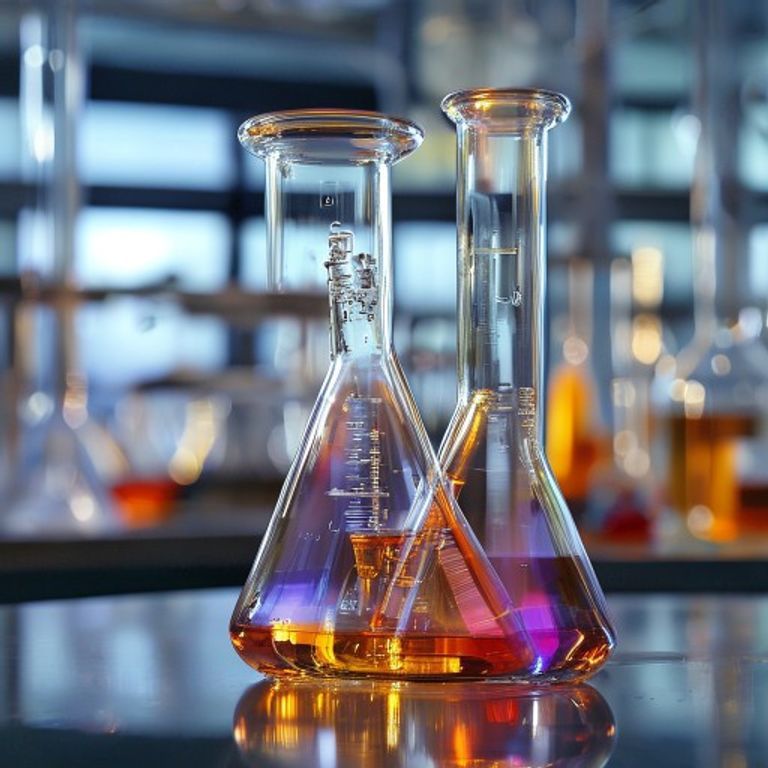
Erlenmeyer Flask Fonction: Débloquer ses rôles essentiels dans chaque laboratoire de chimie

Dans le vaste monde de verrerie de laboratoire, il y a quelques pièces qui se distinguent vraiment comme indispensables. Parmi eux, la fiole Erlenmeyer règne comme un outil polyvalent et largement utilisé. Souvent reconnue par sa forme conique distinctive, son fond plat et son col étroit, cette pièce d'équipement est bien plus qu'un simple conteneur. Si vous vous êtes jamais demandé à quoi sont utilisés les flacons Erlenmeyer en chimie, ou pourquoi nous l'atteignons souvent au lieu d'un bécher, vous êtes au bon endroit. Nous sommes sur le point de plonger profondément dans les applications spécifiques des flacons coniques dans les laboratoires et vraiment comprendre la puissance de ce produit de base de laboratoire.
Je me souviens de ma première fois dans un labo de chimie, un peu débordé par les différents objets en verre. Le bécher semblait simple, mais ce flacon étrangement façonné, nommé d'après son inventeur Emil Erlenmeyer, apparaissait partout. Bientôt, j'ai réalisé que son design unique n'est pas seulement pour l'esthétique; c'est un brillant morceau d'ingénierie qui facilite une multitude de processus chimiques. Laissez explorer les fonctions de base qui font de l'Erlenmeyer un véritable cheval de travail dans le laboratoire.
Qu'est-ce qui rend l'Erlenmeyer Flask si spécial ?
Avant de sauter dans ses fonctions, laissez-nous apprécier le design. Imaginez essayer de remuer vigoureusement une tasse de café sans renverser une goutte. Tricky, c'est ça ? Maintenant imaginez faire ça avec un bol à bouche large. Le flacon d'Erlenmeyer, dont la large base se rétrécit au cou étroit, résout ce problème avec élégance. Cette forme conique n'est pas un accident; elle est le secret de sa polyvalence et de son efficacité dans de nombreuses tâches de laboratoire. Il permet un mélange approfondi tout en réduisant significativement le risque de déversement et d'évaporation du solvant, en particulier par rapport à un bécher ouvert.
Les fonctions essentielles d'un jet d'Erlenmeyer
1. Le champion du titre
Peut-être son rôle le plus emblématique est dans le procédé de titration. Si vous avez déjà effectué une titration, vous connaissez le besoin critique de mélange précis et contrôlé. Le col étroit de la fiole Erlenmeyer est parfait pour insérer une burette, ce qui permet d'ajouter un titre dans le sens de la goutte. Comme nous ajoutons le titre, nous devons constamment mélanger la solution. Le corps conique de la fiole nous permet de tourner les produits chimiques avec facilité et vigueur, assurant un mélange rapide et complet sans éclaboussure des précieux réactifs. Cela rend le but d'Erlenmeyer flask dans les expériences de titration absolument crucial pour des résultats précis. Aucune autre verrerie ne s'empare d'un tourbillon vigoureux aussi gracieusement !
2. Solutions de mélange avec précision
Au-delà de la titration, la fiole Erlenmeyer est un maestro absolu pour les solutions de mélange. Sa conception le rend idéal pour le tourbillonnage manuel, qui est souvent préféré à l'utilisation d'une tige d'agitation pour certaines réactions, ou quand un agitateur magnétique est disponible ou approprié. La grande surface à la base du liquide, combinée avec le cou constrictif, crée un vortex naturel lorsqu'il est agité, facilitant ainsi une homogénéisation efficace. C'est l'un des avantages distincts de la fiole Erlenmeyer pour les solutions de mélange, empêchant les déversements qui pourraient se produire avec un bécher ou un tube d'essai.
3. Réactions au chauffage et à l'ébullition
You might wonder, why use Erlenmeyer flask instead of beaker for heating? While beakers can be heated, the Erlenmeyer flask offers significant advantages, especially when boiling solvents or performing reactions under reflux. The narrow neck acts as a partial condenser, helping to reduce solvent evaporation by allowing vapors to condense and drip back into the flask. This is incredibly useful for reactions that require heating over extended periods or for boiling solutions without significant loss of volume. Plus, its robust glass construction (often borosilicate glass) makes it durable enough to withstand direct heating.
4. Stockage temporaire et culture
While not its primary function, an Erlenmeyer flask can also serve as a suitable vessel for temporary storage of solutions, especially when sealed with a stopper or a parafilm. The narrow opening helps minimize evaporation and contamination compared to an open beaker. In biological laboratories, the specific applications of conical flasks extend to culturing microorganisms. The shape allows for good aeration when shaken or agitated, which is vital for the growth of aerobic cultures.
Erlenmeyer Flask vs. Beaker : une comparaison rapide
It’s easy to confuse the two, as both are fundamental verrerie de laboratoire. However, their designs cater to different needs. A beaker, with its straight sides and wide mouth, is excellent for general mixing, holding liquids, and rough measurements. But for vigorous swirling, preventing evaporation, or carrying out a titration, the Erlenmeyer flask is the clear winner. Think of it this way: a beaker is like an open serving bowl, great for easy access. An Erlenmeyer is like a shaker bottle, designed for dynamic mixing without spillage.
Conseils pour l'utilisation efficace de votre jet Erlenmeyer
- Always check for cracks or chips before use, especially if heating.
- Do not fill the flask to the brim; leave ample headspace for swirling and boiling.
- When heating, place it on a wire gauze over a Bunsen burner or use a hot plate with a stir bar.
- Ensure the stopper (if used for storage) is appropriate for the neck size to prevent leaks or contamination.
Conclusion
From facilitating precise titrations to ensuring efficient mixing and controlled heating, the Erlenmeyer flask is an unsung hero of the chemistry lab. Its unique conical shape is a testament to thoughtful design, offering practical advantages that enhance accuracy, safety, and efficiency in countless experiments. Next time you pick up an Erlenmeyer flask, I hope you’ll have a newfound appreciation for this humble yet mighty piece of verrerie de laboratoire.
FAQ : Vos questions sur le flap Erlenmeyer
Q: Puis-je mesurer des volumes précis avec une fiole Erlenmeyer?
A: No, Erlenmeyer flasks are designed for holding, mixing, and heating, not for precise volume measurements. They often have volume markings, but these are approximate. For accurate measurements, use graduated cylinders, pipettes, or volumetric flasks.
Q: Un flacon Erlenmeyer est-il sûr pour les acides forts ou les bases?
A: Yes, most Erlenmeyer flasks are made from borosilicate glass, which is highly resistant to chemical corrosion, including strong acids and bases. However, always exercise caution and wear appropriate PPE when handling hazardous chemicals.
Q: Puis-je mettre une fiole Erlenmeyer dans le congélateur?
A: While borosilicate glass can generally withstand extreme temperatures, placing a flask with liquid directly into a freezer can be risky, especially if the liquid expands upon freezing. It’s best to use glassware specifically designed for low temperatures or exercise extreme caution by allowing ample headspace.
Q: Quelle est la différence entre une fiole Erlenmeyer et une fiole Florence?
A: A Florence flask (or boiling flask) has a round bottom, making it less stable on a flat surface but ideal for even heating. An Erlenmeyer flask has a flat bottom, offering stability, and its conical shape is better for swirling and reducing spills.







