

Au-delà du cycle de rotation : Déballer les utilisations essentielles des tubes à centrifugeuse

Vous êtes-vous déjà posé des questions sur ces petits tubes qui se déplacent dans les laboratoires, les cliniques et même dans certains milieux industriels? On parle de tubes à centrifugeuses ! Bien qu'ils puissent sembler simples en plastique ou en verre, ces petits vaisseaux puissants sont les héros méconnus d'innombrables percées scientifiques, tests diagnostiques et processus de contrôle de la qualité. Ils sont absolument fondamentaux pour séparer les mélanges basés sur la densité, rendant visible l'invisible et séparable inséparable.
Qu'est-ce qui rend ces tubes si cruciaux ? Laissez-les plonger profondément dans le monde fascinant des tubes centrifuges et découvrez leurs rôles pivots dans un éventail surprenant de domaines. Préparez-vous à apprécier la puissance du spin!
Quoi exactement ? *Sont* Des tubes à centrifugeurs ?
Avant d'explorer leurs utilisations, laissez-nous vous rafraîchir rapidement ce qu'est un tube de centrifugeuse. Essentiellement, il s'agit d'un contenant spécialisé conçu pour contenir des échantillons liquides pendant la centrifugation – un procédé qui utilise la force centrifuge pour séparer les composants d'un mélange. Pensez-y comme un super rapide merry-go-round pour les molécules !
Ces tubes sont de tailles variées, à partir de minuscules tubes à microcentrifuge (souvent appelés tubes Eppendorf) contenant seulement quelques microlitres à des tubes plus grands capables de contenir jusqu'à 50 mL ou plus. Ils sont généralement fabriqués à partir de matériaux durables comme le polypropylène, le polycarbonate ou même le verre, choisis pour leur capacité à résister à des forces de g élevées et à des environnements chimiques variés. La plupart des tubes en plastique présentent des fonds coniques pour concentrer les granulés séparés, tandis que d'autres peuvent avoir des fonds ronds pour le mélange ou le stockage général.
La science derrière le fil : comment fonctionne la centrifugation
Pour vraiment saisir l'importance des tubes centrifuges, il aide à comprendre le principe qu'ils facilitent. La centrifugation fonctionne en soumettant un échantillon à une force de rotation élevée. Les composants de Denser dans le mélange liquide sont poussés vers l'extérieur (vers le bas du tube dans une centrifugeuse radiale), tandis que les composants moins denses restent plus proches du centre de rotation. Cela accélère efficacement les processus de sédimentation naturelle.
Imaginez que vous ayez un mélange de sable et d'eau. A gauche, le sable finirait par s'installer. La centrifugation accélère considérablement ce tassement en appliquant des forces milliers de fois supérieures à la gravité (mesurées dans le FCR, ou Force centrifuge relative). Le tube de centrifugeuse sert de récipient parfait pour contenir cette force, permettant la formation de couches distinctes ou de "pellets", qui peuvent ensuite être soigneusement séparées.
Où brillent les tubes centrifuges? Principales demandes au sein du Conseil
Maintenant pour l'événement principal! Les tubes à centrifugeuses sont omniprésents, mais leurs applications spécifiques sont incroyablement diverses. Laissez-nous explorer où ces chevaux font vraiment la différence.
Dans le monde du manteau de laboratoire : recherche biomédicale et clinique
C'est peut-être là que les tubes à centrifugeuses sont les plus reconnaissables. Dans les laboratoires biologiques et médicaux, ils sont absolument indispensables.
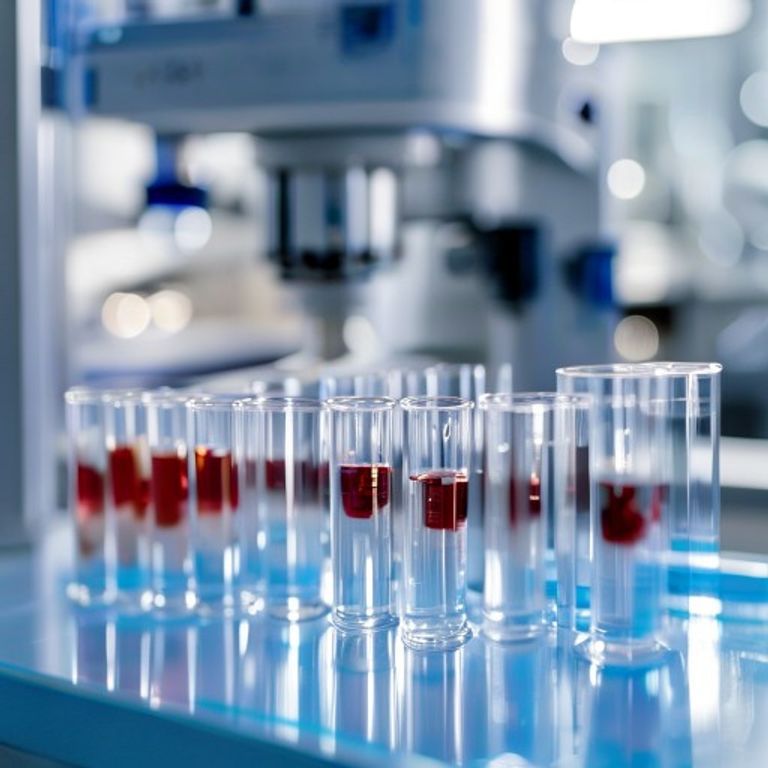
- Séparation des composants sanguins : C'est un exemple classique. Lorsqu'un échantillon de sang est centrifugé, les globules rouges, étant les plus denses, forment une boulette au fond. Au-dessus de cela, vous trouverez une fine couche de globules blancs et de plaquettes (la « couche de buffy »), puis le plasma (la partie liquide) en haut. Cette séparation est vitale pour d'innombrables tests diagnostiques, transfusions et recherches sur les troubles sanguins. La séparation du sérum (plasma sans facteur de coagulation) est également cruciale pour de nombreux essais.
- Extraction et purification de l'ADN/ARN : L'isolement du matériel génétique des cellules ou des tissus est un processus en plusieurs étapes, et plusieurs de ces étapes impliquent la centrifugation. Qu'il s'agisse de cellules granuleuses avant la lyse, de séparer l'ADN/ARN des débris cellulaires ou de concentrer les acides nucléiques purifiés, les tubes à centrifuges sont essentiels pour obtenir des échantillons propres et utilisables pour le séquençage, la PCR et l'analyse génétique.
- Traitement de la culture cellulaire : Les chercheurs qui cultivent des cellules en culture utilisent souvent des tubes de centrifugeuse pour récolter des cellules, les laver (p. ex. pour enlever les vieux milieux ou réactifs) et les concentrer avant d'autres expériences ou cryoconservation. Les cellules de pelletage assurent la récupération d'un nombre maximal de cellules viables sans manipulation excessive.
- Purification des protéines: Lors de l'isolement de protéines spécifiques de mélanges complexes, la centrifugation est souvent utilisée pour éliminer les débris cellulaires insolubles, les solutions protéiques concentrées ou les protéines distinctes en fonction de leur taille ou de leur gradient de densité. Il s'agit d'une étape critique dans la découverte de médicaments et la compréhension de la fonction des protéines.
- Analyse urinaire: En pathologie clinique, les échantillons d'urine sont souvent centrifugés pour concentrer des composants solides tels que les globules rouges, les globules blancs, les cellules épithéliales, les coulées ou les cristaux. Ces éléments concentrés sont ensuite examinés au microscope pour aider à diagnostiquer les maladies rénales, les infections urinaires et d'autres affections.
- Études microbiologiques : Les tubes à centrifugeuses servent à granuler des bactéries ou des levures de cultures liquides, ce qui permet aux chercheurs de laver les cellules, d'extraire des composants cellulaires ou de les concentrer pour des applications en aval comme les tests de sensibilité aux antibiotiques ou les diagnostics moléculaires.
Au-delà de la biologie : utilisations industrielles et environnementales
Leur utilité n'est pas limitée au domaine biomédical. Les tubes centrifuges jouent un rôle important dans le contrôle de la qualité, la fabrication et la surveillance de l'environnement.
- Industrie des aliments et des boissons :
- Précisions : La centrifugation aide à clarifier les jus, les vins et les huiles en enlevant les solides et les impuretés en suspension, améliorant ainsi l'apparence et la stabilité du produit.
- Analyse du contenu en gras : Dans les produits laitiers, les tubes à centrifugeuse sont utilisés dans des tests spécifiques (comme le test Babcock pour le lait) pour séparer et quantifier la teneur en matières grasses, ce qui est crucial pour le contrôle de la qualité et l'étiquetage nutritionnel.
- Récolte des levures : Les brasseries utilisent une centrifugation à grande échelle (souvent en continu) pour récolter la levure après fermentation, qui peut ensuite être réutilisée.
- Essais environnementaux :
- Analyse de la qualité de l'eau : Les tubes à centrifugeuse servent à concentrer les particules provenant d'échantillons d'eau pour l'examen microscopique ou l'analyse chimique des contaminants. Cela peut inclure la séparation des sédiments, des algues ou d'autres solides en suspension pour évaluer la pureté de l'eau.
- Analyse des sols : Lors de l'analyse des échantillons de sol, la centrifugation peut aider à séparer différentes fractions du sol, à extraire des contaminants ou à isoler des microorganismes.
- Traitement des eaux usées : Bien que ce soit souvent fait à plus grande échelle, le principe de la séparation des solides des liquides dans les eaux usées repose sur des procédés de centrifugation miroir, avec des essais en laboratoire plus petits à l'aide de tubes de centrifugation.
- Produits pharmaceutiques:
- Découverte et formulation de médicaments : Au cours du développement de nouveaux médicaments, les tubes à centrifugeuse aident à séparer les ingrédients pharmaceutiques actifs (IPA) des excipients, à purifier les composés et à analyser la stabilité des formulations.
- Production de vaccins : De nombreux processus de production de vaccins comportent des étapes de centrifugation pour purifier les particules virales, les composants bactériens ou les protéines essentielles à l'efficacité du vaccin.
- Laboratoires chimiques :
- Séparation des liquides immiscibles: Alors que les entonnoirs sont souvent utilisés, pour de petits volumes ou des gravités spécifiques, la centrifugation peut accélérer la séparation de deux liquides qui ne se mélangent pas (par exemple, une couche organique d'une couche aqueuse).
- Précipitation Collection : Après une réaction chimique, si un précipité solide se forme, la centrifugation est un moyen efficace de le recueillir du surnageant liquide, assurant ainsi un rendement maximal.
- Récupération du catalyseur : Dans certains procédés chimiques, les catalyseurs peuvent être récupérés à partir de mélanges de réaction par centrifugation.
Choisir votre partenaire de spin: Types de tubes à centrifuger et à considérer
Compte tenu de la variété des applications, il n'est pas surprenant que les tubes de centrifugeuse viennent sous de nombreuses formes. Choisir le bon est la clé du succès.
- Matières:
- Plastique (polypropylène, polycarbonate): La plupart du temps, en raison de leur déposabilité, de leur résistance chimique à de nombreux réactifs de laboratoire courants et de leur capacité à résister à des forces g élevées. Le polypropylène est opaque, tandis que le polycarbonate est souvent plus clair.
- Verre: Réutilisable, autoclavable et chimiquement inerte dans une gamme plus large de solvants. Cependant, ils sont plus enclins à se casser et ne peuvent généralement pas résister à des forces de g aussi élevées que les tubes en plastique, surtout sans adaptateurs appropriés.
- Volume et forme :
- Tubes à microcentrifuge (0,5 à 2,0 mL): Idéal pour les petits volumes d'échantillons, généralement utilisés avec les microcentrifugeuses.
- Tubes coniques (15 mL, 50 mL): Les types les plus courants, avec un fond effilé qui concentre efficacement les pastilles. Excellent pour la culture cellulaire et le travail de laboratoire général.
- Tubes de bottom ronds : Mieux pour le mélange et le stockage général, mais moins efficace pour la granulation de petites quantités de matériaux.
- Tubes ultra-centrifuges: Conçu pour des vitesses extrêmement élevées, souvent plus minces, et parfois fabriqués à partir de plastiques spécifiques ou même de composites en fibre de carbone.
- Stérilité: De nombreuses applications, notamment en culture cellulaire et en microbiologie, nécessitent des tubes stériles pour prévenir la contamination.
- Résistance à la température: Certaines expériences nécessitent une centrifugation à basse température (p. ex., dans des centrifugeuses réfrigérées), de sorte que les tubes doivent pouvoir résister au froid sans être fragilisés.
- Compatibilité chimique: Assurez-vous que le matériau du tube est compatible avec les produits chimiques de votre échantillon pour prévenir la dégradation ou le lessivage.
- Max RCF Évaluation : Crucieusement, les tubes sont notés pour la force centrifuge maximale qu'ils peuvent supporter sans s'effondrer ou se briser. Toujours correspondre à la note du tube à vos capacités centrifuges.
Conseils pour un tour en douceur : meilleures pratiques pour utiliser des tubes à centrifugeurs
Pour assurer la sécurité et des résultats optimaux, il convient de se rappeler quelques pratiques exemplaires :
- L'équilibre est la clé : Toujours charger les tubes symétriquement dans le rotor, en veillant à ce que les tubes opposés aient le même poids. Un chargement inégal peut endommager la centrifugeuse et compromettre la séparation. Utilisez une balance de précision avec des échantillons critiques.
- Culot correctement: S'assurer que les bouchons sont bien serrés pour éviter les fuites, en particulier avec des échantillons dangereux, mais éviter le surresserrement qui peut endommager le bouchon ou le tube. Certaines capsules sont spécialement conçues pour le confinement des aérosols.
- Ne pas remplir ou ne pas remplir : Chaque tube a un volume de remplissage maximal recommandé. Le surremplissage peut entraîner des fuites, tandis que le sous-remplissage peut empêcher la formation de granulés ou même endommager le tube si la balance est éteinte.
- Vérifier avant utilisation: Vérifiez rapidement les tubes pour détecter les fissures, les rayures ou les défauts de fabrication avant d'ajouter votre précieux échantillon.
- Conserver correctement : Conserver les tubes dans leur emballage d'origine, loin du soleil direct et des températures extrêmes, pour maintenir leur intégrité et stérilité.
Conclusion
De l'isolement des composants vitaux dans le sang à l'assurance de la qualité de nos aliments, les tubes à centrifuge sont des outils vraiment indispensables. Leur conception simple explique l'impact profond qu'ils ont sur la découverte scientifique, le diagnostic médical et les processus industriels dans le monde entier. Ils nous permettent de manipuler la matière au niveau microscopique, de révéler des idées et de faire des séparations qui autrement seraient impossibles. Donc, la prochaine fois que vous verrez ces tubes se balader dans un labo, prenez un moment pour apprécier les héros méconnus de la science de la séparation – les tubes centrifugeurs puissants!