


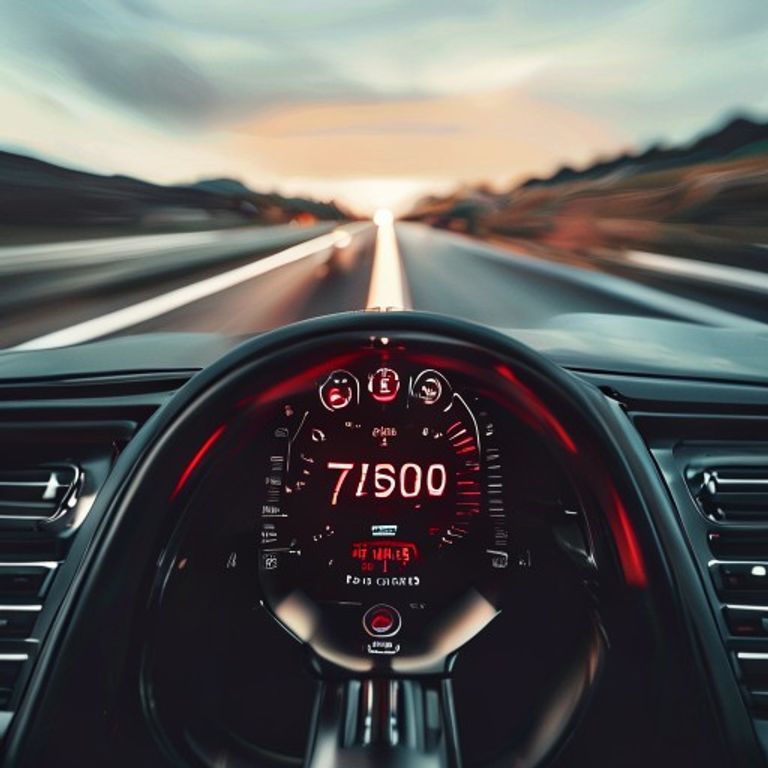
Unlocking Engine Secrets: Your Ultimate Guide to the Tachometer

Have you ever wondered what exactly your engine is doing beneath the hood, beyond just moving you forward? We often focus on speed, measured by the speedometer, but there’s another crucial dial on your dashboard that tells a different, equally important story: the Tachometer. For many, it’s just another gauge, but for anyone who truly wants to understand and optimize their vehicle’s performance, the tachometer is an indispensable tool. Think of it as your engine’s heartbeat monitor, giving you real-time insights into its rotational speed.
In this comprehensive guide, we’re going to dive deep into the world of tachometers. We’ll explore what they are, why they’re so vital, the different types you might encounter, and even some practical tips like how to install a tachometer in a car or what to do when you’re troubleshooting a broken tachometer. Whether you’re a gearhead, a casual driver, or just curious, this article will help you unlock the secrets your engine has been keeping.
What Exactly Is a Tachometer?
At its core, a tachometer is an instrument designed to measure the engine speed, specifically the revolutions per minute (RPM) of a rotating shaft. Most commonly, we see it measuring the crankshaft’s RPM in internal combustion engines. Imagine a bicycle wheel spinning; the tachometer tells you how many full rotations that wheel makes in one minute. That’s RPM in a nutshell!
Unlike a speedometer which tells you how fast your vehicle is moving on the road, the tachometer tells you how fast your engine’s internal components are spinning. This distinction is crucial because your engine could be spinning very fast (high RPM) even when your vehicle isn’t moving fast (e.g., in a low gear or when idling). It’s a dedicated RPM gauge that provides direct feedback on engine workload and efficiency.
Why Is the Tachometer So Important?
So, why bother knowing your engine’s RPM? Well, the tachometer plays a pivotal role in various applications, and understanding its purpose of a tachometer in a boat, car, or motorcycle can really change how you operate these machines. Here are a few key reasons:
- Optimal Shifting: For manual transmission vehicles, the tachometer is your best friend. It helps you shift gears at the right moment to achieve either maximum power for acceleration or best fuel efficiency. Shifting too early might lug the engine, while shifting too late wastes fuel and stresses components.
- Preventing Engine Damage: Every engine has a “redline” – a maximum safe RPM limit. Exceeding this can lead to severe engine damage. The tachometer clearly shows you when you’re approaching or exceeding this limit, allowing you to prevent costly repairs.
- Performance Tuning: Mechanics and performance enthusiasts use tachometers to tune engines, ensuring they deliver power smoothly and efficiently across their operating range.
- Troubleshooting: An erratic or non-responsive tachometer can sometimes indicate deeper issues with your engine’s electrical system or ignition.
- Marine Applications: In boats, understanding purpose of a tachometer in a boat is critical. It helps manage propeller speed for optimal thrust, fuel economy, and to prevent over-revving, especially when navigating different water conditions or towing.
Different Types of Tachometers You Might Encounter
Just like there are various types of measuring instruments, similar to how anemometers unlock the secrets of wind speed measurement, tachometers come in several forms, each with its own advantages:
Analog Tachometers
These are the classic needle-and-dial gauges we often see on older cars and many motorcycles. They provide a quick, visual sweep of your RPM, making it easy to see trends at a glance. They’re robust but can sometimes be less precise for very specific readings.
Digital Tachometers
As the name suggests, these display RPM as a numerical value, often on an LCD screen. They offer superior precision and can be easier to read quickly for exact figures. If you’re looking for the best digital tachometer for motorcycles, you’ll likely find models with features like peak RPM recall, shift lights, and backlighting for night use. Many modern vehicles now integrate digital tachometers into their digital dashboards.
Inductive Tachometers
These are particularly popular for small engines (like lawnmowers, chainsaws, or go-karts) because they don’t require a direct electrical connection to the engine’s ignition system. An inductive tachometer for small engines works by sensing the electromagnetic pulses from the spark plug wire. You simply wrap a wire around the spark plug cable, and it picks up the signals, converting them into RPM readings. They are incredibly easy to install and often portable.
Photoelectric (Laser) Tachometers
These non-contact tachometers are used for measuring the RPM of rotating shafts without touching them. They emit a laser beam at a reflective tape placed on the rotating object and measure the frequency of the reflected light pulses. These are excellent for industrial applications or for troubleshooting where access is difficult.
Installation Basics: Getting Your Tachometer Ready
So, you’ve decided to add a tachometer to your ride or replace an old one. Learning how to install a tachometer in a car can seem daunting, but it’s quite manageable for most DIY enthusiasts. Here’s a general overview of what’s involved:
- Power Connection: You’ll need to connect the tachometer to a 12V power source (usually the ignition switch or a fuse box) and a ground wire.
- Signal Wire: This is the most crucial connection. The tachometer needs to tap into the engine’s ignition system to read the RPM. This typically involves connecting a signal wire to the negative terminal of the ignition coil, a dedicated tachometer output on an ECU, or, for some aftermarket units, directly to an injector pulse. The specific location depends on your vehicle make and model.
- Mounting: Decide where you want your tachometer. Common spots include the dashboard, steering column, or in a dedicated gauge pod. Ensure it’s securely mounted and doesn’t obstruct your view of the road.
- Calibration (if needed): Some aftermarket tachometers require calibration to match the number of cylinders in your engine. Make sure to follow the manufacturer’s instructions for this step.
Always consult your vehicle’s service manual and the tachometer’s installation guide. If you’re unsure, it’s always best to seek professional help.
Troubleshooting Common Tachometer Issues
Even the most reliable instruments can sometimes act up. If you’re troubleshooting a broken tachometer, don’t despair! Here are some common problems and what might be causing them:
-
Tachometer Reads Zero or is Unresponsive:
- No Power: Check the fuse, power connection, and ground wire. A loose or corroded connection can cut off power.
- Bad Signal: The signal wire might be disconnected, damaged, or connected to the wrong source. Verify the connection to the ignition coil or ECU output.
- Faulty Unit: The tachometer itself might be dead. You can test it by connecting it to another compatible vehicle or using a signal generator if you have one.
-
Tachometer Reads Erratic or Inaccurate:
- Loose Connections: Wires that are not securely fastened can cause intermittent readings.
- Interference: Electrical interference from other components (like spark plug wires or aftermarket electronics) can sometimes affect readings. Ensure signal wires are routed away from sources of interference.
- Incorrect Calibration: If your tachometer has a cylinder setting, ensure it’s set correctly for your engine (e.g., 4-cylinder, 6-cylinder, 8-cylinder).
- Alternator Issues: A failing alternator can sometimes cause voltage fluctuations that affect electrical gauges.
-
Needle Stuck or Jerky (Analog Tachometers):
- Mechanical Fault: The internal mechanism of the analog gauge might be physically stuck or damaged.
- Power Surge: A sudden spike in voltage could potentially damage the sensitive internal components.
When troubleshooting, always start with the simplest checks: power, ground, and signal connections. Many issues can be resolved with a bit of systematic investigation.
Conclusion
The tachometer is far more than just a decorative element on your dashboard; it’s a vital instrument that provides real-time feedback on your engine’s health and performance. From helping you achieve optimal shifts and better fuel economy to preventing costly engine damage, understanding your revolutions per minute is key to being a more informed and efficient driver, rider, or boater.
So, the next time you’re behind the wheel, take a moment to glance at your RPM gauge. It’s telling you a story about your engine, and knowing how to read that story can make all the difference in your driving experience. Embrace the power of the tachometer, and you’ll unlock a new level of connection with your machine!
Frequently Asked Questions (FAQ)
1. Can I drive without a working tachometer?
Yes, most vehicles can be driven without a working tachometer, especially those with automatic transmissions. However, for manual transmissions, it makes shifting more challenging, potentially leading to suboptimal performance, higher fuel consumption, and increased engine wear. You’ll rely more on engine sound and feel.
2. Is a digital or analog tachometer better?
It depends on your preference and application. Digital tachometers offer precise numerical readings, which are great for exact tuning or when you need specific data. Analog tachometers offer a quick visual sweep, which many drivers find more intuitive for knowing when to shift at a glance. For specialized needs like the best digital tachometer for motorcycles, digital often wins for features and accuracy.
3. Can an inductive tachometer be used on any engine?
Inductive tachometers are primarily designed for small, single-cylinder engines or engines with easily accessible spark plug wires where you can wrap the sensor. They might not be suitable for complex multi-cylinder automotive engines with shielded ignition systems or coil-on-plug designs. For such engines, direct wired connections are usually required.
4. What does “redline” mean on a tachometer?
“Redline” refers to the maximum safe operating RPM (revolutions per minute) for an engine. It’s usually indicated by a red marking on the tachometer’s dial. Exceeding the redline can cause serious and expensive damage to engine components due to excessive stress and heat.
5. Why is my tachometer reading inaccurate after installation?
Inaccurate readings often stem from incorrect calibration (if your unit is adjustable for cylinder count), poor signal connection, or electrical interference. Double-check your wiring, ensure the cylinder setting is correct for your engine, and make sure the signal wire isn’t running too close to high-voltage wires or other sources of electromagnetic interference.