


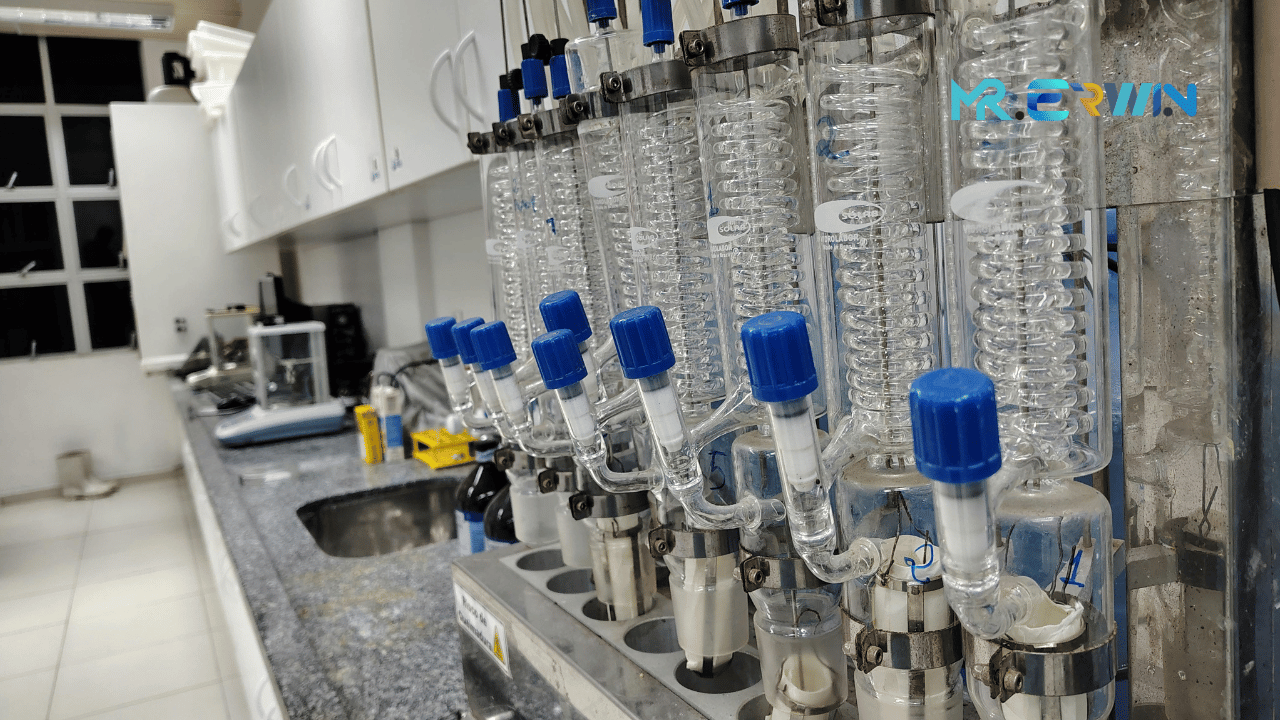
Knowing the Laboratory Equipment Called a Condenser

In the world of chemistry and scientific research, laboratory glassware plays a crucial role in ensuring experiments run smoothly and accurately. One such essential piece of equipment is the condenser. Although it may look like a simple glass tube at first glance, the condenser is a highly functional tool that enables scientists to carry out processes such as distillation and reflux with precision. Understanding how it works, its types, and its applications can help students, researchers, and technicians use it more effectively.
What Is a Condenser?

A condenser is a piece of laboratory apparatus designed to cool hot vapors or gases and convert them back into liquid form. It is typically made from borosilicate glass, which can withstand high temperatures and sudden temperature changes. The device works by allowing vapor to pass through an inner tube while cold water circulates around it in an outer jacket, removing heat from the vapor until it condenses.
Main Functions in the Laboratory
The condenser’s primary role is to facilitate phase change from gas to liquid during various chemical processes. Some of its most common functions include:
- Distillation – separating mixtures based on differences in boiling points.
- Reflux – heating a reaction mixture while continuously cooling and returning the vapor to the flask.
- Solvent recovery – condensing evaporated solvents for reuse.
By controlling temperature and condensation, the condenser ensures that valuable substances are not lost during heating.
Common Types of Condensers
Different experiments require different condenser designs. The most widely used types include:
| Type of Condenser | Description | Typical Use |
|---|---|---|
| Liebig Condenser | Straight inner tube with water jacket | General distillation |
| Allihn Condenser | Bulbous inner tube for increased surface area | Reflux reactions |
| Graham Condenser | Coiled inner tube for maximum cooling | High‑efficiency condensation |
| Dimroth Condenser | Double‑coiled inner tube | Specialized reflux and distillation |
Each type is chosen based on the cooling efficiency required and the nature of the experiment.
How to Use a Condenser Safely
When working with a condenser, proper setup is essential:
- Positioning – For distillation, the condenser is usually set horizontally; for reflux, it is vertical.
- Water Flow – Always connect the water inlet to the lower port and the outlet to the upper port to ensure efficient cooling.
- Secure Connections – Use clamps and stands to hold the condenser firmly in place.
- Avoid Thermal Shock – Do not expose hot glass directly to cold water without gradual cooling.
Conclusion
The condenser may seem like a simple piece of glassware, but it is a cornerstone of many laboratory procedures. By enabling the controlled cooling of vapors, it ensures that experiments are efficient, safe, and precise. Whether you are distilling essential oils, purifying solvents, or conducting organic synthesis, understanding the condenser’s design and function will help you achieve better results in the lab.
Frequently Asked Questions (FAQ)
What is the main function of a laboratory condenser?
A laboratory condenser is used to cool hot vapors or gases and convert them back into liquid form, commonly during distillation or reflux processes.
What materials are condensers usually made from?
Most laboratory condensers are made from borosilicate glass, which is resistant to high temperatures and sudden temperature changes.
What are the common types of condensers used in chemistry labs?
The most common types include Liebig condensers, Allihn condensers, Graham condensers, and Dimroth condensers, each designed for specific cooling needs.
How should water be connected to a condenser for optimal cooling?
The water inlet should be connected to the lower port and the outlet to the upper port to ensure efficient cooling and prevent air bubbles.
In which laboratory processes is a condenser most often used?
Condensers are frequently used in distillation, reflux reactions, and solvent recovery to prevent the loss of valuable substances.
Article Source:
- Condenser (laboratory) – Wikipedia – Comprehensive overview of laboratory condensers, including history, design, and types.
- Best Lab Condensers: Essential Tools for Efficient Distillation and Cooling – EasyTopTen – Reviews and buying guide for different condenser models used in laboratories.
- Laboratory Condensers Selection Guide – GlobalSpec – Technical guide to condenser types, features, and applications in scientific research.







