

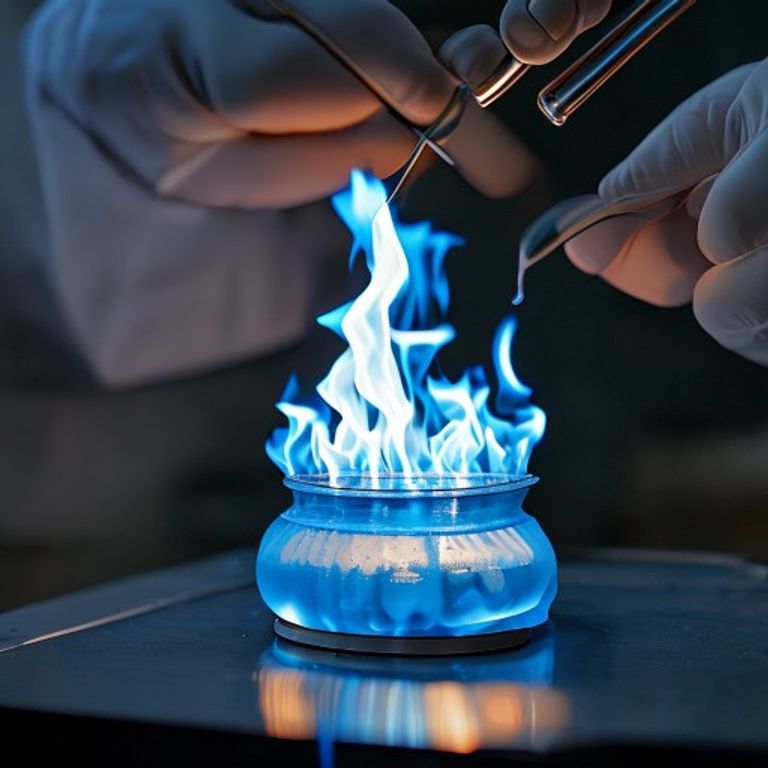
Unlocking the Power of the Bunsen Burner: Practical Uses and Safety Tips for Every Lab

Introduction
When I first stepped into a chemistry lab, the bright blue flame of a Bunsen burner felt like a tiny sun on the bench. It’s not just a decorative piece; it’s a workhorse that powers countless routine and advanced procedures. In this article I’ll walk you through the most common bunsen burner uses, share simple analogies to make the concepts click, and give you practical safety tips so you can handle the flame with confidence.
Everyday Laboratory Heating Tasks
Think of the Bunsen burner as the “microwave” of the lab—quick, reliable, and perfect for small‑scale heating. Here are the tasks we rely on it for every day:
- Heating solutions: Bringing a liquid to a gentle boil for dissolution or reaction.
- Evaporation: Removing solvents from a mixture without needing a hot plate.
- Drying glassware: Quickly driving off moisture after washing.
Because the flame can be adjusted from a soft orange to a fierce blue, you can match the heat intensity to the job—just like turning a kitchen stove dial.
Flame Sterilization and Aseptic Technique
One of the most iconic uses is sterilizing inoculating loops. The principle is simple: the high temperature of a blue flame kills any microorganisms clinging to the loop, ensuring an aseptic transfer.
- Hold the loop at an angle so the flame touches the entire metal surface.
- Watch for a bright orange tip—this indicates the loop is hot enough.
- Let it cool for a few seconds before touching the culture.
In microbiology, this step is as crucial as washing your hands before cooking. A contaminated loop can ruin an entire experiment.
Bunsen Burner in Chemistry Experiments
From classic acid‑base titrations to modern organic syntheses, the Bunsen burner shows up everywhere. Some practical examples:
- Combustion reactions: Demonstrating the oxidation of magnesium ribbons.
- Distillation set‑up: Providing the initial heat source for the flask.
- Thermal decomposition: Breaking down calcium carbonate into lime and CO₂.
If you’re curious about related equipment, check out our essential Bunsen burner uses guide for deeper insights.
Microbiology Applications
Beyond sterilizing loops, the Bunsen burner helps with:
- Creating a sterile zone for inoculation by generating upward airflow.
- Flaming the mouth of test tubes after adding media to prevent contamination.
- Heat‑fixing bacterial smears on slides before staining.
These steps are the backbone of reliable microbial identification—think of the flame as a “clean‑room” barrier in a small glass tube.
Safety First: Operating the Bunsen Burner Correctly
Even though the Bunsen burner is a staple, safety mishaps happen when we treat it like an ordinary candle. Follow these practical rules:
- Check the gas supply: Ensure the valve is fully closed before lighting.
- Use a striker: Light the burner with a spark lighter, never a match.
- Adjust the air‑vent: Open the collar for a blue, non‑luminous flame (most efficient). Close it slightly for a yellow, luminous flame when you need more heat.
- Never leave the flame unattended: Turn off the gas immediately after use.
- Wear protective gear: Lab coat, goggles, and heat‑resistant gloves.
For a broader view on lab safety tools, our flawless Burette use guide also highlights best practices that complement burner safety.
Conclusion
From heating reagents to sterilizing loops, the Bunsen burner remains an indispensable, low‑cost tool in any laboratory. By understanding its core uses, applying simple analogies, and following strict safety protocols, you can harness its power without the worry of accidents. So next time you see that blue flame, remember it’s not just a spark—it’s the heart of many successful experiments.
FAQ
Q: What is the ideal flame color for most heating tasks?
A: A steady blue flame with a faint inner cone indicates complete combustion and the hottest, most efficient heat.
Q: Can I use a Bunsen burner for long‑duration heating?
A: Yes, but monitor the gas supply and never leave it unattended. For very long runs, consider a hot plate to avoid gas depletion.
Q: How do I know if my loop is properly sterilized?
A: The loop should glow orange at the tip for a second or two. If the flame is purely blue, the loop may not be hot enough.
Q: Is it safe to use a Bunsen burner in a fume hood?
A: Absolutely—using a hood helps vent any fumes generated during heating or combustion.
Q: What should I do if the flame goes out unexpectedly?
A: Turn off the gas valve immediately, wait a few seconds, then relight using the striker while ensuring the air‑vent is correctly set.