


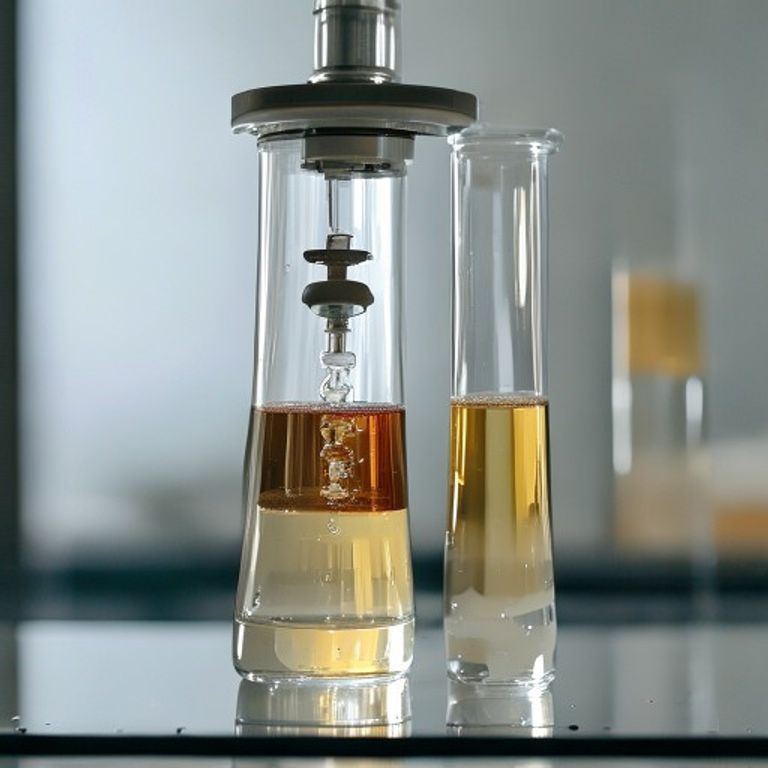
Mastering the Separating Funnel: Practical Guide, Principles, and Everyday Lab Tips

Introduction
Ever stared at a glass bottle with two layers of liquid and wondered how chemists cleanly split them? That’s where the separating funnel shines. In this article, I’ll walk you through what it is, how it works, and give you a step‑by‑step recipe for using it in everyday lab work. Think of it as the kitchen funnel you use for oil and water, but engineered for precise, repeatable extractions.
What Is a Separating Funnel?
A separating funnel is a piece of laboratory glassware designed for liquid‑liquid extraction. It’s a conical vessel with a stopcock at the bottom and a stoppered opening at the top. Because the two liquids are immiscible (they don’t mix), they form distinct layers based on their densities.
Principle and Uses
The core principle is simple: density difference. The heavier liquid settles at the bottom, the lighter one floats on top. By opening the stopcock, you can drain the bottom layer while keeping the top layer untouched. This makes the separating funnel indispensable for:
- Removing organic solvents from aqueous solutions.
- Isolating acids or bases from neutral compounds.
- Purifying reaction mixtures in organic chemistry.
- Preparing samples for analytical techniques like GC or HPLC.
In other words, it’s the go‑to tool for any extraction process that needs clean phase separation.
Parts of a Separating Funnel Apparatus
Before we dive into the procedure, let’s get familiar with the anatomy:
- Body (cone): Holds the liquids.
- Stopcock: Controls the outflow of the lower layer.
- Lid/Stopper: Keeps the system sealed and prevents vapor loss.
- Ground glass joint: Connects the funnel to a stand or a lab tripod stand for stability.
- Graduation marks: Help you gauge volumes.
How to Use a Separating Funnel – Step by Step
Ready to try it out? Follow these practical steps:
- Check the stopcock: Make sure it’s closed and not leaking.
- Add the mixture: Pour your immiscible liquids into the funnel, leaving some headspace.
- Vent the funnel: Gently invert the funnel and open the stopcock to release any built‑up pressure. Close it quickly.
- Allow layers to separate: Let the funnel sit undisturbed. The denser liquid will settle at the bottom.
- Drain the lower layer: Place a receiving flask under the stopcock, open it slowly, and watch the bottom layer flow out. Stop before the interface reaches the stopcock.
- Collect the upper layer: Remove the stopper, pour the remaining liquid into another container, or repeat the extraction with fresh solvent.
- Clean up: Rinse the funnel with appropriate solvents and store it upright.
Tip: If you’re dealing with volatile organic solvents, keep the funnel in a fume hood and use a glass stirring rod to gently mix phases without creating bubbles.
Common Mistakes and Quick Fixes
Even seasoned chemists slip up. Here are a few pitfalls and how to avoid them:
- Opening the stopcock too fast – can cause splashing and loss of product. Open slowly and watch the flow.
- Not venting properly – pressure buildup may burst the stopper. Always vent after adding or mixing.
- Confusing the layers – remember: denser = bottom. If unsure, add a drop of a known dense liquid (e.g., brine) to confirm.
- Leaving the funnel upside down for too long – the stopcock may get clogged with residue. Clean promptly.
FAQ
Can I use a separating funnel for solid‑liquid extractions?
Not directly. The funnel works best with liquids. For solid‑liquid extractions, you’d first dissolve the solid in a suitable solvent, then use the funnel to separate phases.
What material should the funnel be made of?
Most are borosilicate glass because it resists thermal shock and chemicals. For highly corrosive acids, consider PTFE‑lined funnels.
How do I know which layer is which?
Check the densities: water (≈1 g/mL) is heavier than most organic solvents like diethyl ether (≈0.71 g/mL). If you’re unsure, a quick density test with a small sample helps.
Is it safe to reuse the same funnel for different solvents?
Yes, after thorough cleaning. Rinse with a compatible solvent, then with distilled water, and finally dry the funnel before the next use.
Can I perform multiple extractions in one funnel?
Absolutely. After draining the first lower layer, you can add fresh solvent to the remaining upper layer and repeat the process to improve recovery.
Conclusion
The separating funnel may look simple, but mastering its use unlocks a world of efficient extractions in the lab. By respecting the density principle, handling the stopcock with care, and keeping the apparatus clean, you’ll get reproducible results every time. So next time you face a two‑phase mixture, remember: a quick flip, a gentle vent, and a steady drain—your extraction is good to go!







