Unveiling the Unsung Hero: What is Wire Gauze and Why Every Lab Needs It

Have you ever been in a chemistry lab, setting up for an experiment that involves heating, and noticed that simple mesh square on top of a tripod stand? That seemingly humble piece of equipment, often overlooked, is what we call a wire gauze. But what exactly is it, and why is it so indispensable in our scientific endeavors? Today, we’re going to dive deep into the world of wire gauze, uncovering its crucial role, especially when working with a Bunsen burner and various laboratory glassware.
When we think about heating things safely and effectively in the lab, many tools come to mind. Yet, the wire gauze consistently proves itself to be a silent workhorse, ensuring our experiments run smoothly and safely. Let’s explore why this simple mesh is such a big deal.
What is Wire Gauze Used for in Chemistry? More Than Just a Pretty Mesh!
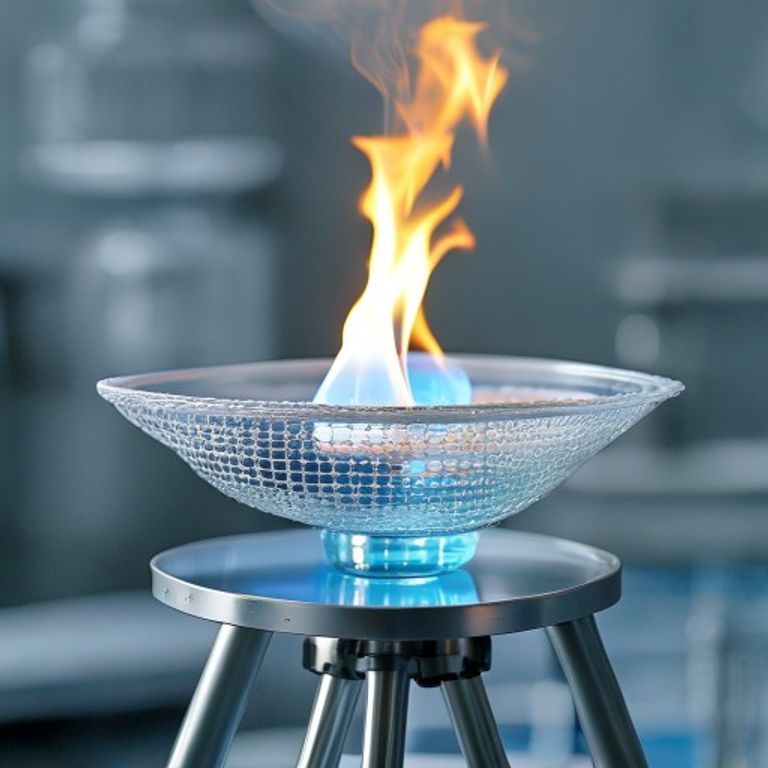
At its core, a wire gauze is a thin sheet of metal mesh, typically made from iron, nickel, or stainless steel, with a ceramic or asbestos center. The ceramic center is particularly important because it helps to distribute heat more evenly. We use it primarily as a support for laboratory glassware, like beakers or flasks, during heating processes. Imagine trying to balance a round-bottom flask directly on a tripod stand – it would be a disaster! The wire gauze provides a stable, flat surface.
But its purpose goes beyond mere support. It’s also critical for proper heat distribution. When we place glassware directly over an open flame, like from a Bunsen burner, the concentrated heat can cause the glass to crack or even shatter due to thermal shock. The wire gauze acts as a diffuser, spreading the flame spreading evenly across the bottom of the glassware. This prevents localized overheating and ensures our solutions are heated uniformly.
The Purpose of Wire Gauze in a Lab: Safety and Efficiency Combined
In any lab, safety and efficiency are paramount. The wire gauze ticks both boxes. From a safety perspective, it prevents glassware from coming into direct contact with the intense heat of the flame. This not only protects the glassware but also reduces the risk of hazardous spills or explosions due to sudden temperature changes. Think of it as a safety net for your glass equipment.
From an efficiency standpoint, by providing even heat, the wire gauze ensures that reactions proceed at a consistent rate. Without it, you might find some parts of your solution boiling while others are still cool, leading to inaccurate results or incomplete reactions. It’s like using a specialized pan on a stove to ensure your food cooks evenly, rather than burning in one spot and remaining raw in another.
How to Use Wire Gauze with a Bunsen Burner: A Simple Setup
Using a wire gauze with a Bunsen burner is straightforward, but there’s a correct way to do it for optimal results. Here’s a quick guide:
- First, set up your tripod stand on a heat-resistant surface.
- Next, place the wire gauze directly on top of the tripod stand. Make sure it’s centered and stable.
- Then, position your laboratory glassware (e.g., beaker, flask) containing your sample on top of the wire gauze.
- Finally, place the Bunsen burner underneath the tripod stand and wire gauze, adjusting the flame so its tip is just below or lightly touching the wire gauze. The gauze will glow red where the flame makes contact, indicating heat transfer.
It’s crucial to always have the wire gauze between the flame and the glassware. This simple setup is fundamental to countless heating experiments, ensuring controlled and safe temperature increases.
Function of Wire Gauze on a Tripod Stand: The Perfect Partnership
The relationship between the wire gauze and the tripod stand is truly a perfect partnership. While the tripod stand provides the necessary elevation and stable platform above the heat source, it’s the wire gauze that offers the actual flat, supportive surface for your beaker or flask. Imagine trying to balance a round beaker directly on the three legs of a tripod – impossible! The gauze bridges that gap, making the tripod stand fully functional for heating experiments. To learn more about unpacking the essential laboratory tripod function, you can read our detailed article on it.
Importance of Wire Gauze in Heating Experiments: Preventing Breakage and Ensuring Accuracy
In heating experiments, especially those involving precise temperature control or delicate glassware, the wire gauze is invaluable. Without it, the direct, concentrated heat from a Bunsen burner would create “hot spots” on the glass. These hot spots expand rapidly, while cooler areas remain unexpanded, leading to immense stress within the glass structure. This stress often results in cracks or complete breakage, ruining your experiment and potentially creating a hazardous situation.
The ceramic center in many wire gauzes plays an even more significant role here. It absorbs and radiates heat much more effectively than just plain wire mesh, ensuring truly uniform heat distribution across the entire base of the glassware. This consistency is vital for experiments where accurate temperature control is critical for reaction kinetics or solubility studies. So, we can confidently say that the wire gauze is not just a convenience; it’s a necessity for reliable and safe heating.
Kesimpulan
So, the next time you step into a chemistry lab and spot that unassuming mesh square, remember its vital role. The wire gauze is a testament to how simple tools can have a profound impact on safety, efficiency, and accuracy in scientific research. From supporting laboratory glassware to ensuring even heat distribution and preventing thermal shock, it’s truly an unsung hero of the lab bench. We rely on it to make our experiments safer and our results more trustworthy. It’s a fundamental piece of equipment that, once understood, highlights the thoughtful design behind even the most basic lab setups.
FAQ (Frequently Asked Questions)
- Can I use wire gauze without the ceramic center?
While wire gauze without a ceramic center can still provide support, it’s less effective at distributing heat evenly. The ceramic center is designed to absorb and diffuse the flame’s heat, significantly reducing hot spots and preventing glassware breakage. For best results and safety, we always recommend using one with a ceramic or asbestos center.
- How do I know if my wire gauze is safe to use?
Check for any signs of extensive rusting, warping, or significant holes in the mesh. If the ceramic center is cracked, chipped, or missing large pieces, it might not distribute heat effectively. A well-maintained, intact wire gauze is safe to use. Always inspect your equipment before starting an experiment.
- Can wire gauze be used with other heat sources besides a Bunsen burner?
Yes, wire gauze can be used with other direct flame heat sources, such as alcohol lamps or propane torches, as long as they provide a controlled flame. Its primary function remains the same: to support glassware and distribute heat. However, for more precise heating or larger setups, other equipment like heating mantles or hot plates might be more suitable.