The Graduated Cylinder: Your Go-To Guide for Accurate Volume Measurement in the Lab

Ever found yourself in a lab, staring at a liquid and needing to measure its volume precisely? If so, you’ve probably encountered our trusty friend: the graduated cylinder. This piece of laboratory glassware is a staple in scientific settings, from high school chemistry classes to advanced research labs. But do you really know its full potential, how to read it correctly, or when to choose it over other options?
Today, we’re going to dive deep into the world of the graduated cylinder. We’ll explore what makes it tick, how to use it like a pro, and why it’s such an indispensable tool for accurate volume measurement. Forget complicated jargon; I promise to keep things simple and practical, so you can confidently tackle your next experiment.
What Exactly is a Graduated Cylinder and What’s it For?
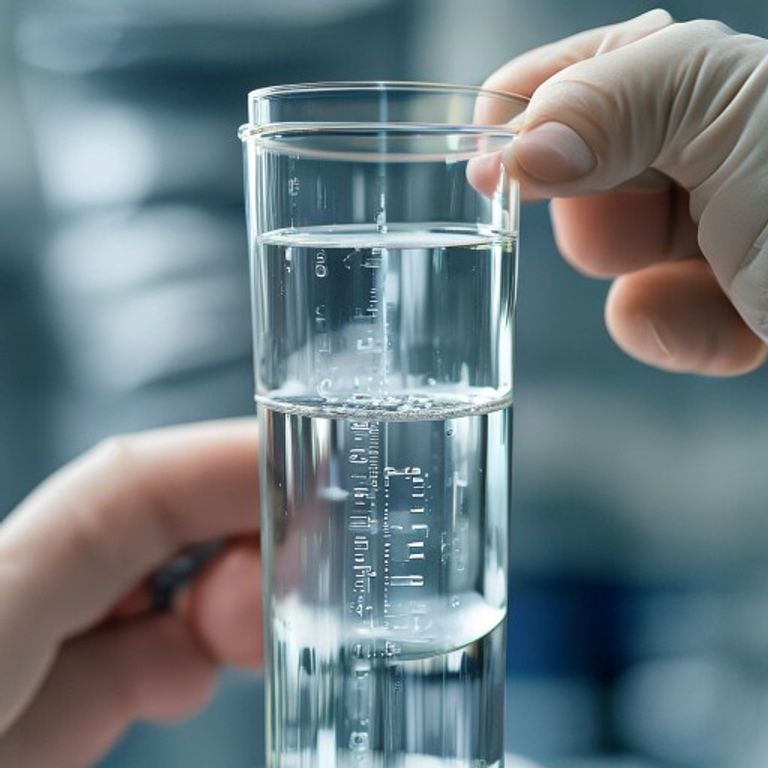
Let’s start with the basics. A graduated cylinder is essentially a tall, cylindrical container with a spout on top for easy pouring, and a flat base for stability. What truly sets it apart, though, are the precise markings, or “graduations,” etched along its side. These lines indicate specific volumes, allowing us to measure liquids with a good degree of accuracy.
So, what is a graduated cylinder used for? Its primary role is to measure the volume of a liquid, solution, or even a solid (by displacement). Think of it like a measuring cup, but for scientific purposes, designed to be much more accurate than, say, a common kitchen measuring cup. Its design—a narrow column—is key to its precision. The narrower the column, the more distinguishable each marked volume becomes, making it easier for us to get a precise reading. You’ll find these pieces of scientific equipment in almost any lab where liquids need to be quantified.
Graduated Cylinder vs. Beaker: Unpacking the Differences
When we talk about laboratory glassware for holding liquids, two items often come to mind: the graduated cylinder and the beaker. While they both hold liquids, they serve very different purposes. Understanding the graduated cylinder vs beaker difference is crucial for choosing the right tool for your task.
Graduated Cylinder: As we’ve discussed, its main purpose is precise volume measurement. The narrow, tall shape and fine graduations allow for readings with relatively high accuracy. It’s built for measuring and dispensing specific amounts of liquid.
Beaker: A beaker, on the other hand, is wider, shorter, and has much cruder volume markings (if any significant ones at all). While it can give you a rough idea of volume, its primary function is for holding, mixing, and heating liquids. It’s like a mixing bowl in your kitchen – great for combining ingredients, but not for precisely measuring a teaspoon of vanilla.
So, if you need to measure out 50 mL of a reagent for an experiment, you grab the graduated cylinder. If you need to heat 100 mL of water, dissolve a solid, or collect a filtrate, the beaker is your friend. Always use the right tool for the job to ensure the success and accuracy of your experiments!
Mastering the Art: How to Read a Graduated Cylinder Accurately
This is where many people can stumble, but don’t worry, it’s simpler than it sounds. Knowing how to read a graduated cylinder accurately is vital for getting reliable results. The key lies in understanding the meniscus.
When you pour a liquid into a glass cylinder, you’ll notice that the surface isn’t perfectly flat. For most liquids, especially water, it forms a slight curve, dipping down in the middle. This curve is what we call the meniscus. To get an accurate reading, we always read the bottom of this curve. Here’s a quick guide:
Place on a Flat Surface: Always set the graduated cylinder on a level surface (like your lab bench) before taking a reading. Holding it in your hand can lead to parallax errors.
Eye Level: Crouch down so your eye is perfectly level with the bottom of the meniscus. If you look down at it (from above), the reading will appear lower than it actually is. If you look up at it (from below), it will appear higher. This is a common source of error in graduated cylinder measurement accuracy.
Read the Bottom of the Meniscus: Identify the lowest point of the curve of the liquid’s surface. Read the volume mark that aligns with this lowest point.
Estimate Between Marks: Graduated cylinders have major markings and smaller subdivisions. If the meniscus falls between two small marks, estimate the last digit. For example, if the smallest marks are 1 mL increments, you might estimate to the nearest 0.1 mL.
By following these steps, you’ll significantly improve your accuracy and confidence in volume measurement.
Tips for Optimal Use and Accuracy in Volume Measurement
To get the most out of your graduated cylinder and ensure the best possible volume measurement accuracy, keep these practical tips in mind:
Choose the Right Size: Always select a graduated cylinder whose capacity is close to the volume you need to measure. Trying to measure 5 mL in a 1000 mL cylinder will be far less accurate than using a 10 mL cylinder. The smaller the cylinder, the finer the graduations relative to the total volume, thus improving precision.
Cleanliness is Key: Ensure your graduated cylinder is sparkling clean before use. Residues can affect the meniscus formation and contaminate your samples.
Handle with Care: While they are robust pieces of laboratory glassware, graduated cylinders can break. Avoid sudden temperature changes and rough handling.
Don’t Heat: Unlike beakers or Erlenmeyer flasks, graduated cylinders are generally not designed for heating. The rapid temperature changes can crack the glass and affect their calibration.
Rinse After Use: To prevent stubborn residues, rinse the cylinder immediately after use with an appropriate solvent (often just water) and then clean thoroughly.
Remember, while graduated cylinders offer good accuracy, for extremely precise work, such as preparing standard solutions, we might opt for a volumetric flask vs Erlenmeyer flask. Volumetric flasks are calibrated to contain a single, highly accurate volume, making them the gold standard for ultimate precision in some scenarios.
Kesimpulan
The graduated cylinder might seem like a simple piece of scientific equipment, but its role in the lab is anything but. From measuring reagents to preparing solutions, knowing what is a graduated cylinder used for and how to read a graduated cylinder accurately is fundamental to successful experiments. By understanding its specific application, distinguishing it from other glassware like beakers, and following best practices for reading the meniscus, you’ll be well on your way to becoming a lab pro. Keep experimenting, keep learning, and always strive for accuracy!
FAQ
Q: Can a graduated cylinder be used to heat liquids?
A: Generally, no. Graduated cylinders are not designed for heating. The glass may not withstand high temperatures or rapid temperature changes, which can lead to cracking or breaking. Always use beakers or Erlenmeyer flasks for heating liquids.
Q: How accurate is a graduated cylinder compared to other glassware?
A: Graduated cylinders offer good accuracy for general laboratory measurements. They are more accurate than beakers or Erlenmeyer flasks for volume measurement but less accurate than volumetric flasks or pipettes, which are calibrated for very high precision for specific volumes.
Q: What is parallax error when reading a graduated cylinder?
A: Parallax error occurs when your eye is not level with the meniscus when taking a reading. Looking from above or below the meniscus can make the volume appear different from its actual value, leading to an inaccurate measurement. Always ensure your eye is at the same level as the bottom of the meniscus.
Q: Can I use a graduated cylinder to measure solids?
A: Yes, you can measure the volume of irregularly shaped solids using the water displacement method with a graduated cylinder. You measure the initial volume of water, then submerge the solid and measure the new volume. The difference between the two volumes is the volume of the solid.