The Unsung Hero of Precision: Your Complete Guide to Mastering the Graduated Cylinder

Ever walked into a science lab and wondered about all those fancy pieces of glassware? Among them, there’s one particular item that might seem unassuming but is incredibly powerful when it comes to accuracy: the graduated cylinder. For anyone involved in scientific work, from budding students to seasoned professionals, understanding this piece of laboratory glassware is absolutely crucial for precise volume measurement.
Today, we’re going to dive deep into everything about the graduated cylinder. We’ll cover what it is, how it’s used, why it’s different from other lab tools, and most importantly, how to get the most accurate readings possible. So, if you’ve ever struggled with a meniscus reading or wondered about the best way to measure with a graduated cylinder, you’re in the right place!
What Exactly is a Graduated Cylinder?
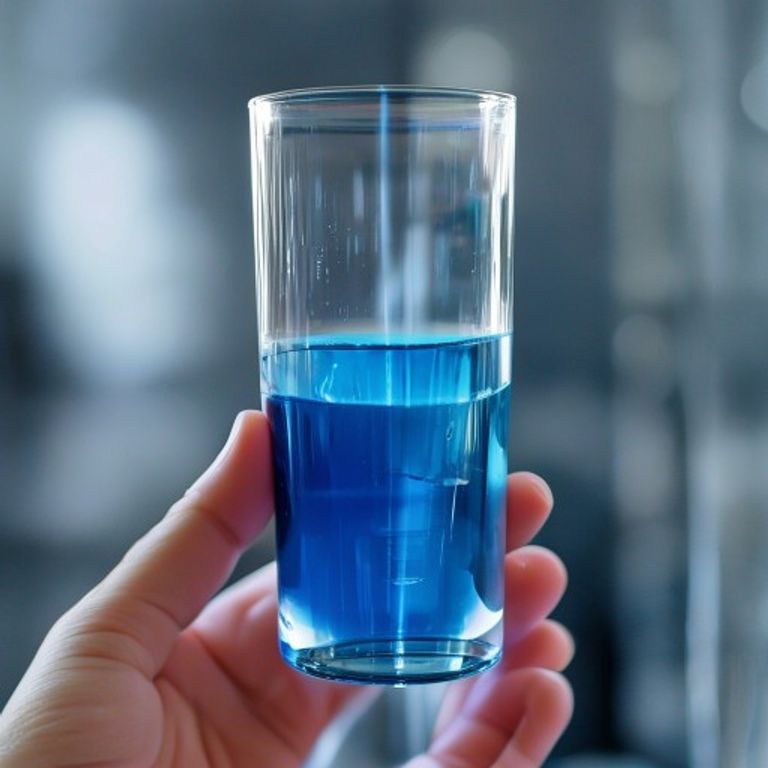
At its core, a graduated cylinder is a piece of scientific equipment designed to accurately measure the volume of a liquid. Imagine a tall, narrow cylinder with markings (graduations) along its side. These markings represent specific volumes, usually in milliliters (mL). Unlike a simple beaker, which is more for holding or mixing, the graduated cylinder is built with precision in mind. Its narrow diameter allows for a more accurate reading of the liquid’s surface, making it an indispensable tool for experiments where exact amounts are key.
We often take its capabilities for granted, but the careful design and calibration of this simple tool are what enable us to conduct reliable experiments and make accurate scientific observations.
Graduated Cylinder vs. Beaker: Why the Distinction Matters
This is a classic question, isn’t it? Many newcomers to the lab often confuse a graduated cylinder with a beaker. While both are used for liquids, their functions are quite distinct. Think of it this way: a beaker is like your everyday kitchen mug – great for holding coffee or mixing ingredients, but you wouldn’t use it to measure out exactly 237 mL for a baking recipe. It gives you a rough idea, but not precision.
A graduated cylinder, on the other hand, is like a measuring cup specifically designed for exactness. It has narrow sides and fine markings, which significantly reduce the margin of error when measuring volume. So, if you need to measure precisely, always opt for the graduated cylinder. If you just need to hold a liquid or heat something, a beaker is perfectly fine. For a deeper dive into the specific uses of beakers, you might want to check out The Ultimate Guide to Beaker Uses.
The Art of Accuracy: How to Read a Graduated Cylinder Correctly
This is where things get interesting, and it’s arguably the most important skill when using this equipment. Learning how to read a graduated cylinder properly is key to precise results. When a liquid is poured into a narrow container like a graduated cylinder, its surface often forms a curve called a meniscus. For most aqueous (water-based) solutions, this curve will be concave, dipping down in the middle.
Here’s the correct way to measure with a graduated cylinder:
- Eye Level is Key: Always place the graduated cylinder on a flat surface and bring your eye level down to the same height as the meniscus. Looking from above or below will lead to parallax error, giving you an inaccurate reading.
- Read the Bottom of the Meniscus: For concave menisci (which is most common), you read the measurement at the very bottom of the curve. Imagine a line touching the lowest point of the liquid surface.
- Estimate the Last Digit: Graduated cylinders often have major and minor markings. For example, if the smallest mark is 1 mL, you should try to estimate to the nearest 0.1 mL. If the meniscus falls between 25 mL and 26 mL, and it’s slightly below the halfway mark, you might estimate it as 25.4 mL. This estimation adds an extra digit of precision.
Mastering this technique is a cornerstone of accurate experimental work.
Beyond Measurement: What is a Graduated Cylinder Used For?
While its primary function is accurate volume measurement, a graduated cylinder plays a role in various laboratory tasks. So, what is a graduated cylinder used for in practical terms?
- Preparing Solutions: When you need to create a solution with a specific concentration, measuring the solvent (often water) with precision is critical, and that’s where our cylindrical friend shines.
- Dilutions: If you’re diluting a concentrated solution, you’ll use a graduated cylinder to measure the exact amount of the original solution and the diluent.
- Transferring Exact Volumes: Sometimes you need to transfer a specific volume from one container to another without altering it, and a graduated cylinder ensures that accuracy.
- Density Measurements: To determine the density of a liquid or an irregularly shaped solid, you’ll often use a graduated cylinder to find the volume.
It’s not just about measuring; it’s about enabling a wide range of scientific procedures with confidence.
Choosing the Right Size: Graduated Cylinder Sizes and Accuracy
Just like shoes, graduated cylinders come in various sizes, and choosing the right one directly impacts your accuracy. Common graduated cylinder sizes range from small 10 mL cylinders all the way up to 1000 mL (1 Liter) or even 2000 mL. The general rule of thumb is to choose the smallest graduated cylinder that can comfortably hold the volume you need to measure.
Why? Because smaller cylinders typically have finer gradations and a narrower diameter, which means a smaller absolute error in your reading. For instance, a 10 mL cylinder might have markings every 0.1 mL, allowing you to estimate to 0.01 mL. A 1000 mL cylinder, however, might only have markings every 10 mL, making it harder to get a precise reading for small volumes. So, for maximum graduated cylinder accuracy, always pick the appropriate size for your specific task.
Conclusion
The graduated cylinder may not be the flashiest piece of scientific equipment in the lab, but it’s undoubtedly one of the most important for achieving precise and reliable results. By understanding its purpose, how it differs from other laboratory glassware like beakers, and mastering the proper technique for reading the meniscus, you’re well on your way to becoming a more accurate and confident scientist. Remember, precision in volume measurement is not just a nice-to-have; it’s fundamental to good science.
FAQ
Q: Can I heat liquids in a graduated cylinder?
A: Generally, no. Graduated cylinders are typically made of borosilicate glass (Pyrex or Kimax) which can withstand some heat, but they are not designed for direct heating like beakers or flasks. The precise volume markings can also be affected by heating and cooling. It’s always best to transfer liquids to a beaker or flask for heating.
Q: Is a graduated cylinder more accurate than a volumetric flask?
A: It depends on the application. A volumetric flask is designed to measure one specific, highly accurate volume (e.g., exactly 100.00 mL) when filled to its calibration mark. A graduated cylinder measures variable volumes with good accuracy, but generally less precisely than a volumetric flask for that single, specific volume. For preparing standard solutions, a volumetric flask is preferred for ultimate precision.
Q: How do I clean a graduated cylinder?
A: For most everyday lab use, washing with detergent and a brush, followed by rinsing thoroughly with tap water and then distilled water, is sufficient. Always ensure it’s completely dry before use, especially if measuring non-aqueous solutions or if water contamination is an issue.