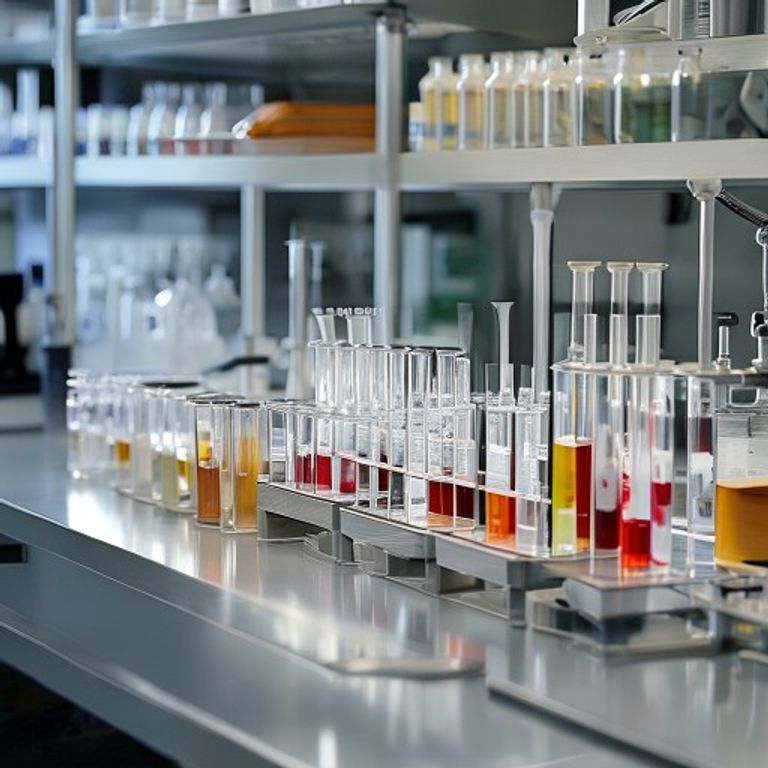
Unlocking the Potential: Essential Test Tube Rack Uses in Every Lab

Introduction: Beyond Just a Stand – The Unsung Hero of the Lab
In the bustling world of chemistry and science, we often get captivated by the flashier equipment – the roaring Bunsen burner, the precise burette, or the intricate glassware. Yet, there’s a quiet workhorse that plays an indispensable role in almost every experiment we conduct: the humble test tube rack. It might seem like a simple piece of laboratory equipment, but its uses are far more critical than just holding a few glass tubes. Today, we’re going to dive deep into what makes this everyday item so crucial, from ensuring safety to streamlining our scientific endeavors.
Think of it like the reliable co-pilot to your main experiment. Without it, things would quickly become messy, dangerous, and incredibly inefficient. So, let’s pull back the curtain and explore the multifaceted roles of a test tube rack.
What is a Test Tube Rack, Anyway?
At its core, a test tube rack is a stand designed to hold multiple test tubes upright. Simple, right? But its design is incredibly practical. They come in various materials – plastic for general use, wood for a classic feel and good insulation, and metal (often wire) for applications requiring high heat resistance or sterilization. Each type serves a slightly different purpose, but their primary function remains consistent: providing a stable and organized home for our precious samples and reagents.
The Core Purpose: Why Every Chemist Needs a Test Tube Rack
When we ask ourselves, “what is the purpose of a test tube rack in a chemistry lab?”, the answer isn’t singular. It’s a combination of practical necessities and safety protocols that make it indispensable.
1. Safety First: Preventing Spills and Breakages
This is arguably the most critical use. Imagine a lab bench cluttered with test tubes lying on their sides, filled with unknown chemicals. It’s a recipe for disaster! A test tube rack keeps tubes upright, preventing accidental spills that could lead to chemical exposure, contamination, or even dangerous reactions. It also significantly reduces the risk of test tubes rolling off the bench and breaking, protecting both our experiments and ourselves from sharp glass.
2. Organization and Efficiency: Keeping Your Workspace Tidy
A well-organized workspace is a sign of a professional scientist. Test tube racks help us keep our experiments neat and orderly. When we’re running multiple reactions or preparing several samples, a rack allows us to label and arrange test tubes systematically. This organization isn’t just about aesthetics; it boosts efficiency, reduces confusion, and minimizes errors, especially during complex chemical experiments like titration where precision is key.
3. Holding Tubes During Reactions and Heating
Many chemical reactions take place within test tubes. Whether we’re mixing reagents, observing color changes, or heating substances, the rack provides a stable base for the test tube. For heating, while we usually hold a single test tube with a clamp over a Bunsen burner flame, the rack is essential for holding the tube before and after heating, allowing it to cool safely without direct contact with the bench surface.
4. Drying and Storage: Post-Experiment Essentials
After an experiment, test tubes need to be cleaned and dried. Racks are perfect for air-drying washed test tubes, allowing water to drain completely and preventing water spots. For short-term storage, they keep cleaned tubes ready for the next experiment, maintaining a sterile or clean environment until use. This contributes to the overall cleanliness and readiness of our scientific glassware.
5. Setting Up Experiments: The Staging Area
Before an experiment even begins, test tube racks serve as a crucial staging area. We can prepare various reagents in separate test tubes, ensuring everything is pre-measured and ready to go. This makes the transfer of liquids or solids much smoother. For example, when performing titrations, a rack can hold the various aliquots or standard solutions, keeping them within easy reach and preventing mix-ups.
Choosing and Using Your Test Tube Rack Safely
While simple, there are still best practices for using these racks. Always choose a rack appropriate for the size of your test tubes. If you’re working with hot materials, a wooden or metal rack is usually preferred over plastic, as plastic can melt or deform. Remember, never heat a test tube while it’s in a plastic rack – the rack is for holding, not direct heating. Always place the rack on a stable, flat surface to prevent tipping, especially when it’s full.
Beyond the Lab Bench: Common Applications of a Test Tube Rack in Science
While we’ve focused heavily on chemistry, test tube racks are indispensable across various scientific disciplines. In biology, they hold samples for microbiology cultures or blood tests. In environmental science, they might hold water samples for analysis. Essentially, any field that uses test tubes relies on these racks for safety, organization, and efficiency. They are truly versatile tools.
Conclusion: A Small Tool, A Big Impact
So, the next time you step into a lab and spot a test tube rack, take a moment to appreciate its silent yet significant contribution. It’s more than just a holder; it’s a fundamental component of chemistry lab safety, organization, and the seamless execution of scientific experiments. From preventing spills to streamlining our workflow, the test tube rack truly is an unsung hero, making our scientific journey safer, cleaner, and more productive. It’s a perfect example of how even the simplest tools can have the greatest impact.
FAQ (Frequently Asked Questions)
- What are test tube racks typically made of?
Test tube racks are commonly made from plastic (polypropylene, polyethylene), wood, or metal (stainless steel, coated wire). Each material offers different properties regarding heat resistance, chemical compatibility, and durability. - Can I heat a test tube while it’s in the rack?
No, generally not. While metal or wooden racks might withstand some heat, you should never directly heat a test tube while it’s in any rack, especially plastic ones, as it can damage the rack or pose a safety hazard. Always remove the test tube and hold it with a test tube clamp when heating over a flame. - How do I clean a test tube rack?
Cleaning depends on the material. Plastic and metal racks can usually be washed with soap and water, or sometimes disinfected with appropriate lab cleaning agents. Wooden racks might require special care to prevent warping or mold growth. Always check manufacturer guidelines if available. - Why is proper organization with test tube racks important in a lab?
Proper organization is crucial for lab safety, efficiency, and accuracy. It prevents accidental mixing of chemicals, reduces spills, makes it easier to track samples, and saves valuable time during experiments. A cluttered workspace is a dangerous and inefficient workspace.