Unlocking Lab Precision: Your Essential Guide to the Graduated Cylinder

Ever walked into a lab and seen those tall, slender glass or plastic tubes with markings along the side? Chances are, you’ve spotted a graduated cylinder. It might seem like a simple piece of laboratory equipment, but trust me, it’s an unsung hero when it comes to accurately measuring liquid volumes. If you’re new to the lab world or just want to brush up on your skills, you’re in the right place! We’re going to dive deep into everything you need to know about this indispensable tool.
What Exactly is a Graduated Cylinder?
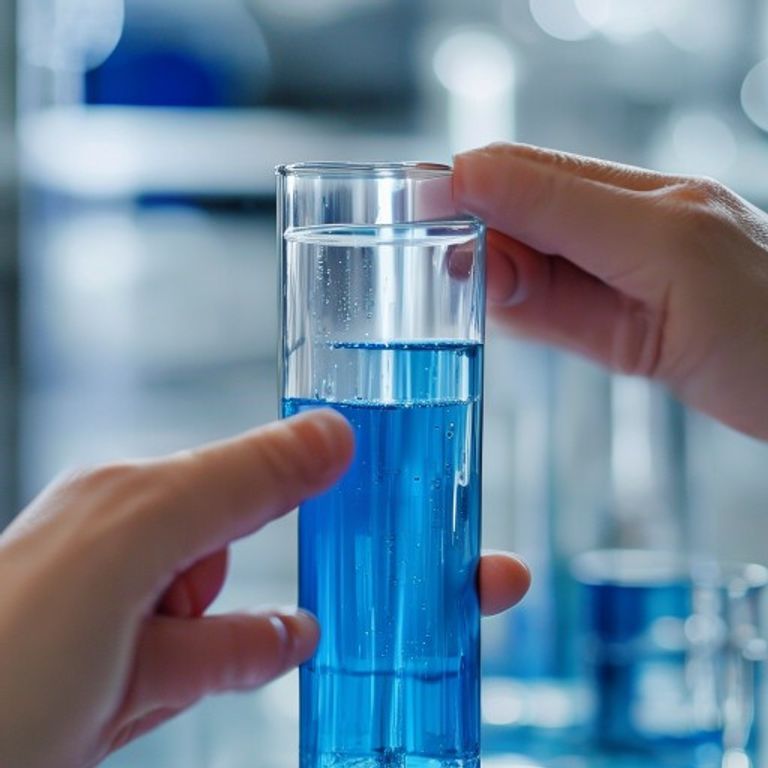
At its core, a graduated cylinder is a cylindrical piece of laboratory glassware (though often made from plastic nowadays for durability) designed specifically for precise volume measurement of liquids. Unlike a beaker or an Erlenmeyer flask, which are more for mixing or holding, the graduated cylinder’s primary job is to tell you exactly how much liquid you have. Its narrow diameter and clear markings (graduations) allow for much more accurate readings compared to other general-purpose containers.
What is a Graduated Cylinder Used For?
So, what is a graduated cylinder used for? Primarily, it’s used to measure a specific volume of liquid. Imagine you’re doing an experiment and need precisely 50 milliliters of water, or perhaps 75 ml of a chemical solution. This is where our trusty graduated cylinder shines! It’s an everyday workhorse in chemistry labs, biology labs, and even in many industrial settings where accurate liquid dispensing is crucial. While it’s great for measuring, we usually don’t use it for mixing, heating, or storing chemicals for long periods, as its tall, narrow design isn’t ideal for those tasks.
How to Read a Graduated Cylinder Accurately
Reading a graduated cylinder isn’t just about glancing at the numbers; there’s a specific technique involved to ensure accuracy. Here’s how we do it:
Place on a Flat Surface: Always set the cylinder on a level surface to prevent any skewed readings.
Eye Level: This is crucial. Crouch down so your eye is perfectly level with the liquid’s surface. If you look from above or below, you’ll get an incorrect reading due to parallax error.
Observe the Meniscus: For most liquids (especially water), you’ll notice the liquid surface isn’t perfectly flat. Instead, it forms a curve, dipping in the middle. This curve is called the meniscus. When reading, always take the measurement from the bottom of this curve.
Read the Smallest Increment: Pay attention to the markings. A 100ml graduated cylinder, for example, might have major markings every 10 ml, minor markings every 1 ml, and even smaller lines for 0.1 ml. Always read to the finest division and then estimate one more digit. This attention to detail is part of mastering your lab skills.
For a deeper dive into precise liquid handling techniques and to truly Master Your Lab: The Essential Guide to Measuring Cylinders for Accurate Volume Measurement, we’ve got a comprehensive guide that breaks down all the nuances.
Graduated Cylinder Accuracy: What You Need to Know
While graduated cylinders are great for measuring, it’s important to understand their limitations regarding graduated cylinder accuracy. They are considered accurate for general laboratory work, typically with an error margin of about 1% of their full scale. This means a 100ml graduated cylinder might have an uncertainty of ±1ml. If you need extremely high precision, like measuring for analytical chemistry, you’ll likely turn to other volumetric glassware such as a volumetric flask or pipettes. For instance, if you want to understand instruments that offer even greater exactitude, learning about the secret to precision, unveiling how pipettes work in your lab can be quite illuminating.
Graduated Cylinder vs. Beaker: Why the Difference Matters
This is a common point of confusion for beginners: graduated cylinder vs beaker. Both hold liquids, right? Yes, but their purposes are distinct. Beakers are wide-mouthed containers primarily used for mixing, heating, and holding liquids temporarily. Their markings are very approximate—think of them as serving suggestions, not precise measurements. A beaker might indicate 100ml, but it could easily be off by 5-10% or more. A graduated cylinder, with its narrow design and finer divisions, is specifically calibrated for accuracy in volume measurement. So, remember: for approximate holding, use a beaker; for accurate measurement, grab a graduated cylinder.
Types and Sizes
Graduated cylinders come in various sizes and materials. You’ll commonly find them in volumes ranging from 5ml all the way up to 2000ml or more. A 100ml graduated cylinder is one of the most frequently used sizes in many labs due to its versatility. While glass is traditional, plastic versions (often polypropylene or polymethylpentene) are increasingly popular, especially in educational settings or where corrosive chemicals are used, because they are shatter-resistant and sometimes offer better chemical resistance. The 100ml graduated cylinder price can vary significantly depending on the material, brand, and precision class.
Kesimpulan
From understanding what it is and what it’s used for, to mastering how to read a graduated cylinder, we’ve covered the essentials. This simple yet vital piece of laboratory equipment is your go-to for accurate liquid volume measurement in countless experiments. Remember its role, respect its accuracy (and its limitations), and always read that meniscus correctly. With a little practice, using a graduated cylinder will become second nature, helping you achieve more reliable results in all your scientific endeavors!
FAQ
What is the most accurate way to read a graduated cylinder?
The most accurate way is to place it on a flat surface, get your eye level with the bottom of the liquid’s meniscus, and read the lowest point of that curve. Always read to the smallest marked increment and then estimate one more digit.
Can I heat liquids in a graduated cylinder?
No, graduated cylinders are generally not designed for heating. The rapid temperature changes can cause glass cylinders to crack, and plastic ones may melt or deform, affecting their accuracy.
What’s the difference between a graduated cylinder and a volumetric flask?
A graduated cylinder measures varying volumes with reasonable accuracy. A volumetric flask, on the other hand, is designed to measure one specific, highly accurate volume (e.g., exactly 100.00 ml) when filled to its calibration mark. Volumetric flasks are used for preparing solutions of precise concentrations.
Why do some liquids form a curved meniscus and others a flat one?
The meniscus forms due to the interplay of adhesive forces (attraction between liquid and container) and cohesive forces (attraction within the liquid itself). Water, for example, is more attracted to glass than to itself, so it “climbs” the sides, forming a concave meniscus. Mercury, conversely, is more attracted to itself, forming a convex meniscus (curving upwards).
Is a plastic graduated cylinder as accurate as a glass one?
Generally, glass graduated cylinders are considered to offer slightly higher precision and are less prone to scratching or chemical reaction with certain solvents compared to plastic. However, high-quality plastic graduated cylinders can provide very good accuracy and are much more durable, making them excellent for many applications, especially in educational or field settings.