Unlocking Lab Secrets: What Exactly Does a Pipette Measure?

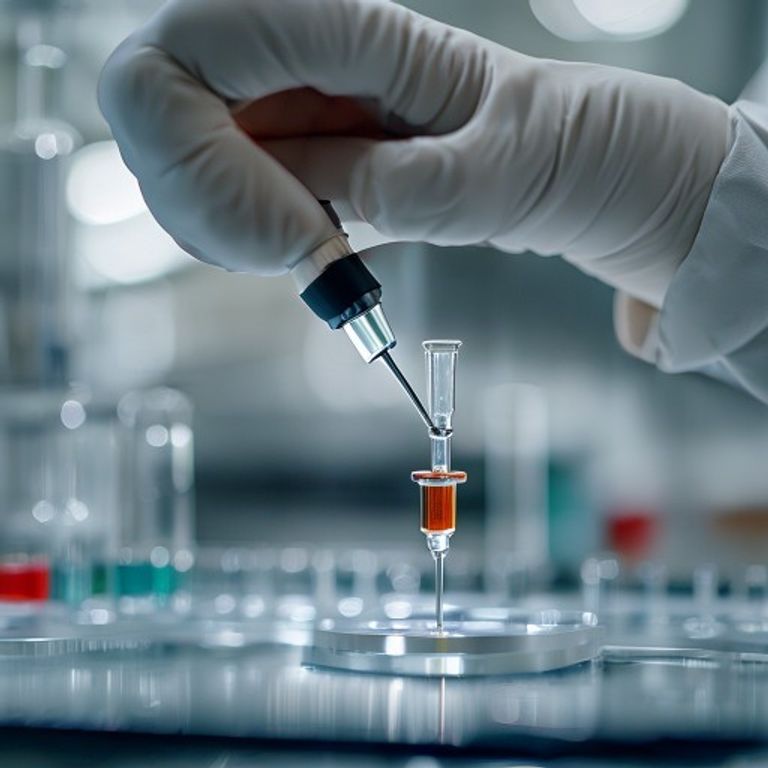
Ever wondered how scientists manage to mix chemicals with such incredible precision? It’s not magic, it’s meticulous work, often thanks to a humble yet powerful piece of laboratory equipment: the pipette. If you’ve ever seen a lab, you’ve probably spotted these sleek tools, poised to transfer liquids with astounding accuracy. But what exactly does a pipette measure? And why is it so indispensable in almost every scientific field? Let’s dive in and unravel the secrets behind this essential instrument!
Here at our lab, we know firsthand that precise volume measurement is the backbone of reliable experimental results. Unlike pouring from a large container, which gives you a rough estimate, a pipette is designed for something far more critical: measuring and transferring exact, predetermined volumes of liquid. Think of it like using a tiny, hyper-accurate measuring spoon for liquids, ensuring that every drop counts and every experiment starts with the correct ingredients.
What Precisely Does a Pipette Measure?
At its core, a pipette measures and dispenses specific, accurate volumes of liquid. While other tools like beakers or flasks might hold liquids, they’re typically for approximate volumes or storage. Pipettes, however, are engineered for true precision. When we talk about what does a pipette measure, we’re talking about anything from minuscule drops that are barely visible to a few milliliters of solution, all with a degree of exactness that’s crucial for scientific integrity.
Imagine baking a cake where you need exactly 250 grams of flour. You wouldn’t just eyeball it; you’d use a precise scale. In the lab, pipettes serve a similar purpose for liquids, ensuring that the volume you intend to transfer is the volume you actually transfer. This accuracy is paramount for research, diagnostics, and quality control.
The World of Liquid Volumes: What Can Pipettes Handle?
The beauty of pipettes lies in their versatility across a vast range of liquid volumes. So, what liquid volumes do pipettes measure? From the incredibly tiny to moderately small, there’s a pipette for almost every need:
- Microliters (µL): This is where micropipettes shine. They can measure volumes as small as 0.1 microliters (that’s one ten-thousandth of a milliliter!). This answers the question: what is the smallest volume a pipette can measure? These tiny volumes are vital in molecular biology, genetics, and pharmaceutical research, where reagents are often expensive and samples are scarce.
- Milliliters (mL): Larger pipettes, like volumetric or serological pipettes, handle volumes typically ranging from 1 mL up to 100 mL. These are common in chemistry, clinical labs, and environmental testing.
So, whether it’s a DNA sample, a specific enzyme solution, or a reagent for a chemical reaction, pipettes are our go-to tools for accurate liquid transfer.
Accuracy is Key: How Precisely Do Pipettes Measure?
This is where pipettes truly stand out from other laboratory equipment. How accurately do pipettes measure liquids? Well, depending on the type and proper technique, pipettes can achieve incredible levels of precision, often within 0.1% to 1% of the target volume. This is why they are considered essential analytical instruments.
Think of it this way: trying to measure a teaspoon of salt with a bulldozer scoop wouldn’t work, right? You need the right tool for the job. Pipettes are designed with meticulous engineering to minimize error, especially volumetric pipette accuracy. To maintain this high standard, regular calibration is crucial, ensuring that the pipette consistently delivers the volume it’s set for.
Different Pipettes for Different Tasks: Types and Their Uses
Just like you wouldn’t use a screwdriver for every repair job, there are different types of pipettes, each designed for specific measurement needs. Let’s look at what types of pipettes measure different volumes:
- Volumetric Pipettes (Bulb Pipettes): These are the champions of accuracy for a single, fixed volume (e.g., 10 mL, 25 mL). They have a bulb in the middle and deliver a very precise, predetermined volume when filled to a specific mark. They are often used when extreme accuracy is non-negotiable.
- Graduated Pipettes (Serological Pipettes): These are like scientific rulers for liquids. They have graduation marks along their length, allowing us to measure variable volumes, although typically with slightly less precision than volumetric pipettes. They’re great for when we need to dispense multiple different volumes from the same pipette.
- Micropipettes (Adjustable Pipettes): These are the workhorses for tiny volumes, as mentioned earlier. They allow us to set a desired volume (e.g., 0.5 µL to 1000 µL) within their range, making them incredibly versatile for molecular biology and microbiology. They often use disposable tips to prevent cross-contamination.
- Electronic Pipettes: For repetitive pipetting tasks or those requiring precise speed, electronic pipettes offer motorized aspiration and dispensing, reducing user fatigue and improving consistency.
Why Pipettes Reign Supreme for Precise Liquid Measurement
So, why use a pipette for precise liquid measurement when other tools exist? The answer boils down to consistency, reliability, and the very foundation of scientific research. The pipette function is critical because:
- Reproducibility: In science, we need to be able to repeat experiments and get the same results. Accurate volume measurement with pipettes ensures that the starting conditions for each experiment are identical.
- Minimizing Error: Even a tiny error in reagent concentration can throw off an entire experiment. Pipettes help us minimize these critical errors.
- Safety and Economy: For hazardous or expensive reagents, precise measurement ensures we use only what’s necessary, reducing waste and risk.
Without pipettes, many complex analyses and breakthroughs in medicine, biology, and chemistry simply wouldn’t be possible. They truly are an unsung hero of the lab!
Conclusion
From the smallest drop to several milliliters, pipettes are the undisputed champions of accurate volume measurement and liquid transfer in the lab. They allow us to handle precious samples and critical reagents with the precision needed to unlock scientific mysteries, develop new medicines, and ensure the safety of our world. So, the next time you hear someone ask what does a pipette measure, you can confidently explain that it measures the very foundation of reliable scientific discovery!
FAQ
Q: What’s the main difference between a pipette and a dropper?
A: A dropper (like an eyedropper) is for approximate, qualitative transfer of liquids, often just “a few drops.” A pipette, on the other hand, is an accurate analytical instrument designed to measure and transfer a precise, quantifiable volume of liquid.
Q: Can I use a pipette for any liquid?
A: While pipettes are versatile, their use depends on the liquid’s properties. Viscous liquids, highly volatile solvents, or extremely corrosive acids might require specialized pipettes or techniques to ensure accuracy and prevent damage to the instrument.
Q: How often should pipettes be calibrated?
A: The frequency of calibration depends on how often the pipette is used, the type of pipette, and the required accuracy. Generally, pipettes should be calibrated at least once every 6-12 months, or more frequently if they are heavily used, drop, or if critical experiments demand the highest pipette accuracy.
Q: What is the most common type of pipette in a biology lab?
A: Micropipettes are arguably the most common type in biology labs due to their ability to precisely measure and transfer very small volumes (microliters) of DNA, RNA, proteins, and reagents used in molecular biology, cell culture, and immunology.