Beyond Just Stirring: Unlocking Every Essential Glass Rod Function in Your Lab

In the bustling world of chemistry labs, where precision and efficiency are paramount, we often find ourselves surrounded by an array of specialized equipment. From complex spectrometers to intricate titration setups, each tool plays a vital role. Yet, among these high-tech marvels, there’s one humble piece of laboratory glassware that often goes unnoticed but is incredibly indispensable: the glass rod. It might seem like a simple stick of glass, but its functions are far more diverse and critical than you might imagine.
For us in the lab, a glass rod isn’t just a stirring stick; it’s a silent partner that assists in countless operations, ensuring accuracy and safety. Think of it as the unsung hero, quietly making sure everything runs smoothly, much like a good assistant behind the scenes. So, let’s dive deep and explore the multifaceted glass rod function that makes it an absolute must-have in any scientific setting.
More Than Just a Stirrer: The Primary Glass Rod Function
When someone asks, “what is the function of a glass rod in chemistry?”, the first answer that usually springs to mind is “stirring.” And they wouldn’t be wrong! This is indeed its most common and fundamental application. We use glass rods to:
- Mix Solutions: Whether we’re dissolving a solid solute into a solvent or blending two liquids, a glass rod provides an inert, non-reactive tool for thorough mixing. Its smooth surface ensures that no contaminants are introduced, unlike some metal spatulas that might react with certain chemicals.
- Aid Dissolution: Ever tried to dissolve sugar in cold tea without stirring? It takes ages! A glass rod speeds up the dissolution process by constantly bringing fresh solvent into contact with the solute, ensuring a homogeneous mixture much faster.
- Homogenize Suspensions: For solutions where particles might settle, a quick stir with a glass rod can temporarily homogenize the mixture, crucial for taking representative samples.
The beauty of the glass rod here is its chemical inertness. Made from borosilicate glass, it resists corrosion from most acids, bases, and solvents, making it a reliable choice for nearly any chemical mixing task we encounter.
Mastering Decantation: How to Use a Glass Rod for Clean Separations
Beyond simple mixing, one of the most elegant and practical uses of a glass rod is in decantation. If you’ve ever needed to separate a liquid from a solid precipitate or from another immiscible liquid without disturbing the bottom layer, you know the challenge. This is where the glass rod truly shines.
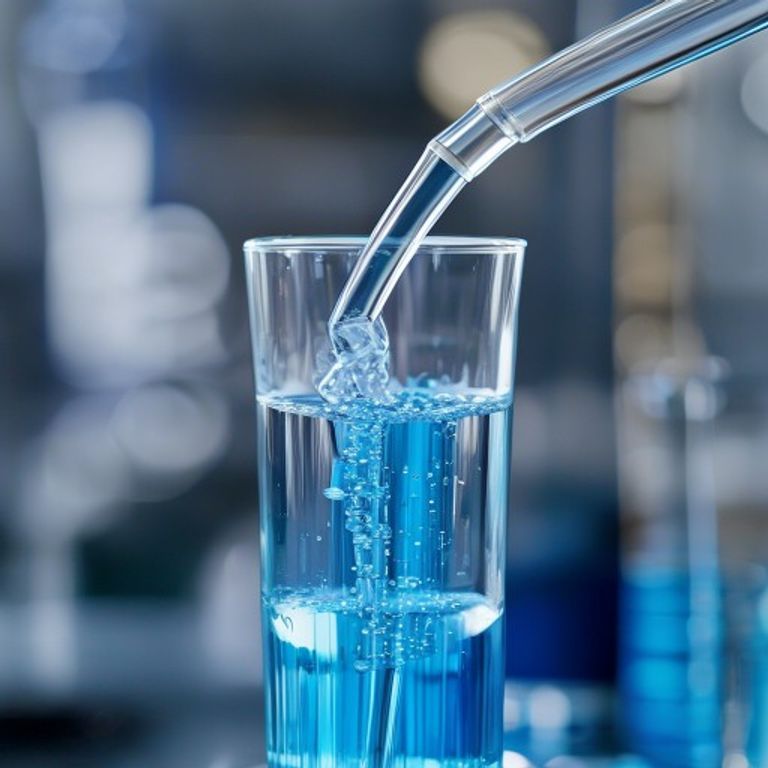
When we perform decantation, we carefully pour the top liquid layer off, leaving the solid behind. To prevent splashing and ensure a smooth, controlled flow, we hold a glass rod against the lip of the beaker or flask. The liquid flows down the rod, creating a narrow, directed stream that minimizes turbulence and prevents the settled solid from being re-suspended. It’s like having a miniature slide for your liquid, guiding it precisely where you want it to go without making a mess or contaminating your separation. This technique is crucial for obtaining clean supernatants.
Precision and Safety: The Role of a Glass Rod in Solution Preparation
The purpose of a glass rod in solution preparation extends beyond just mixing. It’s a key tool for precision and safety, especially when dealing with concentrated acids or bases.
- Preventing Splashing During Transfer: When adding a concentrated acid to water (always add acid to water, never the other way around!), we can use a glass rod to direct the acid slowly down the side of the beaker. This minimizes heat generation and splashing, making the process much safer.
- Transferring Liquids Accurately: Similar to decantation, when transferring liquids from one container to another, especially into narrow-mouthed flasks, the rod acts as a guide. This prevents spills and ensures all the liquid reaches its intended destination.
- Aiding Dissolution of Viscous Substances: For thicker, more viscous solutions, a glass rod helps break up clumps and ensures even dispersion, making the preparation smoother.
Working with chemistry beakers and other glassware, a glass rod becomes an extension of our hands, allowing for controlled and delicate manipulations that would otherwise be difficult or dangerous.
Beyond the Basics: Other Clever Uses of Glass Rods
While stirring and decanting are its bread and butter, a glass rod has a few other tricks up its sleeve:
- Spreading Liquids: Sometimes, we need to spread a small amount of liquid evenly over a surface, like a spot plate or a TLC plate. The smooth end of a glass rod is perfect for this.
- Testing pH Paper: Instead of dipping the entire pH paper into a solution (which could contaminate it or lead to inaccurate readings if the paper sticks to the container), we can touch a drop of the solution onto the pH paper using the tip of a glass rod.
- Breaking Up Solids: For agglomerated solid chemicals, a gentle nudge with a glass rod can sometimes break them apart before weighing or dissolving.
- Initiating Crystallization: In some cases, scratching the inner surface of a flask with a glass rod can provide nucleation sites that help initiate crystallization from a supersaturated solution.
It’s truly a versatile scientific tool that adapts to many different needs in the lab.
Conclusion
From the simplest task of mixing a solution to the delicate art of decantation and safe reagent transfer, the humble glass rod proves its worth time and again. We often take it for granted, but its inert nature, smooth surface, and simple design make it an indispensable part of our laboratory toolkit. Understanding the full spectrum of its functions, from why are glass rods used for stirring to their role in complex separations, helps us appreciate this little workhorse even more. So, the next time you pick up a glass rod, remember it’s not just a stick – it’s a key to precision, safety, and efficiency in the scientific world.
Frequently Asked Questions (FAQ)
Q: What is the primary function of a glass rod in chemistry?
A: The primary function of a glass rod in chemistry is to stir and mix solutions, ensuring proper dissolution and homogeneity of mixtures without introducing contaminants.
Q: Why are glass rods used for stirring instead of other materials?
A: Glass rods are preferred for stirring because they are chemically inert (non-reactive) with most laboratory chemicals, easy to clean, heat resistant, and do not introduce impurities into the solution. Materials like metal could react with certain chemicals, while plastic might not withstand heat or aggressive solvents.
Q: How do you use a glass rod for decantation?
A: To use a glass rod for decantation, hold the rod against the lip of the container (e.g., a beaker) from which you are pouring. Tilt the container, allowing the liquid to flow slowly down the length of the glass rod. This guides the liquid, prevents splashing, and helps to separate it cleanly from a settled solid or immiscible liquid without disturbing the lower layer.
Q: How do you properly clean and maintain a glass rod?
A: Glass rods should be cleaned immediately after use with soap and water, then rinsed thoroughly with distilled or deionized water. For stubborn residues, appropriate cleaning solutions can be used. Store them safely to prevent breakage, often in a beaker or a dedicated rack.