

Understanding the Separating Funnel Principle: Simple Steps for Efficient Liquid‑Liquid Extraction

Introduction
When we first meet a separating funnel in the lab, it can look like a fancy tea‑pot with a stopcock. But underneath that simple design lies a powerful principle that lets us split a mixture of immiscible liquids into two clean layers. In this article I’ll walk you through how a separating funnel works, the physics behind the density difference, and some practical tips to avoid common pitfalls like emulsion formation.
How Does a Separating Funnel Work?
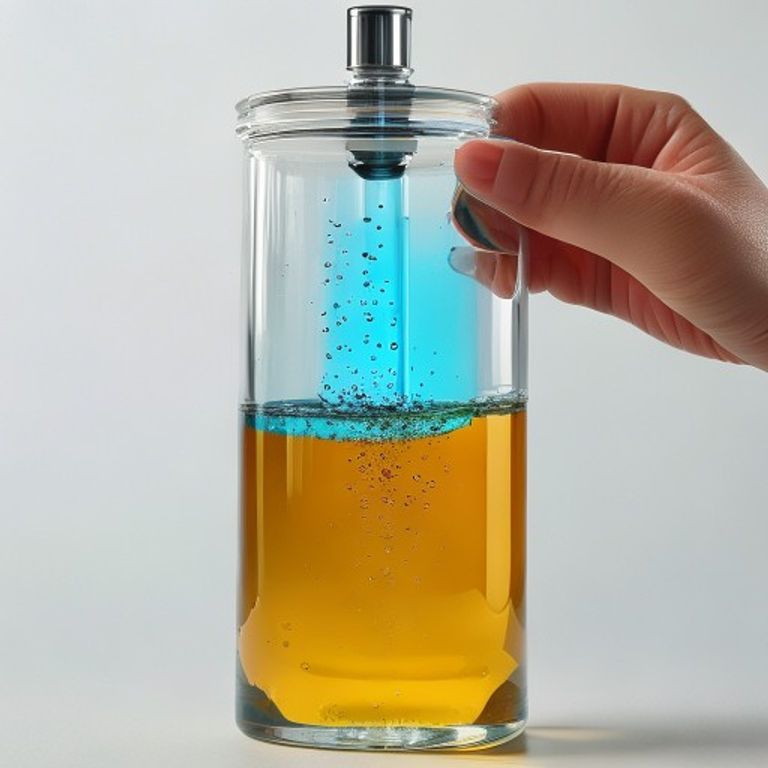
The basic idea is straightforward: you add two liquids that don’t mix (think oil and water), shake them to let the solutes transfer, let the mixture settle, then open the stopcock to drain the lower layer while the upper layer stays in the funnel.
- Step 1 – Loading: Pour the combined liquids into the funnel.
- Step 2 – Mixing: Gently invert the funnel several times. This creates a large interfacial area where the solute can move from one phase to the other.
- Step 3 – Settling: Place the funnel upright and wait for the two phases to separate based on density.
- Step 4 – Draining: Open the stopcock to release the denser (bottom) layer into a receiving flask.
- Step 5 – Closing: Close the stopcock when the interface reaches the stopcock tip, then pour out the lighter (top) layer.
Principle of Liquid‑Liquid Extraction Using a Separating Funnel
The science behind this process is essentially density separation. Each liquid has a characteristic density (mass per unit volume). When two immiscible liquids are together, the one with the higher density sinks, while the lighter one floats. This is the same reason oil floats on water.
Beyond density, the extraction efficiency depends on the partition coefficient of the solute between the two phases. A solute that prefers the organic phase will move into the oil layer during shaking, while a solute that prefers the aqueous phase will stay in water.
Practical Tips to Maximize Your Extraction
1. Choose the Right Solvent Pair
Pick solvents with a large density gap (e.g., water ≈ 1 g cm⁻³ vs. dichloromethane ≈ 1.33 g cm⁻³). This makes the layer interface sharp and easy to see.
2. Avoid Emulsion Formation
Vigorous shaking can create tiny droplets that stay suspended, forming an emulsion. To break it:
- Shake gently, then swirl.
- Add a small amount of brine or a salt solution to “salt out” the water phase.
- Let the mixture sit longer; gravity will eventually coalesce the droplets.
3. Use the Stopcock Properly
Always start the stopcock with the funnel upside‑down. This prevents the lighter layer from spilling out before you have a chance to close the tap.
4. Check the Interface
When the two layers are clearly distinct, you’ll see a sharp line. If the line is blurry, give it more time or add a drying agent to remove residual water.
5. Safety First
Wear gloves and goggles, especially when working with volatile organic solvents. Keep the funnel vented by opening the top stopcock briefly after each drainage to release any built‑up pressure.
Real‑World Example
Imagine you need to extract caffeine from coffee grounds using dichloromethane. After mixing the coffee extract (water) with dichloromethane, you shake the separating funnel, let it settle, and then drain the denser organic layer containing the caffeine. The remaining aqueous layer can be discarded or further processed. This simple operation illustrates the principle behind separating immiscible liquids in everyday lab work.
Connecting to Other Lab Essentials
If you’re curious about how other basic lab tools complement the separating funnel, check out this understanding the core test tube function. Knowing the right container for each step can streamline your workflow and reduce cross‑contamination.
Conclusion
The separating funnel is more than a piece of glass; it’s a practical application of density differences and partition chemistry. By mastering the simple steps—loading, gentle mixing, allowing phases to settle, and careful draining—you can achieve clean separations with minimal waste. Remember to choose solvents wisely, avoid emulsions, and always prioritize safety.
FAQ
What is the principle behind separating immiscible liquids?
It relies on density differences: the liquid with higher density settles at the bottom, while the lighter one stays on top, allowing easy separation.
How can I break an emulsion in a separating funnel?
Gentle swirling, adding a small amount of brine, or allowing the mixture to stand longer can help coalesce droplets and restore clear layers.
Can I use any solvent pair?
Choose solvents that are immiscible and have a noticeable density gap. Common pairs include water/hexane, water/dichloromethane, or water/ethyl acetate.
Why should I vent the funnel?
Ventilation releases built‑up pressure from volatile solvents, preventing accidental splashes when you open the stopcock.
Is a separating funnel suitable for large‑scale extractions?
For larger volumes, you might switch to a continuous extractor or a larger separatory funnel, but the underlying principle remains the same.