Unlocking the Power of the Lab: Understanding the Core Test Tube Function

In the bustling world of scientific discovery, where complex machines and intricate processes often take center stage, it’s easy to overlook the unsung heroes of the laboratory. But if there’s one piece of laboratory equipment that truly embodies versatility and fundamental importance, it’s the humble test tube. Yes, that simple glass cylinder we’ve all seen in movies or science class photos plays a far more critical role than its unassuming appearance suggests. Today, let’s pull back the curtain and really explore the core test tube function – what it is, why we use it, and how it makes so much scientific work possible.
You might think, “It’s just a tube, right?” And while physically that’s true, the magic of its design allows us to perform countless experiments, store crucial samples, and observe reactions up close. We’re talking about a small, cylindrical vessel, typically made of borosilicate glass (think Pyrex!) for heat and chemical resistance, or sometimes plastic for less demanding tasks. It usually has an open top and a rounded bottom, which helps in heating evenly and prevents cracking, while also making it easy to clean. This design is no accident; every curve and every material choice contributes to its incredible utility.
What is the Purpose of a Test Tube? The Many Hats It Wears
When someone asks, “what is the purpose of a test tube?”, it’s like asking “what is the purpose of a spoon?” – the answer is simple yet multifaceted. At its heart, a test tube is designed for holding, mixing, and heating small quantities of liquids or solids. But let’s break down some of its primary uses in the lab:
1. Sample Collection and Storage: Your Miniature Lab Refrigerator
Imagine you’ve just collected a precious liquid sample, maybe from a plant extract or a patient’s blood. Where do you put it? A test tube is often our first choice. Its narrow opening minimizes evaporation and contamination, while its size is perfect for holding precise volumes. We often use them for short-term storage, like keeping samples ready for the next step of an experiment, or even preparing small batches of reagents. Think of it as a miniature, personal sample repository, allowing us to manage and organize countless specimens without taking up too much space.
2. Mixing and Observing Chemical Reactions: The Chemistry Arena
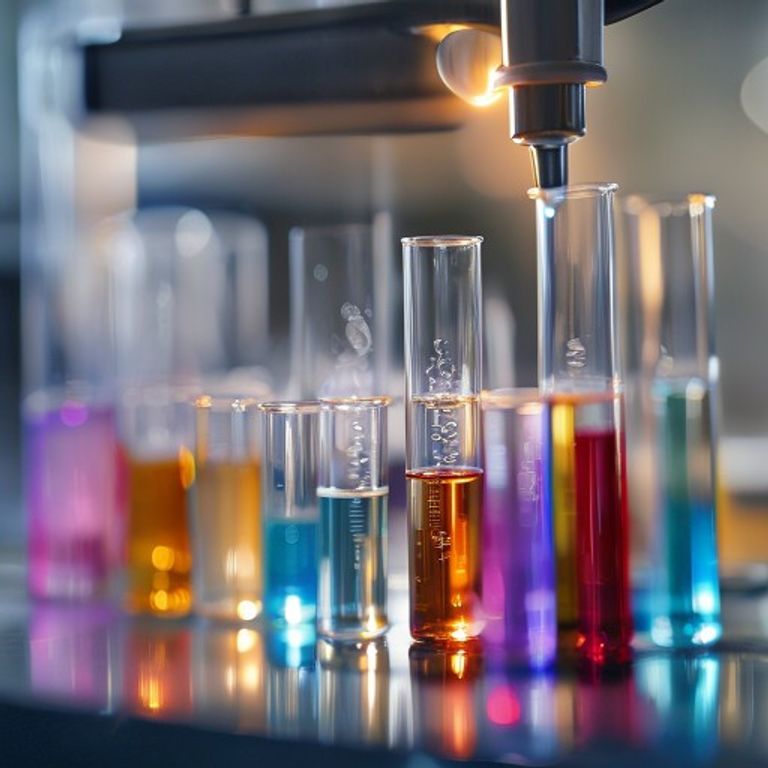
This is where the excitement often happens! The transparent walls of a test tube allow us to clearly observe chemical reactions in real-time. We can mix two or more substances, shake them gently, and watch as colors change, precipitates form, or gases evolve. The small volume is ideal for initial tests, allowing us to experiment with different reactant ratios or conditions without wasting large amounts of precious chemicals. It’s like having a tiny, controlled stage for molecular drama!
3. Heating Samples: When Things Need to Get Warm
Many chemical and biological processes require heat. Whether it’s to speed up a reaction, dissolve a solid, or sterilize a sample, test tubes are perfect for the job. Their borosilicate glass construction can withstand significant temperature changes without cracking. When heating, we always use a test tube holder to safely manipulate the hot glass, preventing burns and ensuring stability. This crucial role in unlocking lab safety: the essential test tube holder definition and its crucial role cannot be overstated, as it protects us from potential hazards. We gently heat the bottom or lower sides of the tube over a Bunsen burner or in a water bath, making sure to point the opening away from ourselves and others.
4. Biological Assays and Cultures: Nurturing Life in Miniature
The importance of test tubes in biological research is immense. From cultivating bacteria and yeast to performing enzyme assays or diagnostic tests, test tubes are indispensable. They provide a sterile environment for growing microorganisms or reacting biological samples. In microbiology, they’re often called “culture tubes,” serving as tiny homes for microbial growth, allowing researchers to study their behavior and properties under controlled conditions. It’s truly amazing how much life can thrive in such a small vessel!
5. Dilution and Preparation: Precision in Small Volumes
When we need to prepare serial dilutions or mix small, precise volumes of reagents, test tubes shine. Their marked graduations (on some types) allow for accurate measurements, and their shape facilitates thorough mixing. This precision is vital in many quantitative analyses, ensuring that our experimental results are reliable and reproducible.
Beyond the Standard: Specialized Test Tubes
While the classic test tube is a workhorse, there are also specialized versions designed for specific tasks. For instance, the versatility of the centrifugal tube, a robust, conical-bottomed tube, is specifically designed to withstand the high forces of a centrifuge, separating components of a liquid sample. Similarly, NMR tubes are highly precise tubes used in nuclear magnetic resonance spectroscopy. These variations highlight how the fundamental “tube” design adapts to complex scientific needs, always keeping the core function of containment and reaction in mind.
Practical Tips for Using Test Tubes Safely and Effectively
To get the most out of our test tubes and ensure safety, we always keep a few things in mind:
- Safety First: Always wear appropriate personal protective equipment (PPE), like safety goggles. When heating, use a test tube holder and never point the opening towards yourself or others.
- Cleanliness is Key: Wash test tubes thoroughly with detergent and rinse with distilled water after each use to prevent contamination.
- Handle with Care: While borosilicate glass is strong, it’s not invincible. Avoid sudden temperature changes and rough handling to prevent breakage.
- Proper Storage: Store clean test tubes in a rack, mouth down, or in a designated drawer to keep them dust-free and organized.
Kesimpulan
So there you have it – the unassuming test tube, a true workhorse of the laboratory. From basic mixing and heating to complex biological assays, its simple design unlocks a world of possibilities for scientific exploration. Understanding the diverse test tube function helps us appreciate its indispensable role, proving that sometimes, the simplest tools are indeed the most powerful. It’s a testament to good design and practical utility, enabling scientists worldwide to push the boundaries of knowledge, one small reaction at a time.
FAQ
Q: Can I reuse test tubes?
A: Yes, most glass test tubes are reusable after proper cleaning and sterilization. Plastic test tubes, especially those used for biological samples, are often single-use to prevent cross-contamination.
Q: Why do test tubes have round bottoms?
A: The rounded bottom serves several purposes: it allows for even heating over a flame, prevents cracking due to stress points (unlike flat bottoms), and makes it easier to clean thoroughly as there are no sharp corners for residues to accumulate.
Q: What is the difference between a test tube and a beaker?
A: While both are lab glassware, test tubes are typically smaller, cylindrical, and used for holding, mixing, and heating small quantities of substances, especially when observing reactions or performing assays. Beakers are wider, have a spout, and are generally used for mixing, pouring, and holding larger volumes of liquids, but are less suitable for direct heating with a flame due to their shape and potential for cracking.