The Unsung Hero of Precision: Unpacking the Vital Function of Pipettes in the Lab

In the vast world of scientific research and laboratory work, where precision often dictates success or failure, there’s one tool that consistently stands out for its humble yet indispensable role: the pipette. We might often take it for granted, but its pipette function is absolutely crucial for almost every experiment or analysis we undertake. Imagine trying to bake a cake without accurate measuring spoons – that’s roughly the level of chaos we’d face in the lab without these clever devices!
From preparing delicate biological samples to mixing chemical reagents for a reaction, the ability to transfer exact volumes of liquid is paramount. In this article, we’ll dive deep into what is a pipette used for in a laboratory, exploring how does a pipette work to measure liquid so precisely, and why this seemingly simple piece of laboratory equipment is so vital for accurate liquid handling. So, let’s peel back the layers and discover why the pipette is truly an unsung hero of the scientific world.
What Exactly is a Pipette and Why Do We Use It?
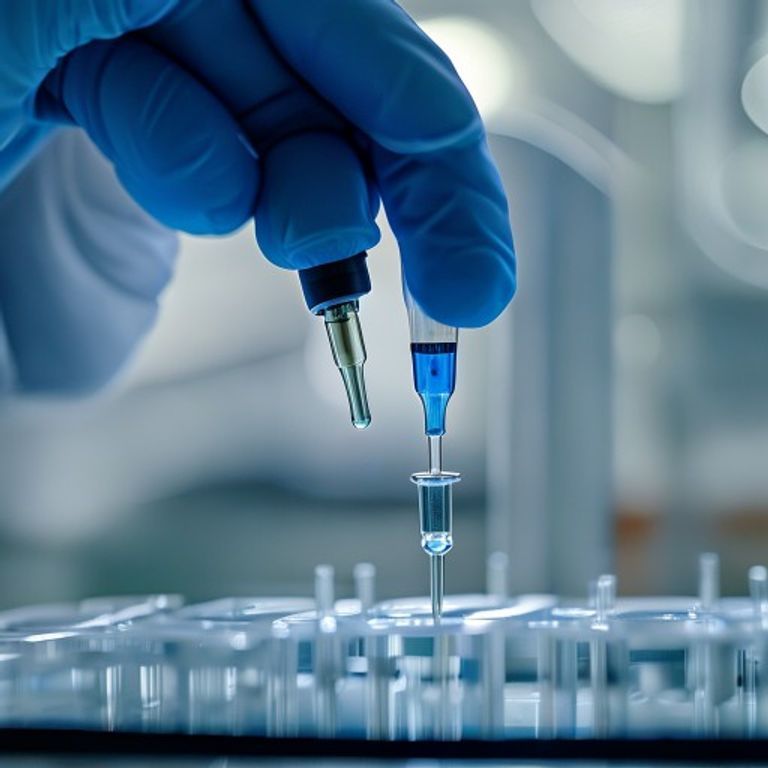
At its core, a pipette is a laboratory tool designed to transfer and dispense precise, measured volumes of liquid. Think of it as our super-accurate, miniature measuring cup. While a regular spoon might give you “about a teaspoon,” a pipette gives you *exactly* 10 microliters (or whatever volume you set) with incredible accuracy. This level of precision is non-negotiable in scientific settings, especially when dealing with expensive reagents, sensitive biological samples, or critical diagnostic tests.
There are several types of pipettes, each suited for different tasks. We have volumetric pipettes, which are fixed-volume glass tubes for maximum accuracy at a single volume; graduated pipettes, which have markings for various volumes but are less precise; and perhaps the most common in modern labs, micropipettes, which are adjustable-volume devices used for tiny volumes ranging from 0.1 microliters to several milliliters. Each type serves a specific purpose of using a pipette, depending on the accuracy and volume required.
How Does a Pipette Work to Measure Liquid So Precisely?
For adjustable micropipettes, the magic lies in their piston-driven air displacement mechanism. It’s quite clever, really!
Aspiration: Drawing up the liquid
First, we attach a disposable tip to the pipette. Then, we press the plunger down to the “first stop” (which displaces a set volume of air), immerse the tip into the liquid, and slowly release the plunger. As the plunger returns to its original position, it creates a vacuum that draws the liquid up into the tip. It’s a bit like using a sophisticated straw, but with controlled air pressure.
Dispensing: Releasing the liquid
To release the liquid, we place the tip against the wall of the receiving vessel and press the plunger down to the “first stop” again. This expels most of the liquid. For complete emptying, we then press the plunger past the first stop to the “second stop” (the blowout), which ensures every last drop is delivered. This two-stop system helps ensure maximum accuracy and minimal residual liquid.
The internal mechanism is carefully calibrated to ensure that the volume of air displaced corresponds exactly to the desired liquid volume. Regular calibration is vital to maintain this precision, as even slight wear and tear can affect accuracy.
Beyond Just Transfer: Different Applications of Pipettes in Science
The applications of pipettes are incredibly diverse, spanning almost every scientific discipline. Here are just a few examples of different applications of pipettes in science:
- Chemistry: We use pipettes for precise additions of reagents during titrations, preparing standard solutions for analytical chemistry, and for mixing various chemicals in specific ratios. For example, when performing Mastering Volumetric Flask Uses: Precise Dilutions, Standard Solutions, and Lab Best Practices, a pipette is indispensable.
- Biology & Biotechnology: In this field, pipettes are constantly in use for cell culture, DNA and RNA extraction, PCR (Polymerase Chain Reaction) setup, protein quantification, and preparing media. Accurate sample preparation is the bedrock of reliable biological experiments.
- Medical & Diagnostic Labs: Pipettes are critical for preparing patient samples for diagnostic tests, diluting blood or urine for analysis, and dispensing reagents for clinical assays. Incorrect volumes here could lead to misdiagnoses, so precision is paramount.
- Environmental Science: Analyzing water or soil samples for pollutants often requires precise measurement of reagents and samples.
Why Precision Matters: The Importance of Pipettes for Accurate Liquid Transfer
You might be thinking, “What’s the big deal if I’m off by a tiny bit?” Well, in science, a “tiny bit” can sometimes mean the difference between a successful experiment and a complete failure, or even a correct diagnosis versus an incorrect one. Why is a pipette important for accurate liquid transfer? Here’s why:
- Reproducibility: For experiments to be considered valid, they must be reproducible. If we can’t accurately measure liquids, it’s impossible for others (or even ourselves) to get the same results.
- Reliability: Incorrect volumes can lead to skewed data, false positives, or false negatives. This can have serious implications, especially in medical research or quality control.
- Cost-effectiveness: Many reagents are extremely expensive. Wasting them due to inaccurate transfers is simply not an option.
- Safety: In some cases, precise dilutions are critical for safety, preventing overly concentrated or weak solutions that could be harmful or ineffective.
The pipette ensures that our volumetric measurement is as close to perfect as possible, laying the foundation for trustworthy scientific outcomes.
Choosing the Right Pipette: What’s the Purpose of Using a Pipette?
Understanding what is the purpose of using a pipette for a specific task helps us choose the correct one. If you need to dispense 25.00 mL with the highest possible accuracy (like for preparing a stock solution), a volumetric pipette is your best friend. For dispensing small, adjustable volumes repeatedly in molecular biology, a micropipette is essential. Graduated pipettes are great for less critical tasks where approximate volumes are acceptable, such as transferring large volumes of non-critical reagents.
Always consider the volume range, the required accuracy, and the type of liquid you’re working with. Using the right pipette for the right job is a fundamental skill in any lab, making our work more efficient and our results more reliable.
Conclusion
So, the next time you see a pipette in a lab, I hope you’ll look at it with a newfound appreciation. This seemingly simple tool is a powerhouse of precision, enabling scientists worldwide to conduct groundbreaking research, develop life-saving diagnostics, and ensure the quality of countless products. Its function—accurate liquid handling—is a cornerstone of modern science, proving that sometimes, the greatest impact comes from the most precise instruments. Without pipettes, our journey towards scientific discovery would be a lot messier, slower, and far less reliable.
FAQ
Q1: Can I use any pipette for any liquid?
Generally, pipettes are designed for aqueous solutions. For viscous, volatile, or corrosive liquids, special pipette tips or positive displacement pipettes might be required to ensure accuracy and prevent damage to the pipette.
Q2: How often should pipettes be calibrated?
The frequency of calibration depends on usage, the manufacturer’s recommendations, and lab quality standards. Typically, pipettes should be calibrated every 6-12 months, or more frequently if used heavily, if accuracy is critical, or if there’s any suspicion of malfunction.
Q3: What’s the difference between a micropipette and a regular pipette?
A “regular” pipette often refers to glass pipettes like volumetric or graduated pipettes, which typically handle volumes from 1 mL up to 100 mL. A micropipette, on the other hand, is designed for much smaller volumes, usually ranging from 0.1 microliters to 1000 microliters (1 mL), and often uses disposable plastic tips.