

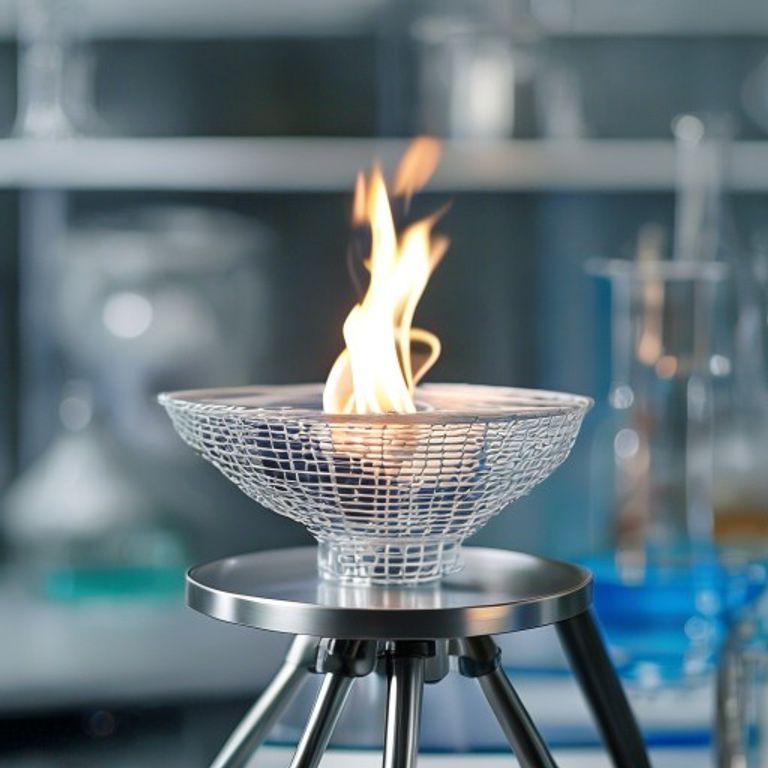
The Unsung Hero: Understanding the Vital Wire Gauze Function in Your Chemistry Experiments

Introduction: The Humble Hero of the Lab Bench
Have you ever watched a chemistry experiment unfold, maybe in a movie or during your school days, and noticed that simple wire mesh sitting atop a tripod stand, patiently holding a beaker over a flickering flame? That unassuming piece of equipment, often overlooked, is the wire gauze. While it might not have the flashy appeal of a colorful chemical reaction or the precise measurement of a digital balance, understanding the crucial wire gauze function is absolutely essential for safe and successful laboratory work. Today, we’re going to dive deep into why this little metal square is such a big deal, especially in chemistry experiments.
What Exactly Is Wire Gauze?
Before we explore its functions, let’s quickly define what we’re talking about. Wire gauze is essentially a thin sheet of woven metal wire, typically made from iron or steel, that has a ceramic or asbestos center. Nowadays, asbestos is rarely used due to health concerns, so most modern wire gauzes feature a ceramic center. It’s designed to be heat-resistant and durable, capable of withstanding the high temperatures produced by a Bunsen burner or other heating sources.
The Primary Wire Gauze Function: Even Heat Distribution
Imagine trying to cook a steak by just pointing a blowtorch at one spot. You’d end up with a burnt patch and raw meat elsewhere, right? The same principle applies in the lab when heating glassware. One of the most critical wire gauze functions is to distribute heat uniformly across the bottom of the glassware, like a beaker or flask. When you place glassware directly over a Bunsen burner flame, the heat is concentrated at one small point. This can cause the glass to expand unevenly, leading to stress and potentially shattering the glassware – a hazardous situation nobody wants!
The ceramic or asbestos pad in the center of the wire gauze acts as a crucial heat diffuser. It absorbs the direct flame and then radiates the heat outwards, spreading it more evenly across the entire base of your beaker or flask. This uniform heating is vital for many chemistry experiments, ensuring that your solutions heat up consistently and your reactions proceed as expected without localized overheating.
A Solid Support System for Glassware
Beyond heat distribution, the role of wire gauze in supporting glassware is equally fundamental. When you’re using a Bunsen burner, your glassware needs a stable platform. That’s where the wire gauze comes in, usually placed on top of a tripod stand. It creates a flat, secure surface to hold beakers, flasks, and other lab apparatus directly over the flame. Without it, you’d have your expensive and fragile glassware balancing precariously, risking spills, breakage, and potential injury. Think of it as a sturdy, heat-resistant table for your experimental vessels.
Safety First: Preventing Direct Flame Contact
Another essential aspect of why is wire gauze used in heating is safety. Direct contact between a high-temperature flame and glassware, especially thin-walled glass, can cause thermal shock. Thermal shock happens when one part of the glass heats up much faster than another, leading to rapid expansion and, again, shattering. The wire gauze acts as a buffer, shielding the glassware from the direct, intense heat of the flame while still allowing efficient heat transfer. This small but mighty apparatus plays a significant role in maintaining a safe laboratory environment.
How to Use Wire Gauze with a Bunsen Burner Like a Pro
Using wire gauze is straightforward, but here are some tips to get it right:
- Setup: Always place the wire gauze on a stable tripod stand. Make sure the tripod legs are wide enough for stability and that the wire gauze sits flat.
- Placement: Position your glassware (beaker, flask, etc.) centrally on the wire gauze. This ensures even support and heat distribution.
- Flame Adjustment: When heating with a Bunsen burner, adjust the flame so that its tip is just below or lightly touching the ceramic center of the wire gauze. The goal is to heat the gauze, which then heats your sample.
- Monitoring: Always keep an eye on your experiment. Even with wire gauze, overheating can occur if not properly monitored.
And speaking of laboratory essentials, while wire gauze handles the heating, other tools are crucial for different aspects of your work. For instance, sometimes you need to mix substances while heating. That’s where why every lab needs a stirring rod and how to use it effectively comes into play, ensuring your chemicals are thoroughly combined for accurate results. Similarly, for containment during reactions or simply holding samples, the versatile world of test tubes offers endless possibilities, often requiring heating methods where wire gauze would be invaluable.
Beyond Heating: Other Applications
While heating is its primary role, the purpose of wire gauze in chemistry experiments can extend slightly beyond. For example, it can serve as a simple beaker support during cooling processes, allowing air circulation underneath. In some filtration setups, it might be used to support a funnel, though specialized clamps are usually preferred for more secure arrangements. Its versatility as a basic lab apparatus makes it an indispensable tool.
Common Questions About Wire Gauze (FAQ)
Q: What is the ceramic center for?
A: The ceramic center is crucial for diffusing the direct heat from the Bunsen burner flame, ensuring that the heat is spread evenly across the bottom of the glassware. This prevents hot spots and thermal stress that could crack the glass.
Q: Can I use wire gauze without a tripod stand?
A: While technically you could try to balance it, it’s highly unsafe and not recommended. The tripod stand provides the necessary stability to securely hold the wire gauze and the glassware above the heat source.
Q: Is wire gauze reusable?
A: Yes, wire gauze is designed to be reusable. After use, let it cool down, and if necessary, clean off any residues. With proper care, a wire gauze can last for many experiments.
Q: What’s the difference between wire gauze with and without a ceramic center?
A: Wire gauze with a ceramic center is superior for heating as it provides much better heat distribution. Gauze without a ceramic center will still offer some support, but it won’t be as effective at preventing hot spots and potential glassware damage during heating.
Conclusion: Appreciating the Essential Wire Gauze
So there you have it! The humble wire gauze, often just a background player, truly is an unsung hero in the lab. Its primary wire gauze function of distributing heat evenly, providing stable support for glassware, and enhancing safety makes it an absolutely indispensable tool for anyone conducting chemistry experiments. Next time you’re in the lab, take a moment to appreciate this simple yet vital piece of equipment. It’s a testament to how even the smallest tools can make the biggest difference in the world of science.