

Unlock Lab Efficiency: Mastering the Versatile Laboratory Spatula

Hey there, fellow science enthusiasts! When we think about essential lab equipment, our minds often jump to complex machinery or fancy glassware. But let’s be honest, sometimes it’s the simplest tools that make the biggest difference in our daily experiments. Today, I want us to shine a spotlight on one such unsung hero: the humble laboratory spatula. You might see it everywhere, but do we truly appreciate its versatility and how crucial it is for accurate and safe chemical handling?
From weighing chemicals with precision to carefully transferring powders, the lab spatula is a fundamental tool. In this article, we’re going to dive deep into everything you need to know about this indispensable scientific instrument, including its various types, proper usage, cleaning methods, and how to pick the perfect one for your specific needs. Let’s make sure our lab work is as efficient and precise as possible!
What Exactly is a Laboratory Spatula, Anyway?
At its core, a laboratory spatula is a small, flat, and sometimes spoon-shaped tool designed for handling solid chemicals and other substances in the lab. Think of it as a specialized spoon or scraper, but much more precise and often made from materials that won’t react with sensitive chemicals. Its primary job is to scoop, scrape, spread, and transfer small quantities of powders, granules, and pastes with accuracy and minimal contamination. Without it, imagine trying to scoop a tiny amount of a reagent from a jar – it would be a messy and inaccurate nightmare!
The Many Faces of the Spatula: Types for Every Task
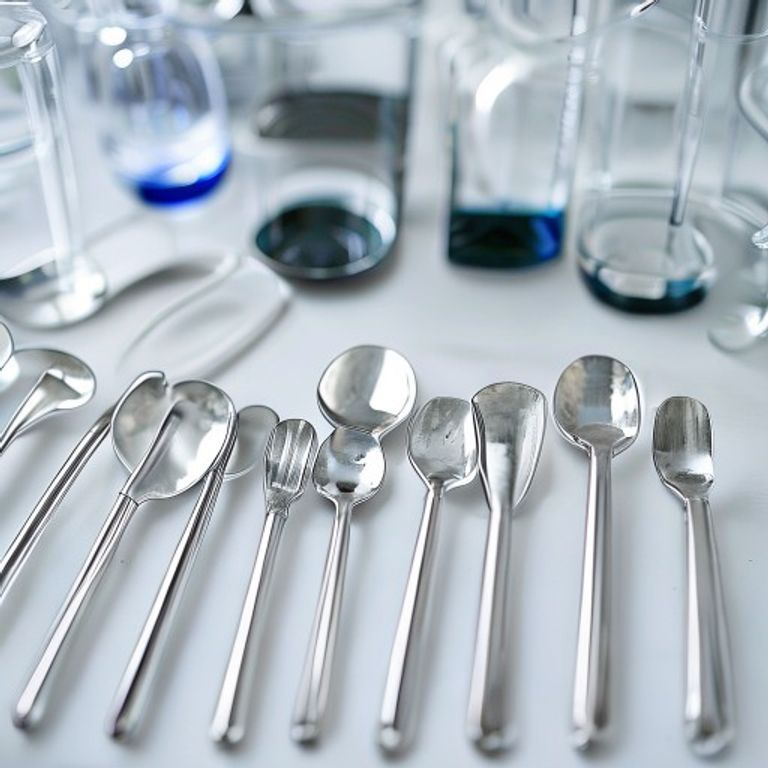
Just like we have different types of spoons for different meals, there are various types of spatulas for chemistry experiments, each optimized for a specific task. Knowing these can really streamline your material transfer:
- Flat Spatulas: These are your basic, all-purpose spatulas. They have a flat blade, sometimes with one end slightly curved, perfect for scraping powders from containers or spreading solid materials on surfaces.
- Spoon Spatulas: As the name suggests, one end is shaped like a small spoon, making it ideal for scooping granular materials or powders. The other end often remains flat for versatility.
- Micro Spatulas: When you’re dealing with extremely small quantities, like milligrams of a precious compound, a micro spatula is your best friend. They are tiny and incredibly precise.
- Scoopulas: This is a fun name, isn’t it? A scoopula is essentially a hybrid spoon-spatula with a U-shaped trough on one end and a flat or slightly curved blade on the other. It’s fantastic for scooping and transferring larger amounts of powders into narrow-mouthed containers, like test tubes or flasks, minimizing spills.
- Offset Spatulas: These have a bent shaft that keeps your hand away from the working surface, which can be useful for certain applications or when handling hot materials.
Most laboratory spatulas, especially those for chemical handling, are made from stainless steel. Why stainless steel? Because it’s durable, resistant to corrosion from many chemicals, easy to clean, and doesn’t react with most substances we encounter in the lab. Sometimes, you’ll find spatulas made from plastic for specific applications where metal contamination is an issue, or for single-use purposes.
Mastering the Art of Chemical Transfer: How to Use Your Spatula
Using a spatula might seem straightforward, but a few tips can elevate your technique and ensure accuracy when weighing chemicals and transferring materials:
- Gentle Scooping: Always scoop materials gently. Don’t dig aggressively, as this can create dust clouds of fine powders, leading to inhalation risks and inaccurate measurements.
- Controlled Transfer: When transferring to a balance or a container, use a tapping motion against the edge of the container to release small amounts gradually. This is crucial for precise weighing.
- Avoid Cross-Contamination: Never use the same spatula for different chemicals without thorough cleaning in between. This is one of the golden rules of the lab!
- Scraping Containers: Use the flat end to scrape down the sides of a reagent bottle, ensuring you get all the desired material out.
- Handling Sticky Substances: For sticky or viscous materials, an offset or bent-tip spatula can be very helpful to prevent the substance from getting on your gloves or hands.
Choosing Your Lab Sidekick: What to Consider
Picking the right spatula for chemical powders or any lab task involves a few considerations:
- Material: As mentioned, stainless steel is the standard. If you’re working with extremely corrosive chemicals or need to avoid any metal contact, consider specific plastic spatulas.
- Size and Shape: Think about the container you’ll be scooping from and the container you’ll be transferring to. A large spatula won’t fit into a small reagent bottle, and a micro spatula won’t be efficient for larger quantities.
- Chemical Resistance: Ensure the material of your spatula is compatible with the chemicals you’ll be handling. Stainless steel is generally good, but always double-check for highly reactive substances.
- Ease of Cleaning: A simple, smooth design without too many nooks and crannies is easier to clean and sterilize, which is vital for preventing contamination.
Keeping It Clean: The Right Way to Maintain Your Spatula
Proper cleaning is paramount for any lab tool, and your spatula is no exception. Here’s how to clean a lab spatula properly:
- Immediate Cleaning: Clean your spatula immediately after use. Dried chemicals are much harder to remove.
- Wash with Detergent: Use a lab-grade detergent and warm water. Scrub away any residues.
- Rinse Thoroughly: Rinse with distilled or deionized water to remove any detergent residue and prevent water spots or contamination.
- Dry Completely: Dry the spatula completely using a lint-free towel or by air drying. Moisture can lead to corrosion, even in stainless steel, and can contaminate sensitive chemicals.
- Sterilization (If Needed): For sterile applications, autoclaving or using appropriate chemical sterilization methods might be necessary after cleaning.
Conclusion
So there you have it! The laboratory spatula, though small, plays a colossal role in the accuracy, safety, and efficiency of our experiments. It’s not just a piece of metal; it’s a precision instrument that, when chosen and used correctly, ensures reliable results. By understanding the different types, proper usage techniques, and meticulous cleaning routines, we can truly master this essential tool and make our time in the lab more productive and less prone to errors. Next time you reach for one, remember the mighty work it does!
Frequently Asked Questions (FAQ)
Q1: Can I use the same spatula for different chemicals if I just wipe it clean?
A: No, absolutely not! Wiping might remove visible residue, but it won’t eliminate microscopic traces that can lead to cross-contamination and ruin your experiments. Always wash and thoroughly rinse your spatula between different chemicals.
Q2: What’s the main difference between a spatula and a scoopula?
A: While both are used for solid transfer, a standard spatula often has a flat or slightly curved blade. A scoopula typically features a U-shaped trough on one end, making it more efficient for scooping and transferring larger quantities or into containers with narrow openings, like bottles and flasks.
Q3: Are plastic spatulas ever better than stainless steel ones?
A: Yes, in certain situations. Plastic spatulas are preferred when working with highly corrosive chemicals that might react with or corrode stainless steel, or when you need to prevent any potential metal ion contamination in your sample. They are also often used for single-use applications to ensure sterility or prevent cross-contamination in very sensitive experiments.
Q4: How do I store my laboratory spatulas?
A: Store clean and dry spatulas in a designated drawer or container, away from other tools that might scratch or bend them. Proper storage helps maintain their integrity and cleanliness, ensuring they’re ready for your next experiment.