

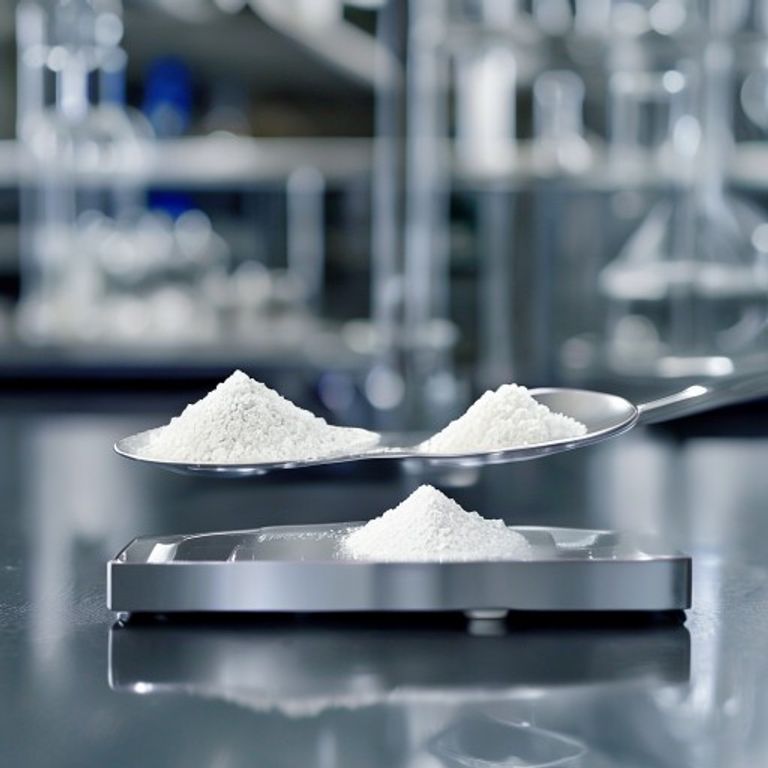
From Powders to Precision: Exploring Key Laboratory Spatula Uses

Hello, fellow science enthusiasts! When we think about essential laboratory equipment, often our minds jump to fancy microscopes, bubbling beakers, or precise pipettes. But let me tell you, there’s an unsung hero that quietly plays a crucial role in almost every lab task: the laboratory spatula. It might seem simple, just a small flat tool, but its versatility and importance cannot be overstated. Today, we’re going to dive deep into the diverse laboratory spatula uses, from scooping delicate powders to aiding in precise measurements. Get ready to discover why this humble instrument is truly indispensable!
What Makes a Lab Spatula Special?
Before we explore its functions, let’s understand what makes a lab spatula unique. Unlike a kitchen spatula designed for flipping pancakes, laboratory spatulas are built for precision and chemical resistance. They come in various materials like stainless steel, plastic, or even nickel-based alloys, each suited for different tasks and chemicals. Their design often features a flat blade on one end and sometimes a spoon-like scoop or a different shape on the other, making them perfect for handling small quantities of substances. Think of it as a surgeon’s scalpel for tiny, often powdery, lab materials.
Core Uses of Laboratory Spatulas
Transferring Powders and Solids: The Primary Role
This is perhaps the most iconic laboratory spatula use. Imagine you need to transfer a tiny pinch of a reactive chemical from a container to a beaker without spilling a single grain. A spatula, with its narrow blade, allows us to meticulously scoop and transfer solid reagents, powders, or crystals. It’s like using a tiny shovel to move sand, but with far greater control and accuracy, ensuring minimal loss and contamination. This precise control is vital, especially when dealing with expensive or hazardous materials.
Mixing and Stirring: Homogeneity is Key
Beyond just moving materials, spatulas are also fantastic for mixing. When we’re working with small amounts of powders that need to be blended, or gently stirring a solution in a test tube, the slender body of a spatula comes in handy. It helps achieve homogeneity without introducing unwanted air bubbles or causing vigorous reactions. Think of it as a miniature whisk, perfect for ensuring everything is evenly distributed in a small experimental setup.
Sampling: Getting a Representative Batch
In quality control or analytical chemistry, getting a representative sample is paramount. A laboratory spatula allows us to extract a small, unbiased portion of a larger batch of powder or granular material for analysis. Different spatula designs, like those with longer handles or specific spoon shapes, are often used to reach into deeper containers and collect samples without disturbing the bulk material unnecessarily. It’s like carefully picking out a single berry from a large basket to test its ripeness.
Spreading and Scraping: Leaving No Trace Behind
Sometimes, we need to spread a thin layer of a substance onto a surface, perhaps for a spectroscopic analysis or a chromatographic plate. A flat-bladed spatula is perfect for this. Conversely, when we need to scrape residual material from the sides of a beaker or mortar, a spatula is our go-to tool. It helps ensure we recover as much of our valuable sample as possible, or that our glassware is thoroughly clean before the next experiment.
Weighing and Measuring: The Path to Precision
When precision is everything, especially in quantitative analysis, a spatula is our best friend on the analytical balance. We use it to carefully add small increments of a substance until the desired weight is reached. This fine control prevents overshooting the target weight, which could lead to inaccurate results. It’s like a finely tuned dispenser, allowing us to hit that exact milligram or even microgram target with remarkable accuracy. This application is often overlooked, but it’s absolutely critical for many experiments.
Different Types, Different Tasks
Just as there are different tools for different jobs in a kitchen, the lab offers a variety of spatulas. We have the classic flat-bladed spatula, sometimes with a bent end, great for general scooping. There are also spoon spatulas, featuring a small scoop on one end, ideal for transferring liquids or very fine powders. Some spatulas are double-ended, offering different shapes for maximum versatility. And let’s not forget micro-spatulas, designed for handling incredibly small quantities, or those made from specific polymers for highly corrosive chemicals. Choosing the right one for the job is part of mastering laboratory work.
Tips for Proper Spatula Use
Using a spatula correctly goes beyond just scooping. Always ensure your spatula is clean and dry before use to prevent contamination. When transferring, hold the spatula firmly and control the amount you’re moving. For sensitive materials, transfer slowly and deliberately. After use, proper cleaning is essential. Stainless steel spatulas can often be washed and sterilized, while plastic ones might be disposable or require specific cleaning protocols based on the chemicals they’ve contacted. Remember, safety first! Always handle chemicals with care, even when using a simple tool like a spatula. If you want to dive deeper into the proper care and handling, I highly recommend checking out a practical guide to laboratory spatulas.
Conclusion
So there you have it! The humble laboratory spatula, far from being just a simple spoon, is a cornerstone of precision and efficiency in any scientific setting. Its diverse laboratory spatula uses, from delicate powder transfer to critical sample collection, underscore its indispensable nature. The next time you’re in the lab, take a moment to appreciate this versatile tool. It truly empowers us to handle substances with the care and accuracy that scientific research demands. Happy experimenting!
Frequently Asked Questions About Laboratory Spatulas
Why are there different types of lab spatulas?
Different lab spatulas are designed for specific tasks and materials. For instance, flat blades are good for scraping and general scooping, while spoon-ended spatulas are better for fine powders or liquid transfer. Materials also vary for chemical resistance or heat tolerance.
Can I use a kitchen spatula in a lab?
Absolutely not! Kitchen spatulas are not designed for the same level of precision, chemical resistance, or sterility required in a laboratory setting. Using one could introduce contaminants or react dangerously with lab chemicals. Always use designated laboratory equipment.
How do I clean a lab spatula?
Cleaning depends on the material and what it contacted. Generally, they are washed with detergent and water, rinsed thoroughly with distilled water, and then dried. For certain chemicals, specific solvent rinses might be necessary, followed by sterilization if required for sterile work.