

Mastering the Separation Funnel: Your Essential Guide to Immiscible Liquid Separation

Introduction: Unlocking the Secrets of Separation in Your Lab
Have you ever looked at a mixture of oil and water and wished you could easily separate them? Well, in the world of chemistry, we often face similar challenges, but with much more complex liquids! That’s where our trusty friend, the separation funnel, comes into play. It’s not just a piece of glass; it’s a powerful tool that allows us to precisely separate liquids that simply refuse to mix, also known as immiscible liquids.
In this guide, we’re going to dive deep into what a separation funnel is, why it’s indispensable in any chemistry lab, and most importantly, how to use a separation funnel like a seasoned pro. Whether you’re a student, a hobbyist, or just curious about lab equipment, prepare to unlock the magic of clean chemical separations with us!
What Exactly is a Separation Funnel? A Peek Inside This Clever Lab Equipment
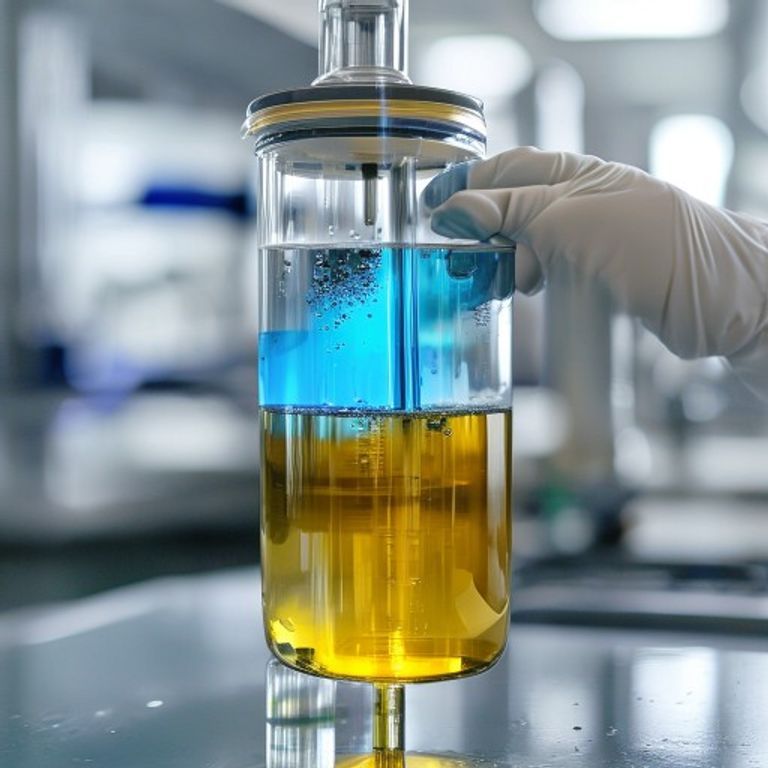
Imagine a pear-shaped glass vessel with a long stem at the bottom and a stopper at the top. That, in essence, is a separation funnel. It’s a fundamental piece of laboratory glassware, designed specifically for liquid-liquid extraction.
Let’s break down the key separation funnel parts and function:
- The Body: This is the main, often conical or pear-shaped, part where your liquid mixture is held. Its shape helps in distinguishing the layers clearly.
- The Stopper (or Cap): Located at the top, it seals the funnel during agitation to prevent spills and pressure leaks. Always make sure it fits snugly!
- The Stopcock: This is arguably the most crucial part, found at the bottom stem. It’s a valve, usually made of glass or Teflon, that allows you to control the flow of liquid out of the funnel, drop by drop if needed. This precise control is key to separating your liquids effectively.
Most high-quality separation funnels are made from borosilicate glass (like Pyrex separation funnel online), known for its durability and resistance to thermal shock and chemical corrosion. This makes them perfect for the rigorous environment of a chemistry lab.
Why Do We Need a Separation Funnel? The Magic of Immiscible Liquids
The core reason we use a separation funnel is to tackle immiscible liquids. Think of salad dressing – oil and vinegar. No matter how much you shake it, they will eventually separate back into distinct layers, right? That’s because they have different polarities and densities, causing them not to mix. In chemistry, we often deal with mixtures like organic solvents (which don’t mix with water) and aqueous solutions (water-based solutions).
Our goal with a separation funnel is typically to perform a process called liquid-liquid extraction (LLE). This is where we dissolve a desired compound from one liquid into another immiscible liquid. For example, if you have a compound dissolved in water, and you want to isolate it, you might add an organic solvent. The compound will “jump” from the water layer into the organic solvent, allowing you to then separate the two liquid layers and recover your purified compound.
How to Use a Separation Funnel Like a Pro: A Step-by-Step Guide
Using a separation funnel chemistry lab equipment might seem intimidating at first, but with a little practice, it’s quite straightforward. Let’s walk through the process:
- Secure it Safely: Always clamp your separation funnel securely to a retort stand. Make sure it’s stable and upright. Safety first!
- Close the Stopcock: Before adding anything, ensure the stopcock at the bottom is fully closed. You don’t want your precious liquids flowing out prematurely.
- Add Your Mixture: Carefully pour your immiscible liquid mixture (the one you want to separate) into the funnel. Don’t overfill it; leave some space at the top.
- Add the Extraction Solvent (if applicable): If you’re performing an extraction, add your second, immiscible solvent now.
- Stopper and Agitate: Place the stopper firmly on top. Now, gently invert the funnel a few times to mix the layers thoroughly. This allows the solute to transfer between the phases. Sometimes, before letting gravity do its work in the funnel, we need to ensure thorough contact between the two phases. This often involves shaking the funnel (with proper venting!), or for more controlled mixing, we might use the essential glass stirring rod in a beaker prior to transfer.
- Vent, Vent, Vent! This is critical. Chemical reactions or volatile solvents can build up pressure inside the funnel during agitation. After each inversion or a few shakes, invert the funnel and open the stopcock briefly, pointing it away from yourself and others, to release any built-up pressure. Close the stopcock immediately after venting.
- Allow to Settle: Place the funnel back on the retort stand and remove the stopper. Let the layers separate completely. You’ll usually see a clear line between them. This might take a few minutes or longer, depending on the liquids. The denser liquid will settle at the bottom.
- Drain the Bottom Layer: Once the layers are distinct, slowly open the stopcock to drain the bottom layer into a clean beaker. Be careful and stop just before the interface reaches the stopcock.
- Collect the Top Layer: Close the stopcock, then pour the remaining (top) layer out from the top opening of the funnel into a separate, clean beaker. This helps prevent contamination from any residual drops clinging to the stopcock.
Common Challenges and Quick Fixes
Even pros run into hiccups! Here are a couple of common issues:
- Emulsion Formation: Sometimes, instead of two clear layers, you’ll get a cloudy, foamy layer in between – an emulsion. This is like a very stable mixture where tiny droplets of one liquid are dispersed in the other. To break an emulsion, you can try:
- Letting it sit for a longer time.
- Adding a small amount of concentrated salt solution (brine).
- Gently swirling the funnel.
- Cooling or heating the mixture (use caution).
- Leaking Stopcocks: If your stopcock is leaking, it might need greasing (for glass stopcocks) or tightening (for Teflon stopcocks). Always check for leaks before adding your precious samples.
Conclusion: Your Path to Precision with the Separation Funnel
The separation funnel truly is a cornerstone of preparative chemistry. From isolating natural products to purifying synthetic compounds, its ability to precisely separate immiscible liquids makes countless chemical processes possible. By understanding its parts, purpose, and proper handling techniques, we can confidently navigate the world of liquid-liquid extraction and achieve cleaner, more accurate results in our experiments. So go ahead, embrace this fantastic piece of laboratory glassware, and happy separating!
FAQ About Separation Funnels
Q: What is the main purpose of a separation funnel?
A: Its primary purpose is to separate two immiscible liquids (liquids that do not mix, like oil and water) based on their different densities, or to extract a compound from one liquid into another.
Q: Can I use a regular kitchen funnel for separating liquids?
A: No, a regular kitchen funnel is not suitable. A separation funnel has a stopcock at the bottom for precise control over the draining of the denser liquid, which is essential for effective separation. Kitchen funnels lack this crucial feature.
Q: What should I do if an emulsion forms in my separation funnel?
A: Emulsions can be tricky! You can try several methods: letting the funnel sit undisturbed for a longer period, gently swirling the funnel, adding a small amount of saturated brine solution, or even gently heating/cooling the mixture (with appropriate safety precautions).
Q: Why is venting important when using a separation funnel?
A: Venting is crucial because mixing or chemical reactions can cause pressure to build up inside the sealed funnel. Releasing this pressure prevents the stopper from popping off or the funnel from potentially bursting, ensuring your safety and the integrity of your experiment.
Q: What materials are separation funnels typically made from?
A: Most high-quality separation funnels are made from borosilicate glass (like Pyrex), which is durable, chemically resistant, and can withstand temperature changes. The stopcock can be made of glass or Teflon.