

The Essential Role of Tripods in Science Labs: Stability, Safety, and Smart Experiments

Introduction
When we step into a chemistry or physics lab, one of the first pieces of equipment that catches our eye is the humble tripod. It may look simple, but its purpose goes far beyond holding a Bunsen burner. In this article, I’ll walk you through what a tripod is used for in a chemistry lab, why it’s a cornerstone for experimental stability, and how you can make the most of it in your own research.
Why Every Lab Needs a Tripod
Think of a tripod as the “steady hands” of a scientist. Without it, heating, distillation, or any setup that involves open flames becomes a risky juggling act. Here are the main reasons why tripods are indispensable:
- Experimental stability: A sturdy base prevents wobbling, which could lead to spills or uneven heating.
- Safety: By keeping hot equipment away from the bench surface, the risk of burns or fire hazards drops dramatically.
- Versatility: Tripods can hold a variety of apparatuses – from Bunsen burners to small crucibles, even lightweight glassware.
Common Uses of a Laboratory Tripod
1. Bunsen Burner Stand
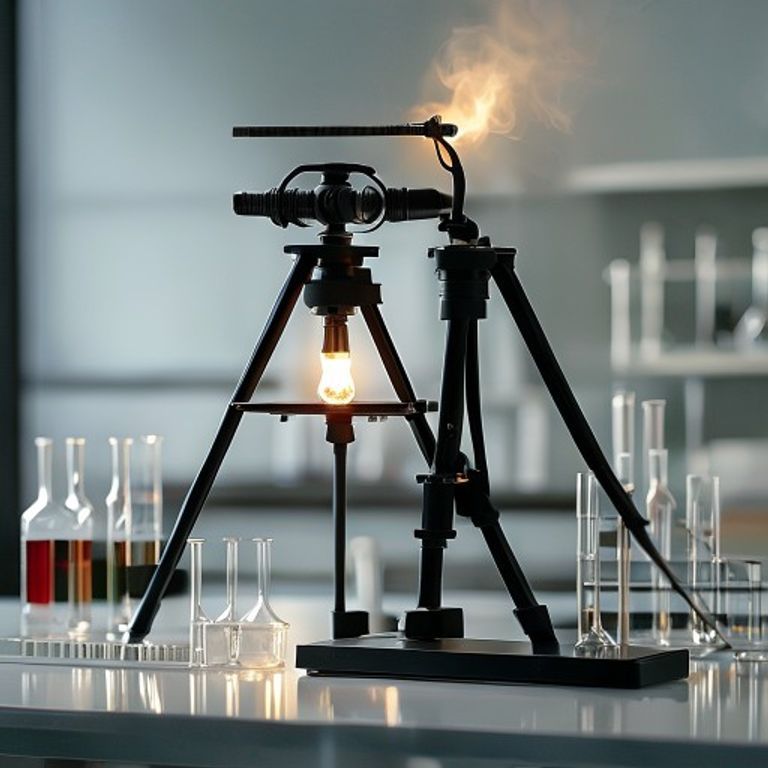
The classic use is supporting a Bunsen burner. Placing the burner on a tripod raises the flame to an optimal height, ensuring even heat distribution for tasks like heating test tubes or performing flame tests.
2. Supporting a Wire Gauze
When you need a flat, heat‑resistant surface, a wire gauze sits on top of the tripod. This setup is perfect for heating beakers or flasks without direct contact with the metal legs, which could cause uneven heating.
3. Holding Small Crucibles or Reaction Vessels
For high‑temperature reactions, a tripod can hold a crucible directly over a flame. The open design allows gases to escape safely, reducing pressure buildup.
How to Stabilize Scientific Equipment with a Tripod
Stability isn’t just about the tripod itself; it’s also about how you set it up:
- Choose the right size: Larger legs provide a broader base of support.
- Adjust leg length: Make sure all legs touch the bench evenly; uneven legs cause wobble.
- Use a retort stand clamp: For extra security, attach a clamp to the tripod’s top rod to hold glassware firmly.
- Check for levelness: A quick “wiggle test” ensures the setup won’t tip over during heating.
Scientific Applications of Tripods in Research
Beyond routine lab work, tripods find their way into advanced research:
- Materials testing: Holding small samples over a flame for thermal analysis.
- Optical experiments: Supporting light sources or spectrometers at a fixed height.
- Field science: Portable tripods enable on‑site heating or drying of samples without a full lab bench.
Why Tripods Matter in Physics Experiments
In physics, precision is king. Whether you’re measuring the rate of heat transfer or calibrating a sensor, any movement can skew results. A tripod provides a fixed reference point, allowing you to:
- Maintain a constant distance between a heat source and a temperature probe.
- Securely mount devices like photodiodes or small lasers for alignment tests.
Practical Tips for Using Tripods Effectively
Here are some quick pointers to get the best out of your tripod:
- Always inspect the legs for wear before use.
- Keep the work area clear of clutter to avoid accidental knocks.
- When heating volatile substances, use a flame‑shield or fume hood for added safety.
- Refer to the essential guide to test tube function for best practices on handling glassware that often sits on a tripod.
- For comprehensive safety measures, check out the complete guide to lab safety showers to ensure your lab meets all emergency protocols.
Conclusion
From the simple act of heating a solution to sophisticated physics measurements, the tripod is a quiet hero that keeps experiments stable, safe, and repeatable. By understanding its purpose and following a few practical steps, we can maximize the reliability of our results and keep our labs running smoothly.
FAQ
Q: Can I use a tripod for non‑heat related experiments?
A: Absolutely. Tripods can hold light sources, sensors, or even small cameras for documentation.
Q: How high should a tripod be set for a Bunsen burner?
A: Aim for a flame height that matches the size of your vessel—typically 2–3 cm above the gauze.
Q: What’s the difference between a tripod and a retort stand?
A: A tripod is free‑standing with three legs, while a retort stand has a vertical column and a clamp, offering more precise positioning for delicate apparatus.
Q: Are there any materials I should avoid using with a tripod?
A: Avoid heavy, uneven loads that could tip the tripod, and never place reactive chemicals directly on the metal legs.
Q: How often should I check the stability of my tripod?
A: Before each use, give the legs a gentle shake and ensure the setup doesn’t wobble.