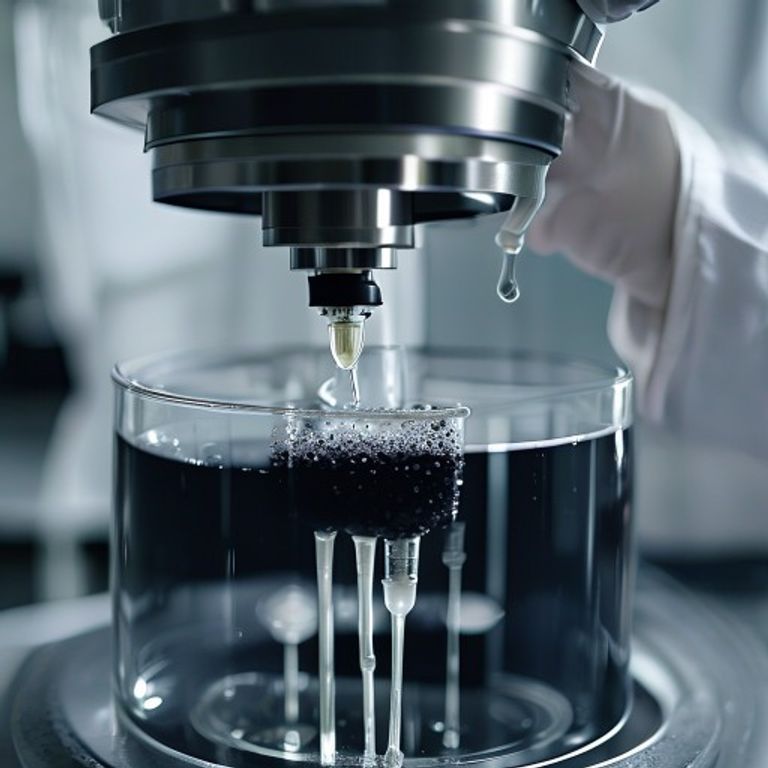
Mastering Supernatant: Practical Tips for Extraction, Handling, and Analysis

Introduction
When we spin down a biological sample, the clear liquid that floats on top is called the supernatant. It holds the soluble proteins, nucleic acids, metabolites, and everything we often need for downstream assays. Yet many newcomers treat it like “just the leftover liquid,” leading to lost material, inaccurate measurements, or contamination nightmares. In this article I’ll walk you through the whole workflow – from extracting the supernatant safely, measuring it correctly, storing it at the right temperature, to keeping it pristine for analysis.
Supernatant Extraction Protocol – Step by Step
Below is a simple, reproducible protocol that works for most cell‑culture or tissue lysates. Feel free to tweak the speeds or times for your specific rotor, but keep the core principles the same.
- 1. Prepare your centrifuge. Balance tubes to within 0.1 g and set the temperature (usually 4 °C).
- 2. Load the samples. Use screw‑cap tubes with a minimum volume of 1 mL to avoid wobble.
- 3. Centrifuge. Typical settings: 12,000 × g for 10 minutes. Adjust if you’re working with fragile organelles.
- 4. Identify the layers. After the spin, you’ll see a dense pellet at the bottom and a clear aqueous supernatant on top.
- 5. Transfer the supernatant. Using a pipette with a wide‑bore tip, carefully aspirate the liquid without disturbing the pellet. If you need to avoid aerosol formation, use a low‑retention tip and a slow aspiration speed.
For a deeper dive into best practices, check out our mastering supernatant guide, which covers troubleshooting tips and alternative equipment options.
Supernatant vs. Pellet in Centrifugation
The pellet contains the insoluble debris – cell walls, nuclei, or large organelles – while the supernatant holds the soluble fraction we usually analyze. Understanding the difference helps you decide whether to discard the pellet or keep it for a secondary extraction. Think of it like separating coffee grounds (pellet) from the brewed coffee (supernatant). If you need the “grounds” later, you can resuspend them in a new buffer and repeat the spin.
How to Measure Supernatant Volume Accurately
Accurate volume measurement is crucial for downstream calculations (e.g., protein concentration per µL). Here are a few practical tricks:
- Graduated pipettes. Use calibrated pipettes for volumes < 1 mL; they give the best precision.
- Serological pipettes. Ideal for 1–10 mL volumes; make sure to read the meniscus at eye level.
- Digital dispensers. Some labs prefer electronic dispensers that log volume automatically.
- Weight‑based method. Weigh the tube before and after transfer (1 µL ≈ 1 mg for water‑based solutions).
Supernatant Storage Temperature Guidelines
How you store the supernatant can make or break your experiment. Follow these rules of thumb:
- Short‑term (≤ 24 h): Keep on ice or at 4 °C. This works for most enzyme assays.
- Medium‑term (days to weeks): Aliquot and freeze at –20 °C. Avoid repeated freeze‑thaw cycles by using small aliquots.
- Long‑term (months): Store at –80 °C. For highly labile proteins, add cryoprotectants (e.g., 10 % glycerol) before freezing.
- Avoid temperature fluctuations. Use a dedicated –80 °C freezer rather than a shared unit that gets opened frequently.
Supernatant Contamination Prevention Methods
Contamination can creep in at any step. Below are practical safeguards:
- Use filtered tips. They block aerosol and particulate carry‑over.
- Work in a clean hood. A laminar flow cabinet reduces airborne particles.
- Label tubes clearly. Mis‑labeling can cause cross‑contamination.
- Keep the pellet undisturbed. When aspirating, stop a few millimeters above the pellet surface; a gentle angle reduces the chance of pulling debris.
- Validate with a quick check. Run a small aliquot on a gel or spectrophotometer to confirm no unexpected proteins or nucleic acids are present.
Supernatant Analysis Techniques
Once you have a clean supernatant, the analytical options are vast. Some common methods include:
- UV‑Vis spectroscopy. Quick protein concentration check (A280).
- Bradford or BCA assay. More sensitive protein quantification.
- qPCR. For nucleic acid‑rich supernatants.
- Mass spectrometry. Deep proteomic profiling.
- ELISA. Targeted detection of specific biomarkers.
Conclusion
Handling supernatant doesn’t have to be a mystery. By following a clear extraction protocol, measuring volumes precisely, storing at the right temperature, and guarding against contamination, you set the stage for reliable downstream results. Treat the supernatant as a valuable resource, not just “the leftover liquid,” and your experiments will thank you.
FAQ
Q: Can I reuse the pellet after the first spin?
A: Yes, you can resuspend the pellet in a fresh buffer and spin again if you need a second‑round extraction of different components.
Q: What’s the best way to avoid bubbles when pipetting supernatant?
A: Use a slow, steady aspiration and release the tip before the final drop to let any trapped air escape.
Q: Is –20 °C ever sufficient for enzyme activity assays?
A: For many enzymes, –20 °C is fine for short‑term storage, but for long‑term stability –80 °C is recommended.
Q: How many freeze‑thaw cycles can a supernatant tolerate?
A: Ideally no more than two. Each cycle can degrade proteins and nucleic acids, so aliquoting is key.
Q: Do I need to filter the supernatant before analysis?
A: If downstream assays are sensitive to particulates (e.g., LC‑MS), a 0.22 µm filter is advisable.