The Unsung Hero of Precision: Understanding the Volumetric Flask’s True Purpose

Imagine trying to bake a complex cake without proper measuring cups, just guessing the amounts of flour, sugar, and milk. You’d probably end up with something… unique, right? In chemistry, especially when we’re dealing with crucial experiments or manufacturing processes, that kind of guesswork simply isn’t an option. We need absolute precision, and that’s exactly where our unsung hero, the volumetric flask, steps into the spotlight.
Today, we’re diving deep into the volumetric flask purpose – exploring why this unassuming piece of laboratory glassware is a non-negotiable tool for accurate work and how it ensures our scientific endeavors are built on a solid foundation of precise measurement.
What Exactly is a Volumetric Flask?
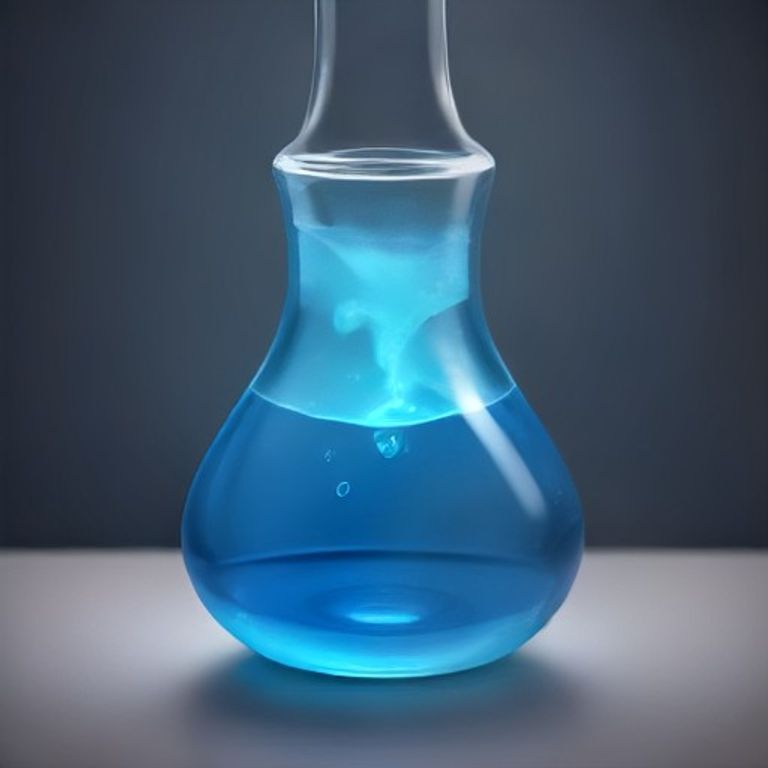
Before we explore what is a volumetric flask used for, let’s understand its distinct identity. Unlike the more common beakers or Erlenmeyer flasks, a volumetric flask boasts a unique design: a flat bottom for stability, a bulbous body, and most importantly, a long, narrow neck. Etched around this narrow neck is a single, precise calibration mark. This mark, my friends, is its superpower, signifying the exact volume the flask is designed to contain at a specific temperature (usually 20°C).
It’s typically made from borosilicate glass or plastic, engineered for maximum accuracy when holding a specific volume of liquid.
The Core Volumetric Flask Purpose: Precision Personified
The primary function of a volumetric flask in chemistry is straightforward yet incredibly vital: to prepare solutions of a precise volume and known concentration. If we need a solution to be exactly 0.1 M, or any other specific molarity, this is our go-to tool. It’s built for tasks where extreme accuracy in `solution preparation` is not just preferred, but absolutely mandatory.
Think of it as the ultimate instrument for creating “standard solutions” – solutions with a highly accurate and known concentration that can then be used to calibrate other instruments or to determine the concentration of unknown solutions.
Key Applications: Where Volumetric Flasks Shine
So, beyond just general `solution preparation`, what is a volumetric flask used for in day-to-day lab work? Let’s break down some of its most crucial applications:
- Preparing Standard Solutions: When we’re performing a molarity calculation and need to make a solution with an exact concentration for experiments, quality control, or as a reference standard for titration, the volumetric flask is indispensable. Its design ensures that the volume of the final solution is precisely known, making our concentration calculations highly reliable.
- Accurate Dilutions: Need to dilute a concentrated stock solution to a specific, lower concentration with `precise volume`? Volumetric flasks help us achieve these dilutions with utmost confidence. Understanding how to use a volumetric flask for dilutions correctly ensures that the final concentration is exactly what we intended, preventing errors that could cascade through an entire experiment.
- Volumetric Analysis: In techniques like titration, where we measure the volume of a reactant to determine the concentration of another, the accuracy of our starting solutions is paramount. Volumetric flasks are key players in preparing these samples, ensuring the initial concentrations are perfectly known.
How We Use a Volumetric Flask for Accurate Measurements (A Practical Guide)
Using a volumetric flask effectively is a skill that emphasizes patience and precision. Here’s how we typically do it:
- Cleanliness is Key: First, we ensure our flask is spotless. Any residue can affect our solution’s concentration. We’ll rinse it thoroughly with distilled or deionized water.
- Add the Solute: We carefully add our solid solute (weighing it precisely first, of course) into the flask, often using a funnel. For liquid solutes, we measure them accurately before adding.
- Dissolve and Swirl: We then add a small amount of solvent (less than the final volume) to dissolve the solute, swirling gently until it’s fully dissolved.
- Bringing to the Mark (The Delicate Part): This is the crucial step. We add more solvent until the liquid level is just below the calibration mark. Then, using a transfer pipette or a wash bottle for very fine control, we carefully add the remaining solvent drop by drop. We want the bottom of the meniscus (the curved surface of the liquid) to align exactly with that mark, viewing it at eye level to avoid parallax error.
- Mix Thoroughly: Once the volume is correct, we stopper the flask and invert it several times to thoroughly mix the solution, ensuring uniform concentration throughout.
Why Use a Volumetric Flask for Accurate Measurements and Not Just a Beaker?
This is a question I often encounter! Many people see graduated markings on beakers and wonder why we bother with a specialized volumetric flask. Think of it like this: a beaker is like a general-purpose measuring jug for rough estimates in the kitchen, while a volumetric flask is like a precisely calibrated measuring spoon for critical ingredients.
The primary function of a volumetric flask in chemistry is high accuracy, which a beaker or Erlenmeyer flask simply cannot provide. Beakers have graduations, but those are for *approximate* volumes – useful for holding, mixing, or heating, but not for preparing solutions of exact concentration. Our volumetric flask, with its single, painstakingly placed calibration mark, is designed for one specific, highly accurate volume. This is the core `explanation of volumetric flask application` when precision truly matters.
Maintaining Your Flask’s Accuracy
To ensure your volumetric flask continues to serve its purpose for years, a few tips:
- Handle it with care to prevent chips or cracks.
- Avoid heating it directly, as extreme temperature changes can cause the glass to expand or contract, permanently altering its internal volume and thus its accuracy.
- Clean it promptly after use to prevent residue buildup.
FAQ About Volumetric Flasks
Here are some common questions we often hear about these essential tools:
Q: Can I heat a volumetric flask?
A: No, we generally avoid heating volumetric flasks. The glass is specifically calibrated for a certain temperature (usually 20°C), and heating can cause the glass to expand, permanently changing its volume and compromising its accuracy.
Q: Is it okay to store solutions in a volumetric flask long-term?
A: While you can temporarily store solutions in them, volumetric flasks aren’t ideal for long-term storage. Their narrow neck increases the chance of solvent evaporation, which can change the concentration over time. We prefer transferring solutions to stoppered bottles for storage.
Q: What’s the difference between a volumetric flask and an Erlenmeyer flask?
A: The main difference lies in their purpose and accuracy. An Erlenmeyer (conical) flask is great for mixing, swirling, and general reactions, and it has approximate volume markings. A volumetric flask, as we’ve discussed, is designed for highly accurate `solution preparation` to a `precise volume` and has only one exact calibration mark.
Conclusion
The volumetric flask, though perhaps not as glamorous as other lab equipment, is truly a cornerstone of quantitative chemistry. Its specific design and the critical calibration mark make it an invaluable tool for any task requiring `precise volume` in `solution preparation`. Understanding the volumetric flask purpose and how to use it correctly is fundamental to ensuring the accuracy and reliability of our scientific work. So, the next time you see one, remember: you’re looking at a tool that makes exact measurements possible, pushing the boundaries of what we can achieve in the lab!