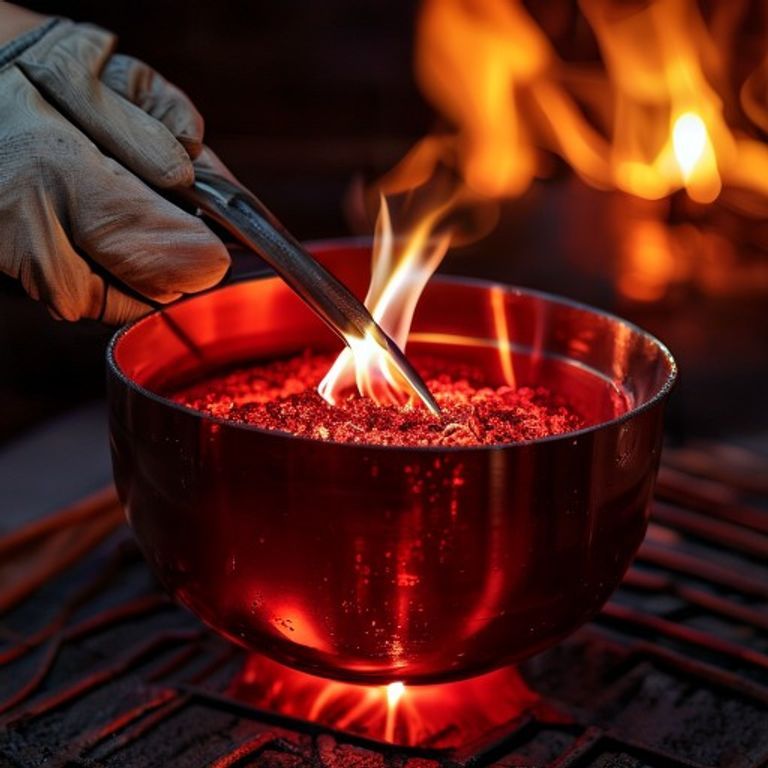
Understanding Crucible Tongs Meaning: How They Work, Why We Need Them, and Practical Tips for Safe Lab Use

Introduction
When I first stepped into a chemistry lab, the sight of a pair of sturdy, metal tongs holding a glowing crucible felt like a scene from a sci‑fi movie. Yet, those crucible tongs are simply one of the most essential pieces of laboratory equipment for handling hot materials safely. In this article, I’ll walk you through the meaning of crucible tongs in a lab, explain what are crucible tongs used for, and share practical tips on how they function so you can use them confidently.
What Are Crucible Tongs Used For?
At its core, a crucible is a small container that can withstand extremely high temperatures—think of it as the oven of the lab. Crucible tongs are the “hands” that let you pick up, move, or position that oven without burning yourself. Here are the main uses:
- Heating substances safely: Transfer a crucible from a furnace to a cooling rack.
- Mixing or stirring: Hold the crucible steady while you add reagents.
- Observing reactions: Position the crucible under a microscope or a camera.
In short, they are the bridge between the intense heat of a reaction and the delicate hands of the researcher.
Definition of Crucible Tongs for Students
If you’re just starting out, think of crucible tongs as a pair of “heat‑proof pliers.” They are usually made of stainless steel or nickel‑chromium alloy, which means they won’t melt or warp even at 1200 °C. The design often includes a curved, lock‑type jaw that matches the shape of a standard crucible, giving you a firm grip.
Key Features to Recognize
- Material: High‑temperature resistant metal.
- Jaw shape: Curved or flat, depending on crucible size.
- Length: Long handles keep your hands away from heat sources.
Purpose of Laboratory Crucible Tongs
The purpose goes beyond just “holding something hot.” It’s about control and safety. By using tongs, you reduce the risk of:
- Accidental burns to skin.
- Spilling molten substances that could cause fires.
- Breaking the crucible, which would waste precious chemicals.
In many labs, safety protocols actually require tongs for any operation involving temperatures above 200 °C.
How Do Crucible Tongs Function?
The mechanics are simple but effective. When you squeeze the handles, the jaws close around the crucible’s rim. Because the jaws are often slightly serrated, they create a friction lock that prevents the crucible from slipping even when you tilt it. The long handles act as a lever, giving you enough mechanical advantage to lift heavy, molten loads without straining your hand.
Practical Tips for Using Crucible Tongs
- Check the grip: Before lifting, make sure the jaws are fully closed around the crucible.
- Use heat‑resistant gloves: Even with tongs, a quick touch can cause a burn.
- Never over‑stretch: If the crucible is larger than the tongs, use a larger pair instead of forcing it.
- Cool down gradually: After heating, place the crucible on a heat‑resistant mat rather than a cold metal surface.
Related Lab Tools You Might Already Know
Understanding crucible tongs becomes easier when you compare them to other types of laboratory tools. For example, a glass stirring rod is used for mixing liquids, while essential guide to burner operation helps you generate the heat that the crucible needs. Both are part of the same safety ecosystem that keeps your experiments running smoothly.
Why Knowing the Meaning Matters
When you truly grasp the meaning of crucible tongs, you start treating them as an extension of your own safety mindset. It’s not just a tool; it’s a reminder that every high‑temperature experiment demands respect, preparation, and the right equipment.
Conclusion
Crucible tongs may look simple, but they play a pivotal role in handling hot materials safely. By understanding what are crucible tongs used for, their design, and proper handling techniques, you can protect yourself and your experiment from unnecessary hazards. So next time you see that pair of metal tongs, remember they’re your trusted partner in the world of high‑heat chemistry.
FAQ
Q: Can I use regular pliers instead of crucible tongs?
A: It’s not recommended. Regular pliers aren’t designed for high temperatures and may melt or transfer heat to your hand.
Q: How do I choose the right size?
A: Match the jaw width to the crucible’s diameter. A snug fit prevents slipping.
Q: Are there special tongs for different materials?
A: Yes. Some tongs have ceramic-coated jaws for ultra‑high‑temperature work, while others are plain metal for routine heating.
Q: Do I need to clean crucible tongs after each use?
A: Absolutely. Wipe them with a lint‑free cloth and store them in a dry place to avoid corrosion.
Q: Where can I learn more about basic lab safety?
A: Check out the simple guide to chemistry for beginners for a broader overview of safe lab practices.