


Unlocking Lab Precision: The Indispensable Function of a Graduated Cylinder

Have you ever wondered why certain tools in a laboratory look so specific? Or why, when measuring liquids, we don’t just use any old container? Well, today, we’re going to dive deep into one of the most fundamental yet crucial pieces of laboratory glassware: the graduated cylinder. You might have seen it in science class, but do you truly understand the core function of a graduated cylinder and why it’s so indispensable?
For us in the world of science and experimentation, accuracy is everything. Imagine trying to bake a cake without precise measurements – disaster! The same principle applies, but with far higher stakes, in chemistry, biology, and other scientific fields. That’s where our cylindrical hero comes in. We’ll explore its primary purpose, how to use it correctly, and why it’s a star player in achieving reliable results.
What Exactly *Is* a Graduated Cylinder?
Before we jump into its functions, let’s quickly define what a graduated cylinder is. Simply put, it’s a tall, cylindrical piece of laboratory glassware (or sometimes plastic) with a flat base and a spout for pouring. What makes it “graduated” are the markings along its side, indicating specific liquid volume measurements. Think of it like a highly specialized measuring cup, but designed for much greater accuracy than your kitchen variety.
These cylinders come in various sizes, from small 10 mL ones for tiny samples to large 1000 mL (1 L) versions for bulk measurements. Each one is calibrated to provide accurate readings, making it a cornerstone of volumetric measurement in almost any lab setting. While other common laboratory glassware like beakers and flasks exist, none match the graduated cylinder’s specific role in precise volume determination.
The Core Function: Precise Volume Measurement
So, what is the primary purpose of a graduated cylinder in chemistry and other sciences? Its main job, its raison d’être, is to measure the volume of a liquid with a high degree of precision. Unlike a beaker, which is excellent for holding, mixing, or heating liquids, but not for accurate measurement, a graduated cylinder is engineered for exactly that. When we need to know the exact amount of a liquid we’re working with – say, 25 mL of a reagent or 100 mL of a solvent – the graduated cylinder is our go-to tool.
This precision is vital for several reasons. In experiments, even a small deviation in liquid volume can drastically alter reaction rates, concentrations, or the final outcome. For instance, if we’re preparing a solution of a specific molarity, using an inaccurate volume would mean our solution’s concentration is off, invalidating our entire experiment. That’s why understanding the function of a graduated cylinder is paramount for anyone serious about laboratory work.
How to Use a Graduated Cylinder Accurately for Volume Measurement
Knowing its function is one thing, but how to use a graduated cylinder for measuring liquid precisely is where the rubber meets the road. It’s not just about pouring and reading; there’s a technique involved. Here’s a simple guide:
- Choose the Right Size: Always select a graduated cylinder whose capacity is close to the volume you need to measure. For example, if you need 25 mL, a 50 mL cylinder is better than a 100 mL one because the markings will be finer and more accurate.
- Place on a Flat Surface: Always set the cylinder on a level surface (like your lab bench) before pouring the liquid. Holding it in your hand can lead to inaccurate readings due to parallax error.
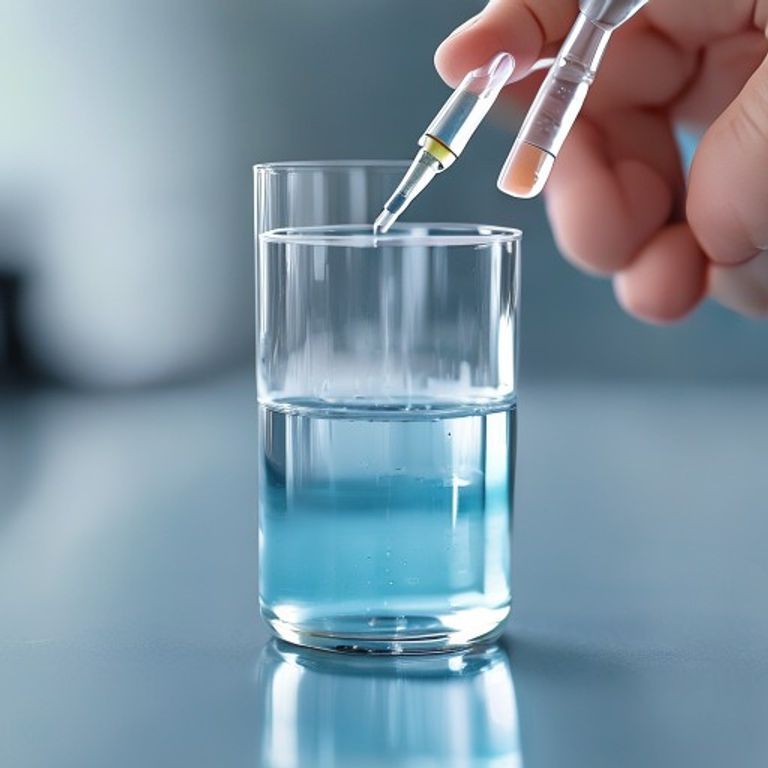
- Pour Carefully: Slowly pour the liquid into the cylinder until it reaches a level slightly below your desired mark. Then, use a dropper or pipette to add liquid drop by drop until the bottom of the meniscus touches the desired mark.
- Read the Meniscus: This is crucial. For most liquids, you’ll notice a curved surface at the top of the liquid where it meets the cylinder wall. This curve is called the meniscus. To read a graduated cylinder accurately for volume measurement, you must read the bottom of this curve. Get down to eye level with the liquid to avoid parallax error (reading it from above or below will make the volume appear different than it actually is).
- Record Your Measurement: Record the value, typically estimating one digit beyond the smallest marked increment. For example, if a cylinder has 1 mL markings, you might estimate to 0.1 mL.
This careful approach ensures that we extract the maximum precision this scientific equipment offers.
Why Precision Matters in the Lab
We’ve talked about the function of a graduated cylinder, but why does all this precision truly matter? In scientific research, every variable counts. Inaccurate liquid volume measurements can lead to:
- Incorrect Experimental Results: Your data might be flawed, leading to false conclusions.
- Wasted Reagents and Time: Having to repeat experiments because of poor initial measurements is costly.
- Safety Issues: In some cases, incorrect concentrations of chemicals can be hazardous.
- Lack of Reproducibility: Other scientists won’t be able to replicate your work if your measurements aren’t precise.
Therefore, mastering the use of a graduated cylinder isn’t just a basic skill; it’s a foundational element of good scientific practice.
Conclusion
So, there you have it! The graduated cylinder might seem like a simple piece of equipment, but its function of a graduated cylinder is absolutely critical for accurate volumetric measurement in the laboratory. By understanding its purpose and following the correct steps for meniscus reading and usage, we can ensure our experiments are reliable, reproducible, and ultimately, lead to sound scientific discoveries. It’s a small tool with a huge impact on the accuracy of our work!
Frequently Asked Questions (FAQ)
Q1: What is the primary purpose of a graduated cylinder in chemistry?
The primary purpose of a graduated cylinder in chemistry is to accurately measure the volume of a liquid. It is specifically designed for precise liquid volume measurements, which are crucial for preparing solutions, conducting experiments, and ensuring the reliability of results.
Q2: How does a graduated cylinder differ from a beaker for measuring liquids?
The main difference between a beaker and a graduated cylinder for measuring is precision. Beakers are general-purpose containers used for holding, mixing, and heating, with approximate volume markings. Graduated cylinders, on the other hand, are calibrated for high accuracy and have fine markings to provide precise volumetric measurement.
Q3: How do you read a graduated cylinder accurately?
To read a graduated cylinder accurately, place it on a flat surface and view the liquid at eye level. For most liquids (like water), you will see a concave curve called the meniscus. Read the measurement at the bottom of this meniscus. This technique minimizes parallax error and ensures a precise reading.
Q4: Can I use a graduated cylinder for heating liquids?
While some graduated cylinders are made of borosilicate glass, which can withstand some heat, they are not typically designed for heating. Using them for heating can compromise their calibration, lead to breakage, or affect the accuracy of future measurements. For heating, it’s generally better to use beakers or Erlenmeyer flasks.







