Mastering the Graduated Cylinder: Practical Tips, Accuracy Secrets, and Buying Guide

Introduction
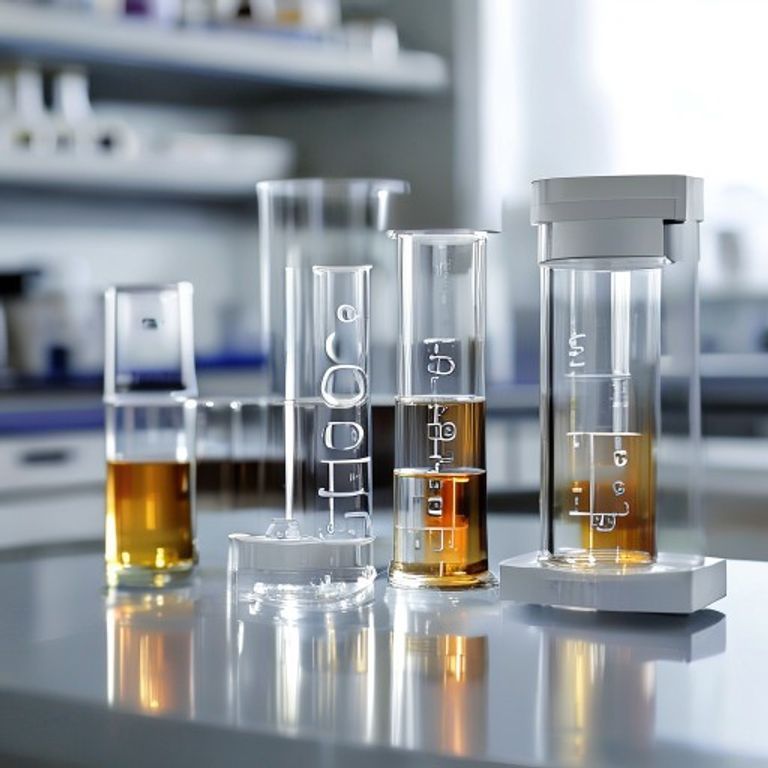
When I first stepped into a chemistry lab, the graduated cylinder felt like a simple piece of glass—just a tube with markings. Yet, over the years I discovered it’s the unsung hero for precise volume measurement. In this article I’ll share how to read a graduated cylinder correctly, compare it with other measuring tools, boost its accuracy, and even pick the right one to buy for your lab.
How to Read a Graduated Cylinder
Spot the Meniscus
The liquid forms a curve called the meniscus. For most liquids (water, most solvents) it’s concave, so you read the bottom of the curve at eye level. Think of it like looking at the bottom of a bowl of soup—your eye should be level with the soup’s surface, not above it.
Step‑by‑Step Reading
- Place the cylinder on a flat surface.
- Ensure the cylinder is clean and dry (no droplets on the outside).
- Look straight at the meniscus—don’t tilt your head.
- Read the nearest graduation line. If the meniscus is between lines, estimate to the nearest 0.1 mL (or the smallest division).
Common Mistakes to Avoid
- Reading from above or below eye level (parallax error).
- Ignoring the meniscus shape—some chemicals (e.g., mercury) have a convex meniscus and you read the top.
- Using a dirty cylinder that obscures the markings.
Uses of a Graduated Cylinder
Beyond simple volume checks, a graduated cylinder is versatile:
- Preparing solutions: Measure exact amounts of solvent before mixing.
- Density experiments: Combine mass (from a balance) with volume to calculate density.
- Reaction monitoring: Track volume changes in gas‑producing reactions.
- Calibration checks: Verify the accuracy of other glassware.
Graduated Cylinder vs. Measuring Cylinder
Some textbooks use “measuring cylinder” and “graduated cylinder” interchangeably, but there’s a subtle difference. A graduated cylinder guide often emphasizes higher precision markings (usually 0.1 mL increments) compared to a generic measuring cylinder found in school labs.
If you need lab‑grade accuracy, stick with a true graduated cylinder. For quick, rough estimates in a teaching setting, a measuring cylinder may suffice.
Graduated Cylinder Accuracy: Tips to Maximize Precision
- Choose the right size: Use a cylinder that’s close to the volume you need. A 100 mL cylinder measuring 95 mL gives better precision than a 1000 mL cylinder.
- Temperature matters: Glass expands with heat. Measure at room temperature (20‑25 °C) and avoid sudden temperature changes.
- Check for calibration: Compare the cylinder’s reading with a known volume (e.g., a certified volumetric flask). If the deviation is >0.5 %, consider recalibrating or replacing.
- Handle gently: Dropping or tapping can chip the graduations, ruining accuracy.
Buying a Graduated Cylinder for Your Lab
When it’s time to purchase, keep these factors in mind:
- Material: Borosilicate glass is heat‑resistant and less prone to breakage. For aggressive chemicals, consider a plastic (polypropylene) cylinder.
- Capacity range: Common sizes are 10 mL, 25 mL, 50 mL, 100 mL, and 250 mL. Choose a set that covers the volumes you work with most.
- Graduation clarity: Look for clear, non‑faded markings and a smooth interior surface.
- Safety features: Some cylinders have a built‑in spout or a protective lip to reduce splashing.
If you’re still unsure which glassware fits best, compare it with other options. For instance, the Volumetric Flask vs Erlenmeyer Flask guide helps you decide when a flask is preferable over a cylinder.
Conclusion
Mastering the graduated cylinder is all about paying attention to the meniscus, choosing the right size, and keeping the glassware clean and calibrated. Whether you’re a student, a hobbyist, or a seasoned researcher, these practical tips will help you get reliable volume measurements every time. And when it’s time to upgrade, remember the material, capacity, and marking quality to ensure your lab stays efficient and safe.
FAQ
Can I use a graduated cylinder for volatile liquids?
Yes, but work quickly and use a lid if possible to minimize evaporation.
What’s the difference between a convex and concave meniscus?
A concave meniscus (most liquids) is read at the bottom curve; a convex meniscus (e.g., mercury) is read at the top.
How often should I recalibrate my graduated cylinder?
At least once a year, or whenever you notice a consistent deviation during routine checks.
Is plastic as accurate as glass?
High‑quality polypropylene cylinders are fairly accurate, but glass generally offers better chemical resistance and clearer markings.
Can I use a graduated cylinder for measuring gases?
Only if the gas is dissolved in a liquid; for direct gas volume, a gas syringe or burette is more appropriate.