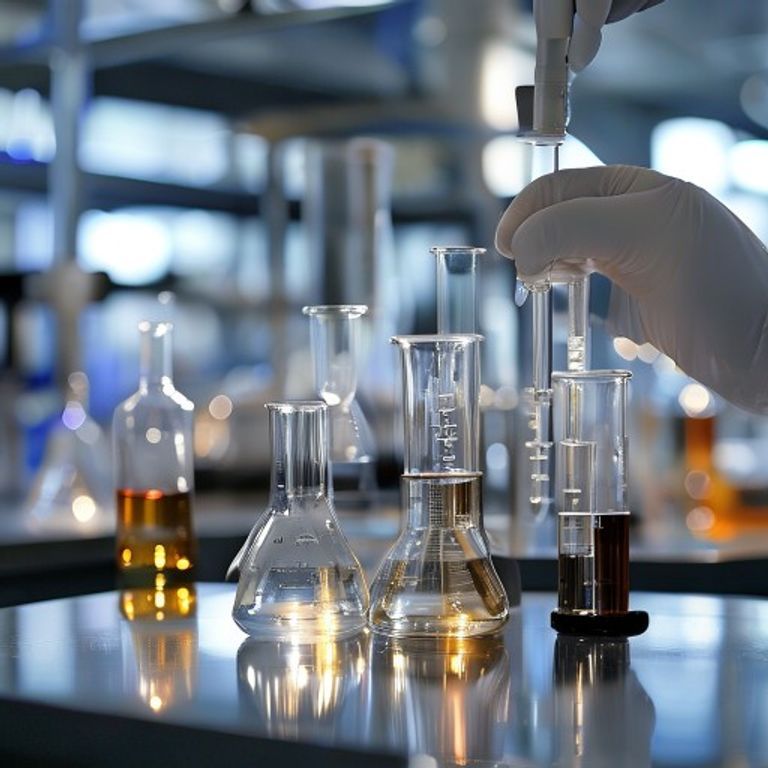
Unlocking Lab Precision: A Deep Dive into Volumetric Glassware Applications

In the world of science, especially in chemistry and biology labs, precision isn’t just a nice-to-have; it’s absolutely essential. Imagine trying to bake a cake without accurate measurements – you’d likely end up with a mess! The same principle applies, but with much higher stakes, in scientific experiments. This is where volumetric glassware applications come into play. These specialized tools are the unsung heroes that ensure our measurements are spot-on, making our research reliable and reproducible. Today, we’re going to explore why these pieces of laboratory equipment are so critical and how we use them to achieve incredible accuracy.
Understanding Volumetric Glassware: What Makes It Special?
When we talk about volumetric glassware, we’re not just referring to any old glass container. We’re talking about instruments meticulously designed for precise liquid measurement. Unlike beakers or Erlenmeyer flasks, which are great for mixing or holding chemical solutions, volumetric glassware is calibrated to contain or deliver exact volumes. Think of it like a finely tuned musical instrument – it’s built for a specific, high-precision task.
The secret lies in their calibration. Most volumetric glassware is calibrated “to contain” (TC) or “to deliver” (TD) a specific volume at a specific temperature, usually 20°C. This meticulous design is what gives them their incredible glassware accuracy, making them indispensable for critical laboratory procedures using volumetric glassware where even a tiny error can skew results.
The Mighty Volumetric Flask: Precision in Solution Preparation
If you’ve ever needed to prepare a solution with an exact concentration, you’ve definitely encountered the volumetric flask. This pear-shaped flask with a long, narrow neck and a single calibration mark is the king of precise solution preparation. Its primary function is to prepare solutions of known concentrations accurately, especially in analytical chemistry.
Here’s how we typically use it:
- We start by weighing out the exact amount of solute.
- Then, we dissolve it in a small amount of solvent directly inside the flask.
- Finally, we carefully add more solvent until the bottom of the meniscus perfectly aligns with the calibration mark on the neck. This ensures the total volume of the solution is precisely what the flask indicates.
The volumetric flask uses in analytical chemistry are vast, from creating standard solutions for calibration curves to preparing reagents for complex experiments. Without them, maintaining consistent and reliable concentrations would be nearly impossible.
Mastering the Burette: Titration Techniques and Accurate Delivery
When it comes to delivering variable but exact volumes of liquid, the burette is our go-to tool. It’s essentially a long, graduated glass tube with a stopcock at the bottom, allowing for controlled dispensing. The burette truly shines in titration techniques, where we need to add a precise amount of one solution to another to determine its concentration.
For example, in an acid-base titration, we might use a burette to slowly add a known concentration of base to an unknown acid solution until neutralization occurs. We read the initial and final volumes from the burette’s markings, and the difference tells us exactly how much liquid was delivered. Achieving accurate measurement with volumetric burettes requires careful technique, like ensuring no air bubbles are present and reading the meniscus correctly at eye level, but the results are incredibly reliable.
Pipettes: From Serological to Volumetric for Varied Needs
Pipettes are another crucial family of volumetric glassware, designed to transfer specific volumes of liquid. There are several types, each suited for different levels of precision:
- Volumetric (or Transfer) Pipettes: These are the most accurate pipettes, designed to deliver a single, fixed volume (e.g., 10.00 mL, 25.00 mL). They have a bulb in the middle and a single calibration mark. We use them when extreme precision is required, much like volumetric flasks for dispensing specific volumes.
- Graduated (or Measuring) Pipettes: These have markings along their length, allowing us to deliver various volumes, though with slightly less precision than volumetric pipettes.
- Serological Pipettes: Often used in biological and medical labs, scientific applications of serological pipettes involve transferring approximate volumes of cell cultures, media, or reagents. They are graduated to the tip, allowing for dispense from a zero mark, but their accuracy is generally lower than volumetric pipettes. They’re excellent for general-purpose transfers where exact, precise volumes aren’t the absolute highest priority, but still important.
Understanding which pipette to use for a given task is vital for successful laboratory procedures using volumetric glassware.
The Crucial Step: How to Calibrate Volumetric Glassware for Precision
Even the best tools need to be maintained, and volumetric glassware is no exception. To truly guarantee how to calibrate volumetric glassware for precision, we often need to calibrate it ourselves or at least be aware of its calibration status. This usually involves determining the exact volume contained or delivered by weighing the amount of distilled water (whose density is known) that the glassware holds or delivers at a specific temperature. This process helps us account for minor manufacturing variations or changes over time.
Regular calibration checks are a cornerstone of good laboratory practice, ensuring that all our laboratory equipment is performing at its peak and that our results are trustworthy.
Conclusion
Volumetric glassware might seem like simple glass tubes and flasks, but their design and application are incredibly sophisticated. From the precise measurements enabled by volumetric flask uses in analytical chemistry to the controlled delivery in titration techniques using burettes, and the varied utility of pipettes, these tools are indispensable. By understanding their unique roles, applying proper laboratory procedures using volumetric glassware, and even knowing how to calibrate volumetric glassware for precision, we empower ourselves to achieve accurate, reliable, and reproducible results in all our scientific endeavors. Truly, they are the silent guardians of laboratory accuracy!
Frequently Asked Questions (FAQ)
Q: Why can’t I just use a beaker for precise measurements?
A: Beakers are designed for mixing, holding, and rough volume estimations, not precision. They have wide mouths and broad graduations, making it impossible to get truly accurate readings. Volumetric glassware, with its narrow necks and single calibration marks (or finely divided scales), is specifically designed for exact volumes.
Q: What does “TC” and “TD” mean on volumetric glassware?
A: “TC” stands for “To Contain,” meaning the glassware is calibrated to hold the exact volume indicated when filled to the mark. “TD” stands for “To Deliver,” meaning it is calibrated to dispense the exact volume indicated. Pipettes and burettes are typically TD, while volumetric flasks are TC.
Q: How often should I calibrate my volumetric glassware?
A: The frequency of calibration depends on how often the glassware is used, the criticality of the measurements, and lab guidelines. Generally, new glassware should be checked, and then recalibration should occur annually or whenever there’s a suspicion of damage or inaccuracy. Some highly regulated labs may require more frequent checks.