Understanding the Function of a Pipette: From Micropipettes to Volumetric Precision

Introduction
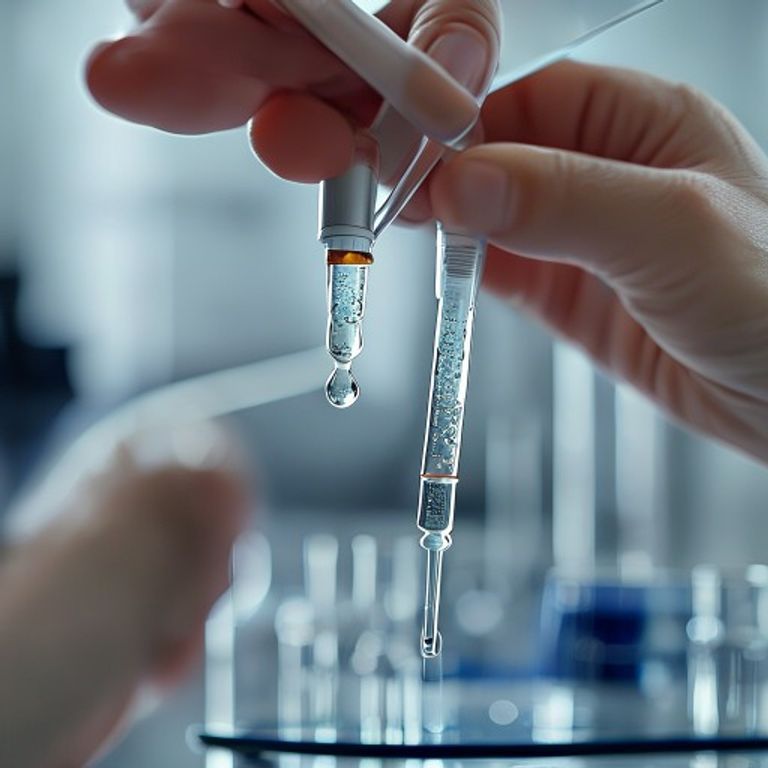
When we step into a modern laboratory, the first thing we often see on the bench is a simple-looking glass tube with a rubber tip – the pipette. Despite its modest appearance, a pipette is the workhorse behind countless experiments, from measuring a few microliters of DNA solution to delivering exact volumes for a titration. In this article, I’ll walk you through the function of a pipette, explore how different types operate, and show why accurate liquid transfer is indispensable in chemistry, biology, and beyond.
How Does a Pipette Work in a Laboratory?
At its core, a pipette creates a pressure differential that draws liquid into a disposable tip and then releases it on demand. Think of it like a syringe without the plunger you have to push manually – the mechanism (air‑displacement, positive‑displacement, or electronic) does the heavy lifting for you.
- Air‑displacement pipettes: A piston moves up and down, pushing air that in turn moves the liquid.
- Positive‑displacement pipettes: The piston directly contacts the liquid, ideal for viscous or volatile samples.
- Electronic pipettes: Motor‑driven pistons provide repeatable volumes with a single button press.
All these designs share the same goal: accurate measurement of a defined volume, which is essential for reproducible results.
Primary Purpose of a Micropipette
Micropipettes are the tiny cousins of the classic glass pipette, designed to handle volumes ranging from 0.1 µL to 1000 µL. Their primary purpose is to enable precise handling of very small liquid amounts, which is crucial when working with expensive reagents or delicate biological samples.
- Ensures consistent sample preparation for PCR, ELISA, and cell culture.
- Reduces waste – you only use what you need.
- Minimizes contamination risk thanks to disposable tips.
Specific Functions of a Volumetric Pipette
Unlike adjustable pipettes, a volumetric pipette is calibrated to deliver a single, exact volume (e.g., 10 mL, 25 mL). Its narrow, graduated neck creates a meniscus that you align precisely, guaranteeing high accuracy.
Key functions include:
- Standard solutions preparation: Perfect for making solutions that require exact concentrations for calibration curves.
- Gravimetric analysis: When you need to weigh the transferred liquid, the volumetric pipette’s precision shines.
- Reference work: Many labs still rely on it for quality‑control checks because it’s less prone to mechanical wear.
For a deeper dive into why precise liquid handling matters, check out our pipette purpose guide.
Role of Pipetting in Chemical Analysis
In analytical chemistry, the reliability of your data hinges on how accurately you can transfer reagents. Whether you’re performing a titration, preparing a standard curve, or conducting a spectrophotometric assay, the pipette is the gatekeeper of accurate measurement. Even a 0.5 % error can skew results, leading to faulty conclusions.
Integrating pipetting with other laboratory equipment, such as a Erlenmeyer flask uses, creates a seamless workflow: you dispense the exact volume into the flask, swirl, and let the reaction proceed.
Why Are Pipettes Essential in Biology Labs?
Biology experiments often involve living cells, enzymes, or nucleic acids that react dramatically to concentration changes. A few microliters too much of a toxin can kill a culture; a few microliters too little of a primer can ruin a PCR.
- Ensures reproducible cell culture media composition.
- Facilitates accurate dosing in drug‑screening assays.
- Supports delicate techniques like microinjection and immunostaining.
Practical Tips for Accurate Liquid Transfer
- Pre‑wet the tip: Aspirate and dispense the liquid once to coat the inner surface, reducing surface tension errors.
- Use the correct tip size: Match tip volume to the pipette setting – oversized tips can cause droplet retention.
- Maintain a steady hand: Hold the pipette vertically during aspiration and at a 45° angle when dispensing.
- Calibrate regularly: Even electronic models need periodic checks against a gravimetric standard.
Conclusion
The function of a pipette goes far beyond simply moving liquid from point A to point B. It is the cornerstone of precise measurement, enabling reliable chemical analysis, accurate biological assays, and consistent sample preparation. By understanding how different pipettes work and applying best‑practice techniques, we can boost the quality of our data and reduce waste – a win‑win for any lab.
FAQ
Q: How do I know which type of pipette to choose?
A: If you need to handle very small volumes (≤1000 µL), go for a micropipette. For larger, single‑volume tasks, a volumetric pipette is best. Air‑displacement models are versatile for most liquids, while positive‑displacement is ideal for viscous or volatile substances.
Q: Can I use the same pipette for aqueous and organic solvents?
A: Generally yes, but check the manufacturer’s compatibility chart. Some plastics may degrade with strong solvents, affecting accuracy.
Q: How often should I calibrate my pipettes?
A: At least once a year for routine use, or more frequently if you notice drift, after major repairs, or when switching to a new type of liquid.
Q: What is the difference between a pipette and a burette?
A: A pipette delivers a fixed volume, while a burette allows you to add liquid dropwise and read the volume dispensed, making it ideal for titrations.
Q: Why is pre‑wetting the tip important?
A: It minimizes the effect of surface tension, ensuring that the aspirated volume matches the set volume more closely.