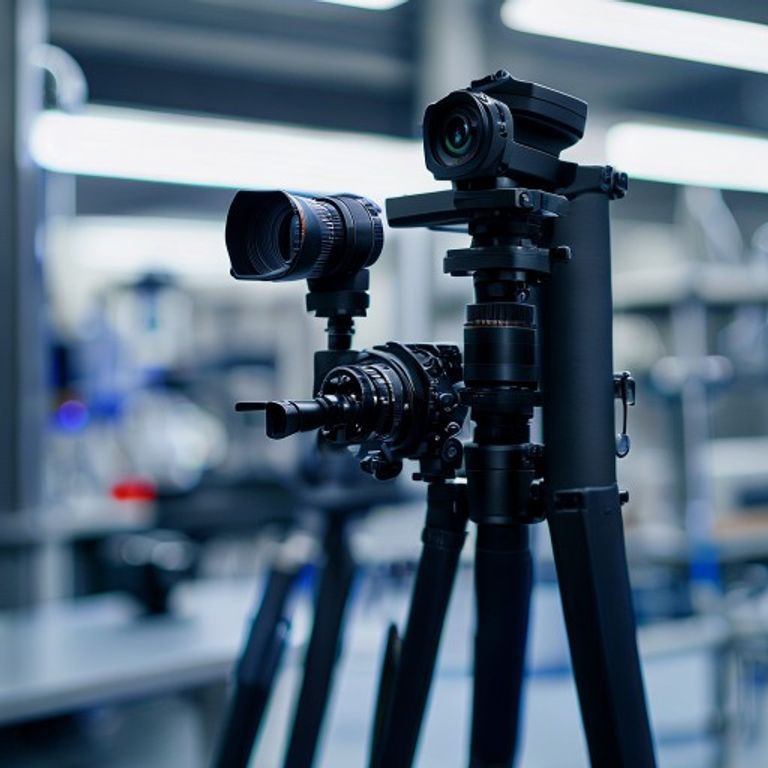
More Than Just a Stand: Unveiling Tripod Uses in Science for Precision and Discovery

When you hear the word “tripod,” what’s the first thing that comes to mind? For most of us, it’s probably a photographer capturing a stunning landscape or a videographer shooting a smooth scene. We often associate tripods with the visual arts, helping us freeze moments in time or create cinematic masterpieces. But what if I told you that this humble three-legged device is just as indispensable, if not more so, in the rigorous world of scientific research and discovery?
That’s right! Tripods are not just for cameras; they are crucial scientific stability equipment that underpins countless experiments, observations, and data collection methods across various scientific disciplines. In this article, we’ll dive deep into the fascinating, often unseen, applications of tripods in science, exploring how they empower researchers to achieve unprecedented levels of precision and make groundbreaking discoveries.
Why Scientists Rely on Tripods for Experiments
Imagine trying to draw a perfectly straight line on a moving train. It’s nearly impossible, right? The same principle applies to scientific experiments. Many scientific endeavors demand absolute stillness and consistent positioning. This is precisely why do scientists use tripods for experiments.
Vibration Reduction: Even the slightest tremor from a lab bench or a researcher’s hand can skew results, especially in sensitive measurements. Tripods act as an isolating platform, absorbing these micro-vibrations and ensuring the experimental setup remains perfectly still. Think of it like a surgeon performing a delicate operation – a steady hand is paramount, and a tripod provides that “steady hand” for instruments.
Consistent Positioning: For experiments requiring repeatable observations or long-term data collection, maintaining the exact same instrument position is non-negotiable. A tripod, once set, provides an unmoving anchor point, ensuring that every measurement is taken from an identical perspective or distance, vital for accurate comparative analysis.
Capturing the Unseen: Tripods in Scientific Photography and Imaging
Science is increasingly visual, and documenting phenomena with photographic accuracy is critical. This is where applications of tripods in scientific photography truly shine.
Microscopy and Macroscopy: When capturing images through a microscope or of small specimens with macro lenses, any camera shake can render the image blurry and unusable. Tripods ensure crystal-clear, high-resolution images, essential for detailed analysis of cells, organisms, or material structures.
Astrophotography and Remote Sensing: From capturing distant galaxies to monitoring environmental changes with specialized cameras, long exposure times are often required. A tripod is absolutely essential here to prevent star trails (unless intentional) or blurred aerial images, enabling scientists to gather precise visual data from vast distances.
Time-lapse Photography: Documenting slow processes like plant growth, chemical reactions, or geological erosion over hours, days, or even months demands a completely stationary camera. Tripods ensure that each frame in a time-lapse sequence is perfectly aligned, creating compelling visual records of dynamic scientific events.
Precision in Every Observation: The Benefits of Tripods
The core benefit of integrating tripods into scientific workflows boils down to one word: precision. The benefits of using a tripod for stable scientific observations are immense, directly impacting the quality and reliability of research outcomes.
Enhanced Data Accuracy: By eliminating shake and ensuring consistent positioning, tripods allow scientists to collect more accurate and reliable data. This is crucial for the vital function of pipettes in the lab or when using other precision measurement tools that demand minimal interference.
Reduced Human Error: Removing the human element of holding equipment frees researchers to focus on other critical aspects of the experiment, reducing fatigue and the potential for errors that arise from manual handling.
Repeatability and Reproducibility: A cornerstone of the scientific method is the ability to repeat experiments and reproduce results. Tripods contribute significantly to this by ensuring that experimental conditions, especially the spatial setup of instruments, remain consistent across multiple trials or different laboratories.
The Lab’s Silent Partner: Tripods for Setup and Equipment
Beyond imaging, tripods play a significant role of tripods in laboratory setups for precision, acting as versatile support structures for a wide array of scientific equipment mounted on tripods.
Sensor Deployment: Whether it’s temperature sensors, light meters, gas detectors, or motion sensors, many need to be held at a specific height and angle for prolonged periods. Tripods offer a stable, adjustable platform for their deployment in both laboratory and field research setup.
Laser Alignment: In optics experiments or precise alignment tasks, lasers need to be perfectly stationary and directed. Specialized tripod heads allow for minute adjustments, ensuring accurate beam paths.
Custom Rigs: With various mounting options and accessories, tripods can be adapted to create custom rigs for unique experimental setups, holding multiple pieces of equipment simultaneously and precisely. Just as mastering volumetric flask uses is key for accurate solution preparation, mastering the versatile configurations of a tripod is key for complex experimental setups.
Think of a tripod as the sturdy table for your delicate scientific work. You wouldn’t try to balance a complex chemical reaction on a wobbly stool, would you? Similarly, scientists rely on the steadfast support of tripods to ensure their valuable equipment is secure and positioned optimally, allowing them to focus on the science itself.
Conclusion
From the microscopic world of cells to the vastness of the cosmos, tripods are silent heroes in scientific exploration. They are not merely accessories but fundamental tools that enhance precision, reduce error, and enable scientists to push the boundaries of knowledge. So, the next time you see a tripod, remember its dual life: a creative companion for artists and an indispensable partner for scientists, stabilizing our path towards discovery.
FAQ
1. Are all tripods suitable for scientific use?
No, not all tripods are created equal. Scientific applications often require more robust, stable tripods, sometimes made from specific materials like carbon fiber for vibration dampening, or heavy-duty aluminum for larger equipment. Precision-adjustable heads are also key.
2. Can tripods be used in harsh field research environments?
Absolutely! Many tripods are designed for outdoor and rugged use, made from durable materials resistant to weather and impact. They are essential for field research, providing stability for cameras, sensors, and other data collection equipment in remote or challenging locations.
3. How do tripods help with data collection methods?
Tripods ensure consistency in data collection by holding instruments in a fixed position, at a precise angle, or at a specific height. This minimizes variables caused by human movement or unstable surfaces, leading to more accurate, repeatable, and comparable data sets.
4. What kind of scientific equipment can be mounted on tripods?
Beyond cameras and microscopes, tripods can support a wide range of equipment including laser levels, spectrometers, weather sensors, optical instruments, environmental monitors, and even specialized robotic arms for automated tasks.