Your Essential Guide to the Bunsen Burner: Understanding Its Function, Parts, and Safe Use in the Lab

In the vibrant world of chemistry and biology labs, there are a few iconic pieces of equipment that just scream “science is happening!” Among them, the Bunsen burner stands out as a true workhorse. If you’ve ever wondered how that neat little device produces its powerful flame or what its real purpose is beyond just making things hot, you’re in the right place. Today, we’re going to dive deep into the Bunsen burner function, exploring its inner workings, its crucial role in experiments, and most importantly, how to use it safely.
I remember my first time lighting a Bunsen burner – a mix of excitement and a tiny bit of apprehension. But once you understand its mechanism, it’s quite fascinating. Think of it as a carefully controlled mini-volcano, designed to give us just the right amount of heat for our scientific endeavors.
What Exactly Is a Bunsen Burner?
At its core, a Bunsen burner is a common piece of laboratory equipment designed to produce a single, open gas flame. It mixes gas with air in a controlled manner before combustion, allowing for a clean, efficient, and adjustable flame. It was invented by Robert Bunsen in the mid-19th century, and its design has remained largely unchanged because of its sheer effectiveness and simplicity.
While we often think of it just for heating, its purpose extends to sterilization and creating an updraft to prevent airborne contamination in certain experiments. It’s a versatile tool, but understanding its components is key to mastering its use.
Understanding the Parts of a Bunsen Burner
To really grasp the mechanism of action for a Bunsen burner, let’s break it down into its main parts:
- Base: The heavy bottom part that provides stability, keeping the burner upright.
- Gas Inlet: This is where the gas tubing connects, bringing fuel (like natural gas or propane) into the burner.
- Needle Valve (or Gas Control Valve): Often located at the base or on the gas inlet, this valve controls the flow rate of the gas, allowing us to adjust the flame size.
- Barrel (or Chimney): The tall, vertical metal tube where the gas and air mix.
- Collar (or Air Vent Regulator): A movable metal ring at the bottom of the barrel with one or more openings. By rotating this, we can adjust the size of the air hole.
- Air Hole(s): Openings in the barrel, typically covered by the collar, that allow air from the surroundings to enter and mix with the gas.
The Magic Behind the Flame: How a Bunsen Burner Works
So, how does a Bunsen burner produce a flame? It’s all about controlled combustion. Here’s the simplified breakdown:
- Gas Inflow: Fuel gas enters through the gas inlet and flows upwards into the barrel.
- Air Mixture: As the gas travels up the barrel, it draws in air through the adjustable air hole. This is where the magic really happens. Imagine a tiny vacuum effect, where the flowing gas pulls air along with it. This creates a gas-air mixture.
- Combustion: Once this optimal gas-air mixture reaches the top of the barrel, and a source of ignition (like a striker) is applied, combustion occurs, producing a flame. The efficiency of this mixing is what allows us to achieve different flame types.
The key here is the precise ratio of gas to air. Too much gas and not enough air gives us one type of flame; the reverse gives us another. Adjusting the collar effectively controls the oxygen supply, which is crucial for complete combustion.
Why Do We Use Bunsen Burners? Key Functions in the Lab
The purpose of a Bunsen burner in a lab is quite diverse, primarily centered around heat. Here are its main functions:
- Heating Substances: This is perhaps its most common role. Whether you need to heat a liquid in a beaker, warm up a solid in a test tube, or boil a solution, the Bunsen burner provides a quick and efficient heat source. Often, you’ll find your Bunsen burner paired with a lab tripod for chemistry experiments and a wire gauze to support glassware.
- Sterilization: In microbiology, Bunsen burners are essential for sterilizing inoculating loops and the mouths of culture tubes, preventing contamination from airborne microorganisms. The high temperature of the flame quickly kills bacteria and other microbes.
- Glass Bending: For simple glassworking tasks, like bending glass tubing, the intense heat of a Bunsen flame can soften the glass, allowing it to be shaped.
- Flame Tests: The characteristic colors produced by certain metal ions when heated in a Bunsen flame are used for qualitative analysis in flame tests.
Decoding Flame Types: From Safety to Precision
Not all flames are created equal! Understanding the different flame types is vital for both safety and experimental precision. We adjust the flame by rotating the collar, which changes the size of the air hole:
- Luminous Flame (Safety Flame): When the air hole is mostly closed, you get a tall, yellow, smoky flame. This flame is relatively cool and not ideal for heating, as it leaves soot. We call it a “safety flame” because its visibility makes it less likely to be accidentally touched. It’s also often used when you need minimal heat or a visible indicator that the burner is on but not actively heating.
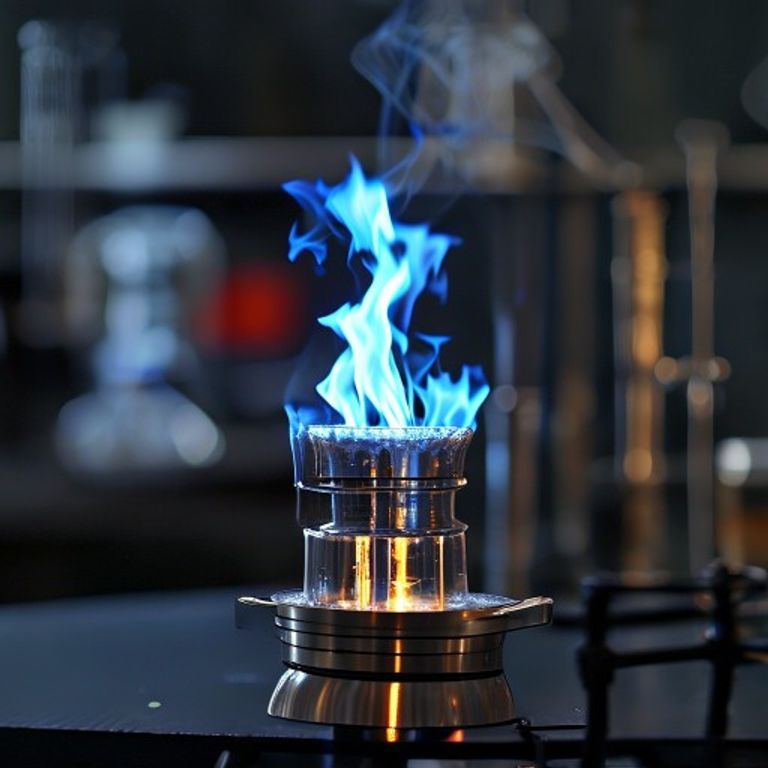
- Non-Luminous Flame (Heating Flame): As you open the air hole, more air mixes with the gas. The flame becomes shorter, blue, and produces an audible “roaring” sound. This is your go-to heating flame. It’s much hotter and burns cleanly without soot.
- Inner Blue Cone: The coolest part, where unburnt gas is still mixing.
- Outer Blue Cone: The hottest part, where complete combustion occurs. This is where you want to place items for maximum heating.
Safety First! Operating Your Bunsen Burner Safely
Knowing how to safely operate a Bunsen burner is non-negotiable. Always remember, you’re dealing with an open flame and flammable gas!
- Pre-Checks:
- Ensure all tubing is securely connected and free of cracks.
- Clear your workspace of flammable materials (papers, solvents, etc.).
- Tie back long hair and wear appropriate personal protective equipment (PPE), including safety goggles.
- Lighting Procedure:
- Close the air hole (collar) to get a luminous flame initially.
- Turn on the gas tap to full.
- Bring a striker (not a match!) to the top of the barrel and light the gas.
- Once lit, slowly open the air hole by rotating the collar until you achieve the desired non-luminous, blue flame.
- During Operation:
- Never leave a lit Bunsen burner unattended.
- Always monitor the flame and adjust if necessary.
- If the flame goes out, immediately turn off the gas tap.
- Shutting Down:
- Always turn off the gas at the main gas tap first, not just the needle valve on the burner. This ensures no gas leaks.
- Allow the burner to cool down before handling.
Conclusion
The Bunsen burner, despite its seemingly simple appearance, is a powerful and indispensable tool in any laboratory setting. From its basic components like the gas inlet and air hole to its ability to produce various flame types through precise gas-air mixing, understanding its full function is key to successful and safe experimentation. I hope this guide has demystified this humble yet heroic piece of laboratory equipment for you. Always remember: practice safety first, and you’ll be harnessing the power of the flame like a pro!
Frequently Asked Questions (FAQ)
Q1: What is the main function of a Bunsen burner?
A: The main function of a Bunsen burner is to provide a controllable, open gas flame for heating, sterilization, and combustion experiments in a laboratory setting.
Q2: How do you adjust the flame on a Bunsen burner?
A: You adjust the flame by two primary controls: the gas control valve (often a needle valve) at the base or gas tap to control gas flow and the collar (air vent regulator) to control the amount of air entering the barrel. More air typically results in a hotter, bluer flame.
Q3: What’s the difference between a luminous and a non-luminous flame?
A: A luminous flame (yellow, tall, smoky) occurs when the air hole is mostly closed, leading to incomplete combustion and less heat. A non-luminous flame (blue, roaring, clean) occurs when the air hole is open, allowing for complete combustion and producing much more heat.
Q4: Why is it important to wear safety goggles when using a Bunsen burner?
A: Safety goggles protect your eyes from splashes of heated chemicals, sudden flickers of the flame, or potential glassware breakage due to heat. It’s a crucial piece of PPE for any lab work involving heat.
Q5: Can I use any type of gas with a Bunsen burner?
A: Bunsen burners are typically designed for specific fuel gases like natural gas, propane, or butane. Always ensure the burner is compatible with the gas supply available in your lab, as different gases require different jet sizes for optimal operation.